Yushu Zhasi Monastery
⭐ 4.80
Zhasi Town, Yushu City, Yushu Tibetan Autonomous Prefecture, Qinghai Province, China
 **A Living Legacy of Tibet's Oldest Buddhist School**
Zasai belongs to the Nyingma tradition, the oldest of the four major schools of Tibetan Buddhism, tracing its lineage back to the 8th-century master Padmasambhava—roughly contemporaneous with the rise of Benedictine monasticism in early medieval Europe. Nangqian County, where the monastery stands, is celebrated as a "land of Dharma kings," with a concentration of temples rivaling the density of historic pilgrimage sites like Tuscany's Monte Amiata region. For centuries, Zasai has served as a vital stronghold of Nyingma teachings in the remote Yushu highlands, its reputation drawing pilgrims from across the Tibetan cultural sphere.
**Mountain-Hugging Architecture**
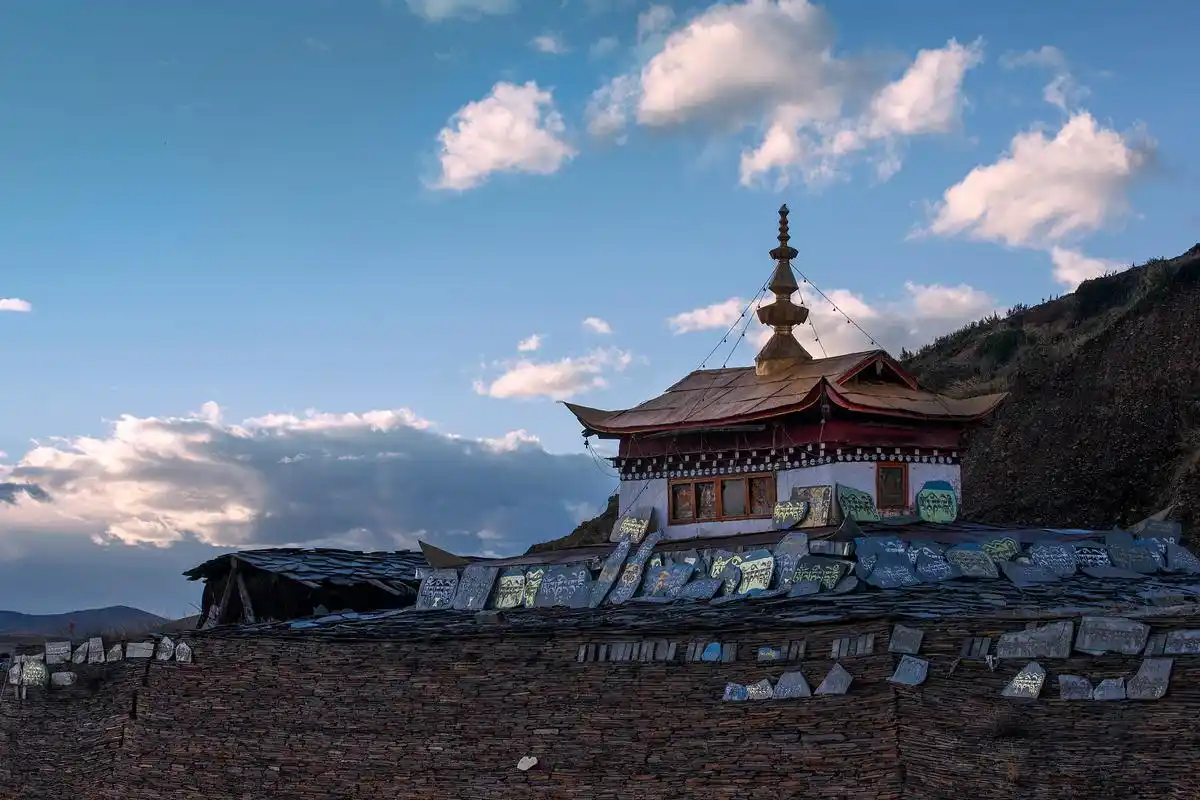
Built into a steep hillside in classic Tibetan style, the monastery's tiered structures cascade down the slope much like a medieval European hilltop abbey—their whitewashed walls crowned with vermilion and gilt roofs that catch the high-altitude sunlight. Inside the main assembly hall, richly painted wooden beams frame an array of bronze Buddhas and brilliantly colored thangkas depicting deities and mandalas. From the upper courtyards, the panorama encompasses the surrounding river valley, distant snow-streaked peaks, and endless pasturelands—a tableau that has welcomed travelers for generations.
**Sacred Treasures and Living Rituals**
The monastery safeguards a precious collection of Buddhist scriptures, ceremonial implements, and centuries-old statues. During major religious festivals, monks in crimson robes gather for elaborate prayer ceremonies, their chanting resonating through the prayer halls while pilgrims circumambulate the temple and turn the great prayer wheels. Zasai remains not merely a museum but a functioning spiritual center, embodying the unbroken transmission of Vajrayana Buddhism in one of its most authentic settings.
**Planning Your Visit**
Reaching Zasai requires effort: the monastery sits roughly 200 kilometers from Jiegu Town, the Yushu prefectural capital, along predominantly unpaved mountain roads. Travelers are strongly advised to hire a 4WD vehicle with an experienced local driver, as conditions can be challenging. The elevation of approximately 3,600 meters demands careful acclimatization—comparable to summiting peaks in the European Alps. Entrance is free, but foreign visitors must arrange permits through the local cultural tourism bureau or a registered travel agency before arrival. The best window for travel runs from June through September, when grasslands flourish and weather is mildest, though sudden storms remain possible.
**Respectful Conduct and Worthwhile Connections**
Visitors should observe standard Buddhist etiquette: remove hats and sunglasses upon entering the prayer halls, maintain silence, circumambulate stupas and prayer wheels clockwise, dress modestly (avoiding shorts and sleeveless tops), and refrain from photographing or touching ritual objects without explicit permission. Those with extra time should pair Zasai with nearby Jiegu Monastery and the extraordinary Jiana Mani Stone Scripture City—one of the world's largest collections of carved mantra stones—offering a comprehensive immersion into the profound spiritual heritage of the Yushu region.
**A Living Legacy of Tibet's Oldest Buddhist School**
Zasai belongs to the Nyingma tradition, the oldest of the four major schools of Tibetan Buddhism, tracing its lineage back to the 8th-century master Padmasambhava—roughly contemporaneous with the rise of Benedictine monasticism in early medieval Europe. Nangqian County, where the monastery stands, is celebrated as a "land of Dharma kings," with a concentration of temples rivaling the density of historic pilgrimage sites like Tuscany's Monte Amiata region. For centuries, Zasai has served as a vital stronghold of Nyingma teachings in the remote Yushu highlands, its reputation drawing pilgrims from across the Tibetan cultural sphere.
**Mountain-Hugging Architecture**
Built into a steep hillside in classic Tibetan style, the monastery's tiered structures cascade down the slope much like a medieval European hilltop abbey—their whitewashed walls crowned with vermilion and gilt roofs that catch the high-altitude sunlight. Inside the main assembly hall, richly painted wooden beams frame an array of bronze Buddhas and brilliantly colored thangkas depicting deities and mandalas. From the upper courtyards, the panorama encompasses the surrounding river valley, distant snow-streaked peaks, and endless pasturelands—a tableau that has welcomed travelers for generations.
**Sacred Treasures and Living Rituals**
The monastery safeguards a precious collection of Buddhist scriptures, ceremonial implements, and centuries-old statues. During major religious festivals, monks in crimson robes gather for elaborate prayer ceremonies, their chanting resonating through the prayer halls while pilgrims circumambulate the temple and turn the great prayer wheels. Zasai remains not merely a museum but a functioning spiritual center, embodying the unbroken transmission of Vajrayana Buddhism in one of its most authentic settings.
**Planning Your Visit**
Reaching Zasai requires effort: the monastery sits roughly 200 kilometers from Jiegu Town, the Yushu prefectural capital, along predominantly unpaved mountain roads. Travelers are strongly advised to hire a 4WD vehicle with an experienced local driver, as conditions can be challenging. The elevation of approximately 3,600 meters demands careful acclimatization—comparable to summiting peaks in the European Alps. Entrance is free, but foreign visitors must arrange permits through the local cultural tourism bureau or a registered travel agency before arrival. The best window for travel runs from June through September, when grasslands flourish and weather is mildest, though sudden storms remain possible.
**Respectful Conduct and Worthwhile Connections**
Visitors should observe standard Buddhist etiquette: remove hats and sunglasses upon entering the prayer halls, maintain silence, circumambulate stupas and prayer wheels clockwise, dress modestly (avoiding shorts and sleeveless tops), and refrain from photographing or touching ritual objects without explicit permission. Those with extra time should pair Zasai with nearby Jiegu Monastery and the extraordinary Jiana Mani Stone Scripture City—one of the world's largest collections of carved mantra stones—offering a comprehensive immersion into the profound spiritual heritage of the Yushu region.