Longbaotan Wetland
⭐ 3.80
Longbaotan Wetland, Yushu Tibetan Autonomous Prefecture, Qinghai Province, China
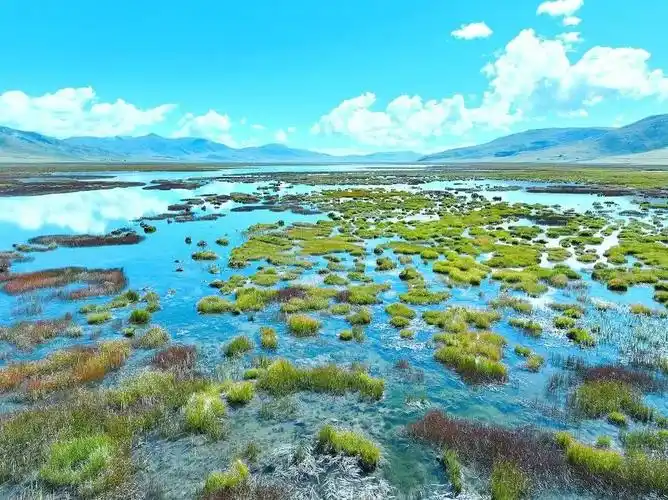 Longbao Beach became Qinghai's first national nature reserve in 1986, just as global conservation priorities expanded through the Ramsar Convention. In 2023, this 100-square-kilometer alpine wetland earned its place on that same international list, joining storied sites like Scotland's Flow Country and France's Camargue. Yet Longbao sits where most European reserves cannot—at 4,200 meters, comparable to the summits of the Swiss Alps. The reserve was deliberately stripped of its AAA-rated tourist facilities in 2018, restoring the marsh to its primal state. The philosophy here prioritizes wilderness over visitor comfort, treating guests as visitors in the cranes' home rather than consumers of scenery.
The wetland showcases textbook alpine marsh ecology: a constellation of shallow lakes and peat-rich grasslands nourished by glacial meltwater from the Yangtze source region. Roughly 170 to 200 black-necked cranes—approximately five percent of the global wild population—return each spring to breed. More than 10,000 bar-headed geese, black storks, and the occasional white-tailed sea eagle share these meadows. Annual temperatures hover around minus 0.4°C. Imagine the bird-rich estuaries of Spain's Ebro Delta or Hungary's Hortobágy, then lift them above the tree line where oxygen thins and silence deepens into something almost sacred.
The wetland pulses with life from late April through early October. April and May bring the black-necked cranes' elaborate courtship dances—an avian ballet staged against snow-capped peaks. June through August is nesting season, when adults shield hatchlings from mountain storms. By late August, juveniles test their wings while remnant wildflowers dot the meadows, though afternoon showers increase. Photographers should arrive at dawn or dusk when angled light gilds the cranes' ebony necks and silver wings—the same golden hours that illuminate the Camargue's flamingos, but rendered at Himalayan altitude.
Reaching Longbao Beach demands serious planning. Fly into Yushu Batang Airport at 3,900 meters, then rest at least one night in Yushu town to acclimatize before driving roughly 80 kilometers west along Provincial Road S308. No public transport exists; only chartered 4WD vehicles handle the variable, often rain-slicked mountain roads. Headaches, breathlessness, and nausea are altitude warning signs—descend immediately rather than push on. August afternoons may reach 15°C, but nights approach freezing. Pack high-SPF sunscreen, UV-rated sunglasses, windproof layers, and a thermos of hot water for frigid dawns.
Access is rigorously controlled to protect breeding birds. Visitors may only use designated bird hides and ranger boardwalks on the reserve's periphery; the core area is strictly forbidden. Drones are banned, observers must maintain 300 meters from nesting birds, and feeding, picking, or littering are prohibited. Bring telephoto lenses and spotting scopes, and arrange a licensed guide in advance for any extended peripheral access. This is no checklist sightseeing stop—it is a sanctuary where patience rewards visitors with intimate glimpses of cranes that have nested on this rooftop of Asia for millennia, drawing pilgrims who treat the plateau with the reverence others reserve for cathedrals.
Longbao Beach became Qinghai's first national nature reserve in 1986, just as global conservation priorities expanded through the Ramsar Convention. In 2023, this 100-square-kilometer alpine wetland earned its place on that same international list, joining storied sites like Scotland's Flow Country and France's Camargue. Yet Longbao sits where most European reserves cannot—at 4,200 meters, comparable to the summits of the Swiss Alps. The reserve was deliberately stripped of its AAA-rated tourist facilities in 2018, restoring the marsh to its primal state. The philosophy here prioritizes wilderness over visitor comfort, treating guests as visitors in the cranes' home rather than consumers of scenery.
The wetland showcases textbook alpine marsh ecology: a constellation of shallow lakes and peat-rich grasslands nourished by glacial meltwater from the Yangtze source region. Roughly 170 to 200 black-necked cranes—approximately five percent of the global wild population—return each spring to breed. More than 10,000 bar-headed geese, black storks, and the occasional white-tailed sea eagle share these meadows. Annual temperatures hover around minus 0.4°C. Imagine the bird-rich estuaries of Spain's Ebro Delta or Hungary's Hortobágy, then lift them above the tree line where oxygen thins and silence deepens into something almost sacred.
The wetland pulses with life from late April through early October. April and May bring the black-necked cranes' elaborate courtship dances—an avian ballet staged against snow-capped peaks. June through August is nesting season, when adults shield hatchlings from mountain storms. By late August, juveniles test their wings while remnant wildflowers dot the meadows, though afternoon showers increase. Photographers should arrive at dawn or dusk when angled light gilds the cranes' ebony necks and silver wings—the same golden hours that illuminate the Camargue's flamingos, but rendered at Himalayan altitude.
Reaching Longbao Beach demands serious planning. Fly into Yushu Batang Airport at 3,900 meters, then rest at least one night in Yushu town to acclimatize before driving roughly 80 kilometers west along Provincial Road S308. No public transport exists; only chartered 4WD vehicles handle the variable, often rain-slicked mountain roads. Headaches, breathlessness, and nausea are altitude warning signs—descend immediately rather than push on. August afternoons may reach 15°C, but nights approach freezing. Pack high-SPF sunscreen, UV-rated sunglasses, windproof layers, and a thermos of hot water for frigid dawns.
Access is rigorously controlled to protect breeding birds. Visitors may only use designated bird hides and ranger boardwalks on the reserve's periphery; the core area is strictly forbidden. Drones are banned, observers must maintain 300 meters from nesting birds, and feeding, picking, or littering are prohibited. Bring telephoto lenses and spotting scopes, and arrange a licensed guide in advance for any extended peripheral access. This is no checklist sightseeing stop—it is a sanctuary where patience rewards visitors with intimate glimpses of cranes that have nested on this rooftop of Asia for millennia, drawing pilgrims who treat the plateau with the reverence others reserve for cathedrals.