Poyang Lake
⭐ 3.20
Poyang Lake National Scenic Area, Xinjian District, Nanchang City, Jiangxi Province, China
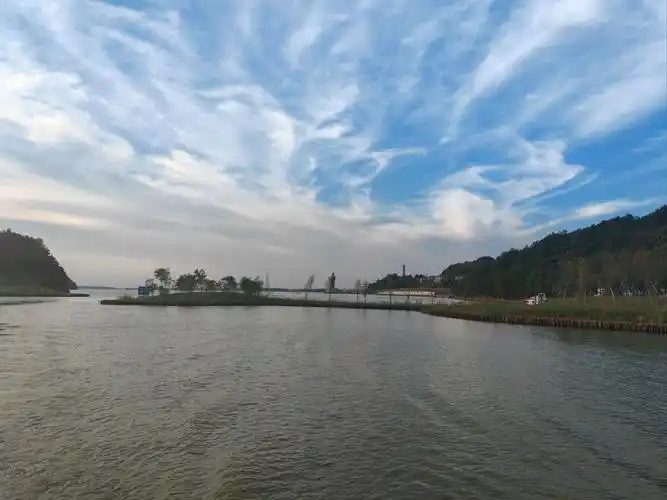 Poyang Lake has been integral to Jiangxi's geography for millennia, fed by five rivers and historically forming part of the great Yangtze floodplain—much as the Danube Delta shaped the cultures of Romania and Ukraine. Ancient records place fishing communities here as early as the Han Dynasty, and the lake's shifting waters have inspired Tang poets who compared its moods to the sea. The Nanchang segment lies at the southwestern tail, where the broad lake begins to narrow toward the Gan River confluence. This peripheral position means visitors miss the lake's grandest open vistas, but gain something rarer: intimate access to one of Asia's most significant wetland ecosystems.
The Nanji Wetland Reserve itself covers thousands of hectares of reed beds and seasonal pools, functioning like a tropical counterpart to Britain's RSPB reserves at Slimbridge or the Wadden Sea along the Dutch–German coast. Designated internationally under the Ramsar Convention, it sustains over 300 bird species during migration, including the Siberian crane—a species whose global population depends heavily on these marshes. Walking the elevated boardwalks in early morning, with mist rising from the shallow waters and the calls of cranes echoing across the reeds, evokes the primordial atmosphere of a European Pleistocene steppe.
Seasonal contrast defines the experience. From November through April, retreating waters reveal vast grass islands and pancake-shaped "dish lakes," painting a gold-and-blue palette reminiscent of Dutch landscape paintings—prime months for photographers and birders alike. May through September floods the area, swallowing the meadows beneath a shimmering inland sea; in late summer, smartweed blossoms turn sections into a surreal "floating meadow," and a temporary road becomes the famous "water highway." Each season rewards a different kind of visitor.
Culturally, the lake sustains a living fishing tradition stretching back generations, with boat-dwelling families preserving techniques and customs that recall Venice's lagoon communities or Scandinavia's boatfolk of old. Nearby Wucheng—ancient trading port across the municipal border in Jiujiang—complements the natural visit with a beautifully preserved merchant town, complete with a migratory-bird museum and Song-dynasty relics, easily paired with a night in a local inn. From the dry-season shores one can also glimpse Luoxingdun, the "Star-Sinking Mound," whose legend Tang dynasty poets immortalized in verse.
Practical planning is straightforward. The Nanji wetlands and most lakeside viewpoints are free to enter, though some reserve core zones require advance registration with the local forestry bureau—check current regulations before traveling. Nanchang city is roughly 350 km southwest of Shanghai and connected by high-speed rail; from downtown, allow two to three hours by car or chartered minivan to reach the reserve entrance. Bring binoculars, sturdy shoes, and warm layers for winter visits; in summer, pack strong insect repellent and sun protection. For travelers seeking classic lake panoramas, consider a two-day extension into Jiujiang to see Luoxingdun, Xieshan Island, and Shizhongshan—the "bell-stone mountain" that Su Shi famously explored by torchlight.
Poyang Lake has been integral to Jiangxi's geography for millennia, fed by five rivers and historically forming part of the great Yangtze floodplain—much as the Danube Delta shaped the cultures of Romania and Ukraine. Ancient records place fishing communities here as early as the Han Dynasty, and the lake's shifting waters have inspired Tang poets who compared its moods to the sea. The Nanchang segment lies at the southwestern tail, where the broad lake begins to narrow toward the Gan River confluence. This peripheral position means visitors miss the lake's grandest open vistas, but gain something rarer: intimate access to one of Asia's most significant wetland ecosystems.
The Nanji Wetland Reserve itself covers thousands of hectares of reed beds and seasonal pools, functioning like a tropical counterpart to Britain's RSPB reserves at Slimbridge or the Wadden Sea along the Dutch–German coast. Designated internationally under the Ramsar Convention, it sustains over 300 bird species during migration, including the Siberian crane—a species whose global population depends heavily on these marshes. Walking the elevated boardwalks in early morning, with mist rising from the shallow waters and the calls of cranes echoing across the reeds, evokes the primordial atmosphere of a European Pleistocene steppe.
Seasonal contrast defines the experience. From November through April, retreating waters reveal vast grass islands and pancake-shaped "dish lakes," painting a gold-and-blue palette reminiscent of Dutch landscape paintings—prime months for photographers and birders alike. May through September floods the area, swallowing the meadows beneath a shimmering inland sea; in late summer, smartweed blossoms turn sections into a surreal "floating meadow," and a temporary road becomes the famous "water highway." Each season rewards a different kind of visitor.
Culturally, the lake sustains a living fishing tradition stretching back generations, with boat-dwelling families preserving techniques and customs that recall Venice's lagoon communities or Scandinavia's boatfolk of old. Nearby Wucheng—ancient trading port across the municipal border in Jiujiang—complements the natural visit with a beautifully preserved merchant town, complete with a migratory-bird museum and Song-dynasty relics, easily paired with a night in a local inn. From the dry-season shores one can also glimpse Luoxingdun, the "Star-Sinking Mound," whose legend Tang dynasty poets immortalized in verse.
Practical planning is straightforward. The Nanji wetlands and most lakeside viewpoints are free to enter, though some reserve core zones require advance registration with the local forestry bureau—check current regulations before traveling. Nanchang city is roughly 350 km southwest of Shanghai and connected by high-speed rail; from downtown, allow two to three hours by car or chartered minivan to reach the reserve entrance. Bring binoculars, sturdy shoes, and warm layers for winter visits; in summer, pack strong insect repellent and sun protection. For travelers seeking classic lake panoramas, consider a two-day extension into Jiujiang to see Luoxingdun, Xieshan Island, and Shizhongshan—the "bell-stone mountain" that Su Shi famously explored by torchlight.