Tibetan Ethnic Market
⭐ 4.00
Yushu City, Yushu Tibetan Autonomous Prefecture, Qinghai Province, China
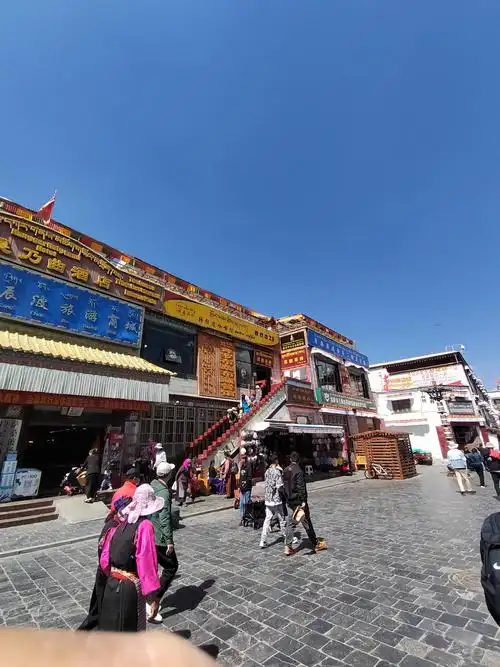 Yushu Autonomous Prefecture sits in southern Qinghai at roughly 3,700 meters elevation, a region long regarded as one of the cradles of Khampa culture. The Khampa people, famed across the Tibetan plateau as spirited horsemen and merchants, have sustained their trading traditions for centuries along ancient routes linking Amdo, Kham, and Central Tibet. Think of it as the Himalayan counterpart to the great caravan bazaars of Samarkand or Kashgar, but reimagined for the modern traveler, where pastoral commerce meets curated cultural tourism.
The market's permanent heart, Kangba Cultural Street, unfurls along the Zachu River with stone-and-timber structures that echo traditional Tibetan courtyard design, whitewashed walls accented by deep red trim and gold-painted lintels. When night falls, the buildings glow like a procession of votive lamps, reminiscent of the illuminated altarpiece festivals of medieval European cathedrals, only here the sanctified energy comes from butter lamps flickering in shop windows and prayer flags catching the mountain breeze.
Culturally, this is where heritage meets reinvention. Artisans sell hand-forged silver and felted wool crafts, while food stalls serve classic tsampa, yak yogurt, and butter tea alongside contemporary creations like yak-meat burgers and yak-latte coffee. During summer and festivals such as the Three-River-Source Eco-Cultural Tourism Festival, pop-up tent markets and trunk-based vendor stalls expand the scene, and visitors are often invited to join the guozhuang, a communal circle dance with roots stretching back over a millennium.
Plan your visit for early evening, between 6 and 10 p.m., when the light softens over the mountains and the night market reaches full pulse. Allow two to three hours to wander, eat, shop, and dance. Bring sun protection and warm layers even in summer, pace yourself due to the altitude, and consider carrying a small oxygen canister. Entry is free, security is reliable, and small-denomination cash remains king; bargaining should be gentle and good-humored. Always ask before photographing monks, prayer flags, or worshippers.
For Western travelers, Yushu's market delivers something the polished souvenir shops of Lhasa rarely can: an unfiltered glimpse of contemporary Tibetan life, where a 700-year-old dance tradition unfolds steps from a yak-burger stand, and where every transaction supports local herder families and traditional craftspeople. It is, quite simply, one of the most authentic cultural encounters left on the plateau.
Yushu Autonomous Prefecture sits in southern Qinghai at roughly 3,700 meters elevation, a region long regarded as one of the cradles of Khampa culture. The Khampa people, famed across the Tibetan plateau as spirited horsemen and merchants, have sustained their trading traditions for centuries along ancient routes linking Amdo, Kham, and Central Tibet. Think of it as the Himalayan counterpart to the great caravan bazaars of Samarkand or Kashgar, but reimagined for the modern traveler, where pastoral commerce meets curated cultural tourism.
The market's permanent heart, Kangba Cultural Street, unfurls along the Zachu River with stone-and-timber structures that echo traditional Tibetan courtyard design, whitewashed walls accented by deep red trim and gold-painted lintels. When night falls, the buildings glow like a procession of votive lamps, reminiscent of the illuminated altarpiece festivals of medieval European cathedrals, only here the sanctified energy comes from butter lamps flickering in shop windows and prayer flags catching the mountain breeze.
Culturally, this is where heritage meets reinvention. Artisans sell hand-forged silver and felted wool crafts, while food stalls serve classic tsampa, yak yogurt, and butter tea alongside contemporary creations like yak-meat burgers and yak-latte coffee. During summer and festivals such as the Three-River-Source Eco-Cultural Tourism Festival, pop-up tent markets and trunk-based vendor stalls expand the scene, and visitors are often invited to join the guozhuang, a communal circle dance with roots stretching back over a millennium.
Plan your visit for early evening, between 6 and 10 p.m., when the light softens over the mountains and the night market reaches full pulse. Allow two to three hours to wander, eat, shop, and dance. Bring sun protection and warm layers even in summer, pace yourself due to the altitude, and consider carrying a small oxygen canister. Entry is free, security is reliable, and small-denomination cash remains king; bargaining should be gentle and good-humored. Always ask before photographing monks, prayer flags, or worshippers.
For Western travelers, Yushu's market delivers something the polished souvenir shops of Lhasa rarely can: an unfiltered glimpse of contemporary Tibetan life, where a 700-year-old dance tradition unfolds steps from a yak-burger stand, and where every transaction supports local herder families and traditional craftspeople. It is, quite simply, one of the most authentic cultural encounters left on the plateau.