Mani Stone Sutra Wall
⭐ 4.20
Mani Stone Sutra Wall, Yushu City, Yushu Tibetan Autonomous Prefecture, Qinghai Province, China
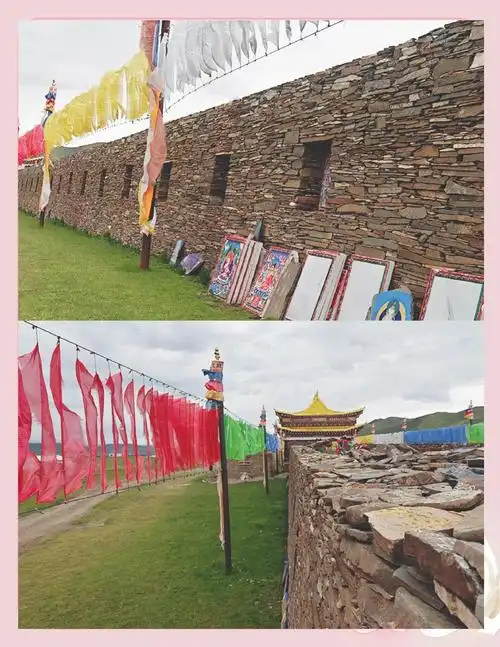 The Jia Na Mani Stone Sutra Wall was founded in the fifty-fourth year of the Kangxi reign (1715) by the first incarnation of Gyalwa Jiana Rinpoche, a celebrated master of the Kagyu lineage of Tibetan Buddhism. For more than three hundred years, pilgrims from across the Tibetan plateau have journeyed here to add their own carved stones to the growing monument, layer upon layer, stone upon stone, much as medieval Europeans contributed labor and donations to build the great Gothic cathedrals of France and Germany over centuries. In 2005, the site was officially certified by Guinness World Records as the largest mani stone heap on earth, a living testament to sustained communal devotion.
The structure follows a precise rectangular plan, stretching 283 meters from east to west and 74 meters from north to south, with walls approximately 2.5 meters high enclosing an area of about 24,000 square meters. The outer walls are densely packed with stones stacked in disciplined rows, each surface engraved with the six-syllable mantra "Om Mani Padme Hum," along with Buddha images, dharani sutras, and devotional verses in classical Tibetan script. Within this remarkable enclosure stands a prayer hall and flagpole, creating a unique arrangement in which a temple resides within a city of scripture, somewhat reminiscent of monastery complexes nestled inside fortified medieval European abbeys.
Every stone represents a personal prayer, a whispered hope, or a memorial offering, transforming the entire site into a vast three-dimensional scripture. Scholars regard the wall as an invaluable living archive for the study of Tibetan religious history, folk customs, and social practice, while the stones themselves preserve centuries of collective memory across generations of the snow-land people. For visitors, the experience offers an intimate encounter with Tibetan Buddhist devotion rendered in stone on a scale found nowhere else.
The site lies roughly three kilometers east of Jiegu Town in Yushu City, at an elevation of about 3,600 meters, and admission is free with no advance booking required. Yushu Batang Airport operates regular flights to Xining and Chengdu, with the drive to the attraction taking around thirty minutes. Because the altitude can challenge even seasoned travelers, visitors are strongly advised to rest one or two days in Yushu after arrival before making the trip, allowing the body to acclimatize gradually to the thin mountain air.
When touring the wall, follow local custom by walking clockwise along the perimeter while turning the prayer wheels or reciting mantras. Do not climb upon, sit on, or lean against the stones, and maintain a respectful silence to preserve the spiritual atmosphere; if you wish to photograph monks or worshippers, seek their permission first. Afternoon weather in Yushu often brings sudden rain and sharp temperature drops, so pack a windproof shell, rain gear, and sturdy non-slip footwear. Elderly travelers, young children, and anyone with a history of altitude-related illness should carefully consider their condition before visiting this lofty sanctuary of stone.
The Jia Na Mani Stone Sutra Wall was founded in the fifty-fourth year of the Kangxi reign (1715) by the first incarnation of Gyalwa Jiana Rinpoche, a celebrated master of the Kagyu lineage of Tibetan Buddhism. For more than three hundred years, pilgrims from across the Tibetan plateau have journeyed here to add their own carved stones to the growing monument, layer upon layer, stone upon stone, much as medieval Europeans contributed labor and donations to build the great Gothic cathedrals of France and Germany over centuries. In 2005, the site was officially certified by Guinness World Records as the largest mani stone heap on earth, a living testament to sustained communal devotion.
The structure follows a precise rectangular plan, stretching 283 meters from east to west and 74 meters from north to south, with walls approximately 2.5 meters high enclosing an area of about 24,000 square meters. The outer walls are densely packed with stones stacked in disciplined rows, each surface engraved with the six-syllable mantra "Om Mani Padme Hum," along with Buddha images, dharani sutras, and devotional verses in classical Tibetan script. Within this remarkable enclosure stands a prayer hall and flagpole, creating a unique arrangement in which a temple resides within a city of scripture, somewhat reminiscent of monastery complexes nestled inside fortified medieval European abbeys.
Every stone represents a personal prayer, a whispered hope, or a memorial offering, transforming the entire site into a vast three-dimensional scripture. Scholars regard the wall as an invaluable living archive for the study of Tibetan religious history, folk customs, and social practice, while the stones themselves preserve centuries of collective memory across generations of the snow-land people. For visitors, the experience offers an intimate encounter with Tibetan Buddhist devotion rendered in stone on a scale found nowhere else.
The site lies roughly three kilometers east of Jiegu Town in Yushu City, at an elevation of about 3,600 meters, and admission is free with no advance booking required. Yushu Batang Airport operates regular flights to Xining and Chengdu, with the drive to the attraction taking around thirty minutes. Because the altitude can challenge even seasoned travelers, visitors are strongly advised to rest one or two days in Yushu after arrival before making the trip, allowing the body to acclimatize gradually to the thin mountain air.
When touring the wall, follow local custom by walking clockwise along the perimeter while turning the prayer wheels or reciting mantras. Do not climb upon, sit on, or lean against the stones, and maintain a respectful silence to preserve the spiritual atmosphere; if you wish to photograph monks or worshippers, seek their permission first. Afternoon weather in Yushu often brings sudden rain and sharp temperature drops, so pack a windproof shell, rain gear, and sturdy non-slip footwear. Elderly travelers, young children, and anyone with a history of altitude-related illness should carefully consider their condition before visiting this lofty sanctuary of stone.