Jiegu Town
⭐ 3.80
Jiegu Town, Yushu City, Yushu Tibetan Autonomous Prefecture, Qinghai Province, China
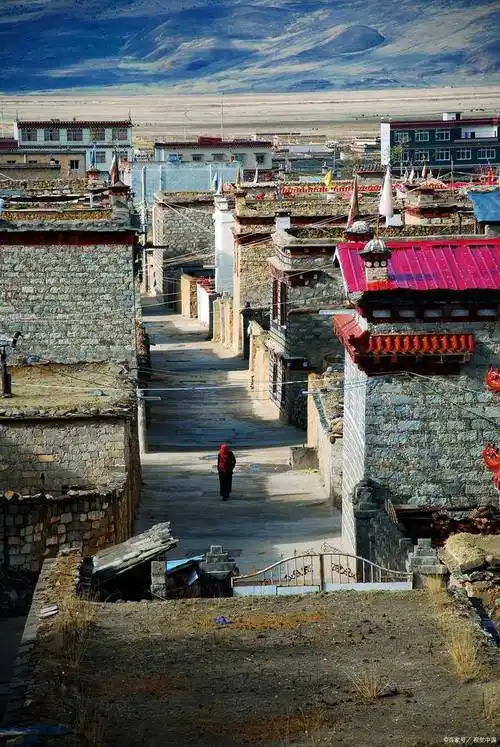 Jiegu occupies a singular place on the historical map, perched where the ancient Tang-Tibet Road—the overland silk route that connected Tang Dynasty China (618–907 CE) to the Tibetan Empire—met the legendary Tea-Horse Trail linking Yunnan with the Tibetan plateau. Like a Tibetan counterpart to the medieval pilgrim crossroads of Santiago de Compostela or the Silk Road oasis of Kashgar, Jiegu channeled monks, merchants, and royal envoys for over a millennium. In 641 CE, Princess Wencheng traveled through this very region on her diplomatic marriage to Songtsen Gampo, leaving behind Tang-era cliff carvings and hybrid Sino-Tibetan architecture that still survive today—tangible echoes of an era when East and West met on the roof of the world.
The crown jewel of Jiegu's sacred landscape is the Xinzhai Mani Stone Sutra City, where pilgrims have stacked more than 2.5 billion carved prayer stones into a sprawling, hill-sized monument. Imagine a stone labyrinth roughly the footprint of the Great Pyramid at Giza, yet formed entirely from quartzite schist etched with sacred mantras—every pebble a whispered prayer accumulating across centuries. Nearby, Jiegu Temple clings dramatically to a hillside as the principal monastery of the Sakya school of Tibetan Buddhism, whose crimson-and-white-robed lamas trace their lineage to eleventh-century Bengal. A short climb to the rear viewpoint reveals the entire town cradled beneath snow-capped peaks and prayer-flag-strewn ridgelines.
Some twenty kilometers outside town, the Princess Wencheng Temple in Beinagou gorge stands as one of China's oldest surviving examples of Sino-Tibetan religious fusion. Erected during the Tang dynasty and later rebuilt, the temple houses a revered statue of the princess herself, with architecture that gracefully blends Tang-era timberwork echoes with Tibetan stone craftsmanship—a visual testament to how the Silk Road produced hybrid civilizations from Antioch to Xian. Back in town, the Yushu Prefecture Museum and Dongzang Great Scripture Hall safeguard ancient Buddhist texts, while the Earthquake Memorial commemorates the town's remarkable recovery from the 2010 disaster that reshaped modern Tibetan identity.
Foreign travelers should note that Yushu is not an open independent-travel zone—visitors must arrange permits through licensed Chinese travel agencies and hire local guides with private vehicles for the duration. Virtually all major sites, from the Mani Stone City to Jiegu Temple and the museum complex, are admission-free. The town's key landmarks sit within easy walking distance of one another, though Princess Wencheng Temple and surrounding grasslands require a short drive. Roads are generally well-maintained, but altitudes are extreme; temperatures can plunge below minus twenty degrees Celsius in winter, while summer nights remain chilly despite mild midday warmth.
The optimal travel window runs from June through September, when emerald grasslands invite horseback riding and yaks graze beneath fluttering prayer flags against deep blue skies. Travelers lucky enough to visit in July can witness the spectacular Yushu Horse Racing Festival, where Khampa riders in sheepskin robes demonstrate skills passed down for centuries—comparable in spirit to Mongolia's famed Naadam games. First-time visitors must allow two to three days for altitude adjustment at the 3,700-meter elevation; avoid strenuous activity and alcohol, and prepare with warm layered clothing, sun protection, and altitude medication. Remember to circle temples clockwise, never step on thresholds, and refrain from photographing inside shrines to engage respectfully with one of Asia's most profound living spiritual landscapes.
Jiegu occupies a singular place on the historical map, perched where the ancient Tang-Tibet Road—the overland silk route that connected Tang Dynasty China (618–907 CE) to the Tibetan Empire—met the legendary Tea-Horse Trail linking Yunnan with the Tibetan plateau. Like a Tibetan counterpart to the medieval pilgrim crossroads of Santiago de Compostela or the Silk Road oasis of Kashgar, Jiegu channeled monks, merchants, and royal envoys for over a millennium. In 641 CE, Princess Wencheng traveled through this very region on her diplomatic marriage to Songtsen Gampo, leaving behind Tang-era cliff carvings and hybrid Sino-Tibetan architecture that still survive today—tangible echoes of an era when East and West met on the roof of the world.
The crown jewel of Jiegu's sacred landscape is the Xinzhai Mani Stone Sutra City, where pilgrims have stacked more than 2.5 billion carved prayer stones into a sprawling, hill-sized monument. Imagine a stone labyrinth roughly the footprint of the Great Pyramid at Giza, yet formed entirely from quartzite schist etched with sacred mantras—every pebble a whispered prayer accumulating across centuries. Nearby, Jiegu Temple clings dramatically to a hillside as the principal monastery of the Sakya school of Tibetan Buddhism, whose crimson-and-white-robed lamas trace their lineage to eleventh-century Bengal. A short climb to the rear viewpoint reveals the entire town cradled beneath snow-capped peaks and prayer-flag-strewn ridgelines.
Some twenty kilometers outside town, the Princess Wencheng Temple in Beinagou gorge stands as one of China's oldest surviving examples of Sino-Tibetan religious fusion. Erected during the Tang dynasty and later rebuilt, the temple houses a revered statue of the princess herself, with architecture that gracefully blends Tang-era timberwork echoes with Tibetan stone craftsmanship—a visual testament to how the Silk Road produced hybrid civilizations from Antioch to Xian. Back in town, the Yushu Prefecture Museum and Dongzang Great Scripture Hall safeguard ancient Buddhist texts, while the Earthquake Memorial commemorates the town's remarkable recovery from the 2010 disaster that reshaped modern Tibetan identity.
Foreign travelers should note that Yushu is not an open independent-travel zone—visitors must arrange permits through licensed Chinese travel agencies and hire local guides with private vehicles for the duration. Virtually all major sites, from the Mani Stone City to Jiegu Temple and the museum complex, are admission-free. The town's key landmarks sit within easy walking distance of one another, though Princess Wencheng Temple and surrounding grasslands require a short drive. Roads are generally well-maintained, but altitudes are extreme; temperatures can plunge below minus twenty degrees Celsius in winter, while summer nights remain chilly despite mild midday warmth.
The optimal travel window runs from June through September, when emerald grasslands invite horseback riding and yaks graze beneath fluttering prayer flags against deep blue skies. Travelers lucky enough to visit in July can witness the spectacular Yushu Horse Racing Festival, where Khampa riders in sheepskin robes demonstrate skills passed down for centuries—comparable in spirit to Mongolia's famed Naadam games. First-time visitors must allow two to three days for altitude adjustment at the 3,700-meter elevation; avoid strenuous activity and alcohol, and prepare with warm layered clothing, sun protection, and altitude medication. Remember to circle temples clockwise, never step on thresholds, and refrain from photographing inside shrines to engage respectfully with one of Asia's most profound living spiritual landscapes.