Zhaxi Peninsula
⭐ 4.20
Zhaxi Peninsula, Yushu Tibetan Autonomous Prefecture, Qinghai Province, China
 **Geological Marvel**
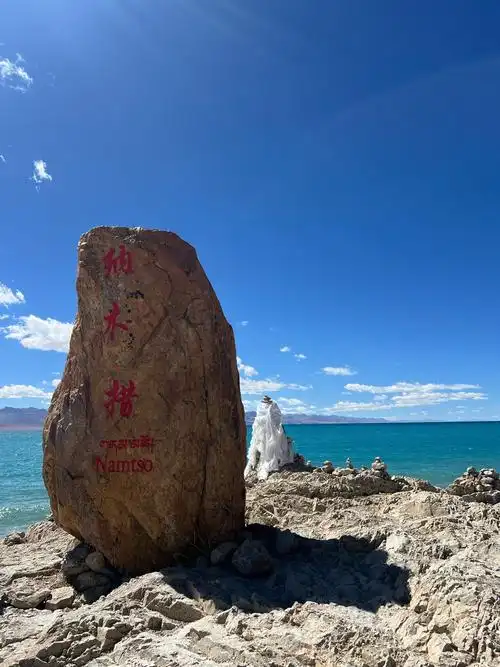
Zhaxi Peninsula juts three kilometers into Namtso Lake, Tibet's largest saltwater body, forming the biggest of the lake's natural peninsulas at a breathtaking elevation of 4,718 meters—roughly the height of Mont Blanc's summit. Over countless millennia, relentless winds and mineral-rich waters have sculpted the limestone into a high-altitude karst landscape of towering stone pinnacles, natural stone bridges, and cave systems dripping with delicate stalactites. This "geological museum of Namtso" invites comparisons to Ireland's otherworldly Burren or the dramatic limestone formations of Slovenia's Karst region, though few such landscapes sit so close to the troposphere. Visitors wandering its rocky spine feel transported to another planet.
**Ancient Voices in Stone**
The peninsula's northern cliffs preserve a remarkable gallery of rock art spanning 2,200 years, beginning when the Qin Dynasty unified China and Hannibal prepared his assault on Rome. The images continue through the 9th century CE, the era of Tang Dynasty poetry and Charlemagne's fragmented empire. These petroglyphs—comparable in significance to Norway's UNESCO-listed Alta carvings—depict hunting, herding, and ritual life of pre-Buddhist Tibetan nomads. Particularly noteworthy are rare painted human faces that hold exceptional academic value, illuminating a high-altitude pastoral civilization that flourished centuries before Buddhism reached the Tibetan Plateau.
**Visual Spectacle**
From the peninsula's rocky spine, travelers enjoy uninterrupted 360-degree panoramas of sapphire-hued Namtso—often called the "Heavenly Lake"—framed by the 7,000-meter snow peaks of the sacred Nyainqêntanglha Range. Dawn ignites the lake's surface with molten gold; dusk transforms its mirror-like waters into a canvas of reflected clouds; and after dark, the Milky Way arches across one of Earth's clearest skies, drawing astrophotographers from across the globe. Each spring and summer, friendly red-billed gulls gather along the shoreline shallows, often feeding from visitors' hands in scenes reminiscent of Parisian riverside encounters.
**Practical Information**
Zhaxi Peninsula forms the core viewing zone of the Namtso National Park and cannot be reached by private vehicle. Visitors must transfer to a mandatory sightseeing shuttle in Damxung County, with a combined ticket and shuttle pass costing approximately 210 yuan (around $30). Shuttles operate until roughly 6:00 PM, so plan at least three hours for the visit. The prime season runs from May through September, when temperatures are mild and the lake displays its purest shades of blue. From November to March, the lake transforms into a surreal sheet of cracking blue ice—extraordinary to photograph but accessible only to well-prepared travelers.
**Visiting Tips**
Altitude is the principal challenge: Namtso sits far higher than Europe's loftiest cable car stations, so acclimatizing in Lhasa for at least two days is essential. Bring a windproof down jacket or shell, as temperatures plummet after sunset even in summer, along with high-SPF sunscreen, sunglasses, and altitude medication. Lakeside guesthouses are basic—refuge-style simplicity rather than hotel comfort—but the unparalleled silence, starlit skies, and sense of standing at the roof of the world more than compensate. Zhaxi is not merely a destination; it is a transformative encounter with one of Asia's last great wilderness frontiers.
**Geological Marvel**
Zhaxi Peninsula juts three kilometers into Namtso Lake, Tibet's largest saltwater body, forming the biggest of the lake's natural peninsulas at a breathtaking elevation of 4,718 meters—roughly the height of Mont Blanc's summit. Over countless millennia, relentless winds and mineral-rich waters have sculpted the limestone into a high-altitude karst landscape of towering stone pinnacles, natural stone bridges, and cave systems dripping with delicate stalactites. This "geological museum of Namtso" invites comparisons to Ireland's otherworldly Burren or the dramatic limestone formations of Slovenia's Karst region, though few such landscapes sit so close to the troposphere. Visitors wandering its rocky spine feel transported to another planet.
**Ancient Voices in Stone**
The peninsula's northern cliffs preserve a remarkable gallery of rock art spanning 2,200 years, beginning when the Qin Dynasty unified China and Hannibal prepared his assault on Rome. The images continue through the 9th century CE, the era of Tang Dynasty poetry and Charlemagne's fragmented empire. These petroglyphs—comparable in significance to Norway's UNESCO-listed Alta carvings—depict hunting, herding, and ritual life of pre-Buddhist Tibetan nomads. Particularly noteworthy are rare painted human faces that hold exceptional academic value, illuminating a high-altitude pastoral civilization that flourished centuries before Buddhism reached the Tibetan Plateau.
**Visual Spectacle**
From the peninsula's rocky spine, travelers enjoy uninterrupted 360-degree panoramas of sapphire-hued Namtso—often called the "Heavenly Lake"—framed by the 7,000-meter snow peaks of the sacred Nyainqêntanglha Range. Dawn ignites the lake's surface with molten gold; dusk transforms its mirror-like waters into a canvas of reflected clouds; and after dark, the Milky Way arches across one of Earth's clearest skies, drawing astrophotographers from across the globe. Each spring and summer, friendly red-billed gulls gather along the shoreline shallows, often feeding from visitors' hands in scenes reminiscent of Parisian riverside encounters.
**Practical Information**
Zhaxi Peninsula forms the core viewing zone of the Namtso National Park and cannot be reached by private vehicle. Visitors must transfer to a mandatory sightseeing shuttle in Damxung County, with a combined ticket and shuttle pass costing approximately 210 yuan (around $30). Shuttles operate until roughly 6:00 PM, so plan at least three hours for the visit. The prime season runs from May through September, when temperatures are mild and the lake displays its purest shades of blue. From November to March, the lake transforms into a surreal sheet of cracking blue ice—extraordinary to photograph but accessible only to well-prepared travelers.
**Visiting Tips**
Altitude is the principal challenge: Namtso sits far higher than Europe's loftiest cable car stations, so acclimatizing in Lhasa for at least two days is essential. Bring a windproof down jacket or shell, as temperatures plummet after sunset even in summer, along with high-SPF sunscreen, sunglasses, and altitude medication. Lakeside guesthouses are basic—refuge-style simplicity rather than hotel comfort—but the unparalleled silence, starlit skies, and sense of standing at the roof of the world more than compensate. Zhaxi is not merely a destination; it is a transformative encounter with one of Asia's last great wilderness frontiers.