Sancharhe Ecological Tourism Area
⭐ 2.00
Yangming District, Mudanjiang City, Heilongjiang Province, China
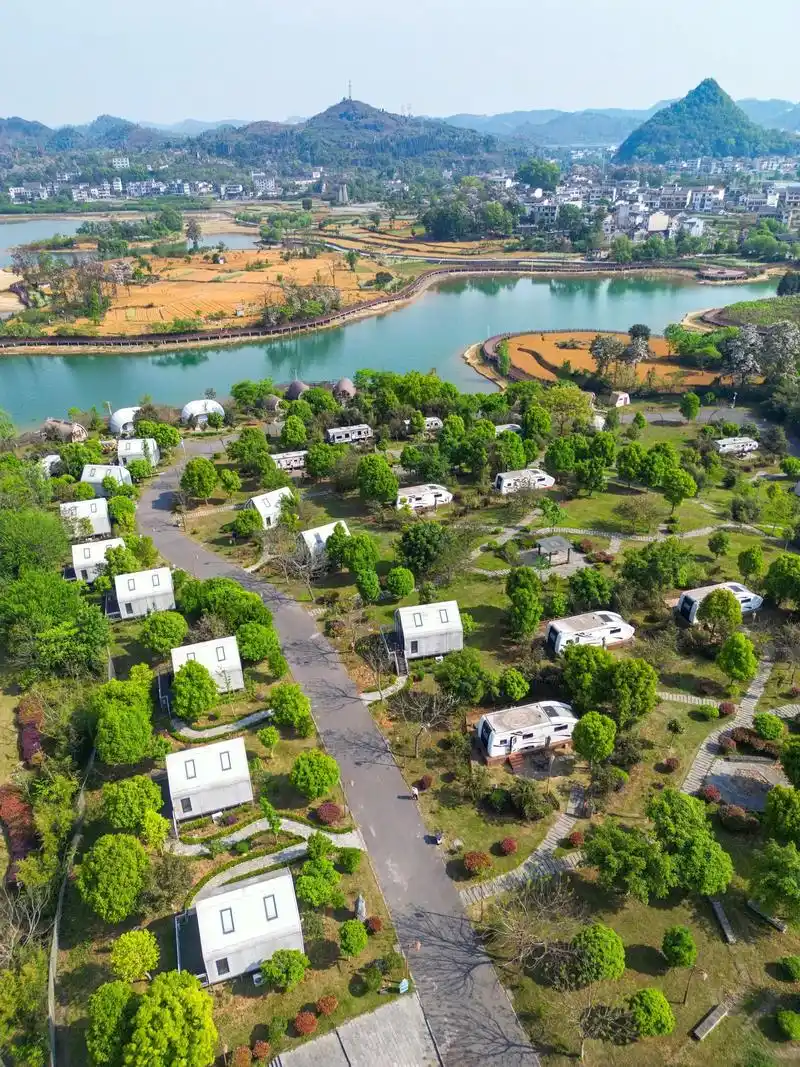 The name Sanchhe, meaning "Three Forks," refers to the natural confluence of three small streams that form part of the broader Mudanjiang River system on the northern edge of the city. Set in the Aimin District, this waterway has long served a hydrological role, regulating drainage across the surrounding farmland and woodland. Geographically, the area belongs to the cold-temperate zone of China's northeast, a region whose mixed forests and long winters echo the boreal landscapes of Scandinavia or the Baltic states. Unlike dramatic gorges carved by rivers elsewhere in Asia, Sanchhe offers a softer, gentler topography of gradual slopes and slow currents—closer in feel to a quiet English chalk stream than to a mountain torrent.
The riverbanks are lined with secondary woodland and patchy farmland, retaining much of their original character despite the city's proximity. In late spring and summer, the trails attract herons, kingfishers, and other waterfowl, while wildflowers soften the edges of the basic concrete footpaths. Yet because the site has never been developed as a formal scenic area, there are no observation decks, no boat services, and no interpretive panels explaining the local flora or wildlife. Visitors expecting the polished infrastructure of a national park will find the experience refreshingly raw, though some may feel the scenery lacks a defining focal point.
The surrounding Aimin District carries quiet historical weight: it lies near the heartland celebrated in the novel "Tracks in the Snowy Forest," which dramatizes the Communist guerrilla campaigns against bandits and Nationalist forces in the late 1940s. Echoes of those partisan-era struggles, which parallel in spirit the French Resistance or the Yugoslav Partisans of the same period, are stronger at nearby landmarks than along the river itself. The Sanchhe banks bear no monuments, plaques, or memorials, so history here must be sought through context rather than signage, making the site better suited to those already curious about the region's past.
Facilities are minimal. The basic riverside walkway runs a short distance along both banks, with simple seating in places, but there are no cafés, restrooms, information booths, or parking specifically for tourists. Public buses and short taxi rides from central Mudanjiang will drop visitors within walking distance of the river. Summer brings mosquitoes and humidity; autumn simplifies the view to russet leaves and bare branches; winter, while atmospheric, offers no dedicated ice or snow activities here. Plan for a one-to-two-hour visit, wear comfortable walking shoes, and bring insect repellent between June and August.
For international travelers, Sanchhe works best as a casual, low-expectation stop rather than a headline destination. Those drawn to Mudanjiang for its wilderness and revolutionary-era stories will find richer rewards at the nearby Diaoguan National Forest Park, which houses the main "Tracks in the Snowy Forest" heritage sites, or at Hengdaoheizi, a charming old logging town turned heritage district often likened to a smaller, frozen cousin of Alpine villages. Travelers should also note that the frequently advertised "AAAA-rated Sanchhe Scenic Area" belongs to Zhenfeng County in Guizhou Province, not to Heilongjiang—an important distinction when researching online.
The name Sanchhe, meaning "Three Forks," refers to the natural confluence of three small streams that form part of the broader Mudanjiang River system on the northern edge of the city. Set in the Aimin District, this waterway has long served a hydrological role, regulating drainage across the surrounding farmland and woodland. Geographically, the area belongs to the cold-temperate zone of China's northeast, a region whose mixed forests and long winters echo the boreal landscapes of Scandinavia or the Baltic states. Unlike dramatic gorges carved by rivers elsewhere in Asia, Sanchhe offers a softer, gentler topography of gradual slopes and slow currents—closer in feel to a quiet English chalk stream than to a mountain torrent.
The riverbanks are lined with secondary woodland and patchy farmland, retaining much of their original character despite the city's proximity. In late spring and summer, the trails attract herons, kingfishers, and other waterfowl, while wildflowers soften the edges of the basic concrete footpaths. Yet because the site has never been developed as a formal scenic area, there are no observation decks, no boat services, and no interpretive panels explaining the local flora or wildlife. Visitors expecting the polished infrastructure of a national park will find the experience refreshingly raw, though some may feel the scenery lacks a defining focal point.
The surrounding Aimin District carries quiet historical weight: it lies near the heartland celebrated in the novel "Tracks in the Snowy Forest," which dramatizes the Communist guerrilla campaigns against bandits and Nationalist forces in the late 1940s. Echoes of those partisan-era struggles, which parallel in spirit the French Resistance or the Yugoslav Partisans of the same period, are stronger at nearby landmarks than along the river itself. The Sanchhe banks bear no monuments, plaques, or memorials, so history here must be sought through context rather than signage, making the site better suited to those already curious about the region's past.
Facilities are minimal. The basic riverside walkway runs a short distance along both banks, with simple seating in places, but there are no cafés, restrooms, information booths, or parking specifically for tourists. Public buses and short taxi rides from central Mudanjiang will drop visitors within walking distance of the river. Summer brings mosquitoes and humidity; autumn simplifies the view to russet leaves and bare branches; winter, while atmospheric, offers no dedicated ice or snow activities here. Plan for a one-to-two-hour visit, wear comfortable walking shoes, and bring insect repellent between June and August.
For international travelers, Sanchhe works best as a casual, low-expectation stop rather than a headline destination. Those drawn to Mudanjiang for its wilderness and revolutionary-era stories will find richer rewards at the nearby Diaoguan National Forest Park, which houses the main "Tracks in the Snowy Forest" heritage sites, or at Hengdaoheizi, a charming old logging town turned heritage district often likened to a smaller, frozen cousin of Alpine villages. Travelers should also note that the frequently advertised "AAAA-rated Sanchhe Scenic Area" belongs to Zhenfeng County in Guizhou Province, not to Heilongjiang—an important distinction when researching online.