Site of Shangjing Longquan Prefecture of Bohai Kingdom
⭐ 3.20
Ning'an City, Mudanjiang, Heilongjiang Province, China
 The Bohai Kingdom emerged in 698 CE when a local leader broke away from the crumbling Tang frontier, forging a confederation of Mohe, Goguryeo, and other peoples of northeast Asia. By 755, the rulers had moved their capital to this sheltered valley, where it thrived for 171 years until falling to the Khitan Liao in 926. Contemporaries called Bohai the "Hedong Shengguo"—the Flourishing State East of the Sea—and it exchanged embassies with Japan, sent students to Chang'an, and projected power across Manchuria and northern Korea. Like the Umayyad court at Córdoba or Constantinople under the Macedonians, Bohai stood as a sophisticated cultural bridge between empires.
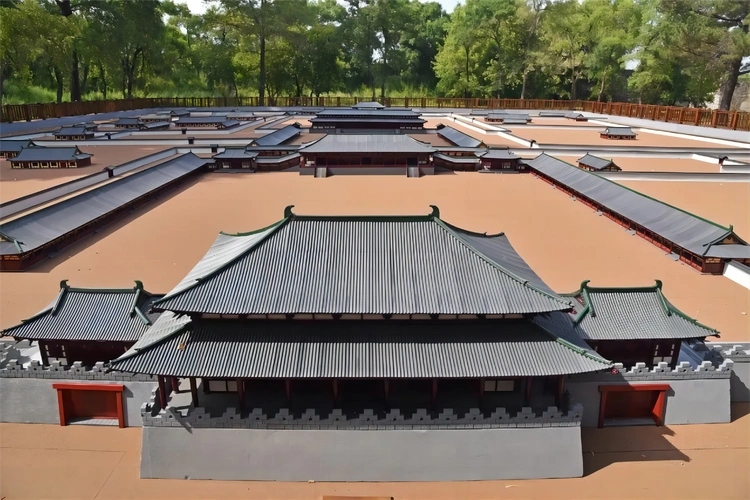
What survives is a remarkably legible city plan: three nested rectangular walls, an outer city, an inner city, and a sacrosanct imperial palace, all aligned on a north-south axis and bisected by a broad processional avenue evocative of Changan's famous Jianzhong Boulevard or the Champs-Élysées of medieval Paris. The earthen rammed platforms of five successive palace halls remain visible, their symmetry and clear zoning recalling the grids of Roman military camps adapted into imperial capitals throughout Eurasia. Surface architecture has largely vanished, but the layout tells a complete story of Tang-inspired urban design transplanted to the Manchurian frontier.
The site's cultural riches include nine Buddhist temple foundations, reflecting the faith that swept east along the Silk Road and rivaled the temple complexes of Bagan or Nara. The most rewarding is Xinglong Temple, where a colossal 7th-century-style stone Buddha and a towering stone lantern, both carved from local volcanic rock, are the rare original Bohai sculptures still standing in the open air. A short drive away, the Three Spirits Tombs (Sanlingfen) royal necropolis adds context for the dynasty's burial customs, rivaling in scale the kurgans of the Eurasian steppes.
Reaching the site requires planning: from Mudanjiang, hire a private car or join a Jingpo Lake day tour (about one hour each way), as public buses are infrequent. Begin at the Shangjing Site Museum housed within Xinglong Temple (entrance around ¥50), then walk to the palace ruins area (around ¥30). The museum opens 09:00–17:00 with last entry at 16:00, though winter hours shorten; advance booking of a Chinese or English-speaking guide is strongly recommended, as interpretive signage is limited.
Visit between May and October, when summer grasses soften the earthen platforms and the air is warm—snow lingers well into spring here, only 200 km from the Russian border. Wear sturdy hiking shoes, carry water and snacks (no on-site food), and bring binoculars to pick out the geometric patterns of the old streets. For travelers interested in Silk Road trade, Tang dynasty culture, or the lesser-known kingdoms of medieval East Asia, this remote and atmospheric site offers something almost no other place can: the chance to walk the vanished imperial grid of a forgotten "Manchurian Chang'an."
The Bohai Kingdom emerged in 698 CE when a local leader broke away from the crumbling Tang frontier, forging a confederation of Mohe, Goguryeo, and other peoples of northeast Asia. By 755, the rulers had moved their capital to this sheltered valley, where it thrived for 171 years until falling to the Khitan Liao in 926. Contemporaries called Bohai the "Hedong Shengguo"—the Flourishing State East of the Sea—and it exchanged embassies with Japan, sent students to Chang'an, and projected power across Manchuria and northern Korea. Like the Umayyad court at Córdoba or Constantinople under the Macedonians, Bohai stood as a sophisticated cultural bridge between empires.
What survives is a remarkably legible city plan: three nested rectangular walls, an outer city, an inner city, and a sacrosanct imperial palace, all aligned on a north-south axis and bisected by a broad processional avenue evocative of Changan's famous Jianzhong Boulevard or the Champs-Élysées of medieval Paris. The earthen rammed platforms of five successive palace halls remain visible, their symmetry and clear zoning recalling the grids of Roman military camps adapted into imperial capitals throughout Eurasia. Surface architecture has largely vanished, but the layout tells a complete story of Tang-inspired urban design transplanted to the Manchurian frontier.
The site's cultural riches include nine Buddhist temple foundations, reflecting the faith that swept east along the Silk Road and rivaled the temple complexes of Bagan or Nara. The most rewarding is Xinglong Temple, where a colossal 7th-century-style stone Buddha and a towering stone lantern, both carved from local volcanic rock, are the rare original Bohai sculptures still standing in the open air. A short drive away, the Three Spirits Tombs (Sanlingfen) royal necropolis adds context for the dynasty's burial customs, rivaling in scale the kurgans of the Eurasian steppes.
Reaching the site requires planning: from Mudanjiang, hire a private car or join a Jingpo Lake day tour (about one hour each way), as public buses are infrequent. Begin at the Shangjing Site Museum housed within Xinglong Temple (entrance around ¥50), then walk to the palace ruins area (around ¥30). The museum opens 09:00–17:00 with last entry at 16:00, though winter hours shorten; advance booking of a Chinese or English-speaking guide is strongly recommended, as interpretive signage is limited.
Visit between May and October, when summer grasses soften the earthen platforms and the air is warm—snow lingers well into spring here, only 200 km from the Russian border. Wear sturdy hiking shoes, carry water and snacks (no on-site food), and bring binoculars to pick out the geometric patterns of the old streets. For travelers interested in Silk Road trade, Tang dynasty culture, or the lesser-known kingdoms of medieval East Asia, this remote and atmospheric site offers something almost no other place can: the chance to walk the vanished imperial grid of a forgotten "Manchurian Chang'an."