Coloane was, until reclaimed land joined it to Taipa in the late twentieth century, Macau's quietest outpost—an island that long resisted the peninsula's casino-driven reinvention. Its market complex continues a market tradition stretching back to the days when Portuguese traders, Chinese fishermen, and Macaense families bartered along this coast, four centuries before Vegas ever opened. Think of it as a working cousin to Lisbon's Mercado da Ribeira or Marseille's Noailles market: everyday, multilingual, and proudly unpolished. The permanent structure next to the light-rail halt represents the meeting point of modern infrastructure and one of Asia's oldest colonial port cultures.
Inside, the ground floor is a compact parade of glistening fish, tropical fruit, dried seafood, and packaged Macanese souvenirs—almond cookies, jerky, and pork floss. Downstairs, a simple food court serves the territory's most-loved comfort dishes: creamy water-crab congee rich with briny sweetness, and the crispy pork-chop bun (a Macanese answer to Portugal's bifana). Portions are generous and prices modest by Macau standards, making it an honest alternative to the showy restaurant scene of the Cotai Strip. The atmosphere echoes a small-town French or Italian market hall—functional, sociable, and welcoming to browsers.
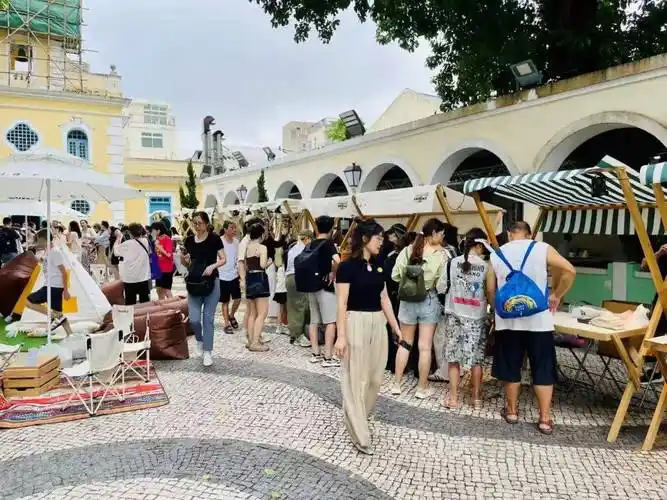
Beyond the permanent pavilion, temporary markets transform Largo de Santo Estêvão and other squares into rotating showcases of local design: hand-poured candles, artisan coffee roasters, illustrated zines, and live acoustic sets. These pop-ups recall weekend creative markets in Berlin's Kreuzberg or London's Bermondsey, transplanted to a former fishing village. Held mostly on weekends and during summer festivals, each event lasts two to four days, so checking Macao Government Tourism Office listings before visiting is essential.
Practical logistics are refreshingly straightforward. Take the Macau Light Rapid Transit to Seac Pai Van station—about five minutes on foot from the market—and you'll avoid Cotai's notorious traffic. Drivers can use nearby public lots, though weekends fill quickly. The market itself stays open year-round, and a visit of one to two hours is plenty; plan to arrive between 3 and 6 pm for the best light, fewer lunch crowds, and the chance to chat with stallholders. Carry both cash and mobile payment apps, as some small vendors struggle with change.
Its real magic lies in context. From the market, wander five minutes to the butter-yellow Chapel of St. Francis Xavier, then stroll along pastel-painted lanes toward the centuries-old Tam Kung Temple, where seafarers once prayed for safe voyages. A ten-minute drive brings you to Lord Stow's Bakery (the original of the famed Portuguese egg-tart empire) and Coloane's black-sand beach, ideal at sunset. Pair the market with this broader circuit—morning photos along Avenida de Cinco de Outubro, a market lunch, then pastries and ocean—and you'll glimpse a Macau that most tourists, swept up in Cotai's neon, never see.