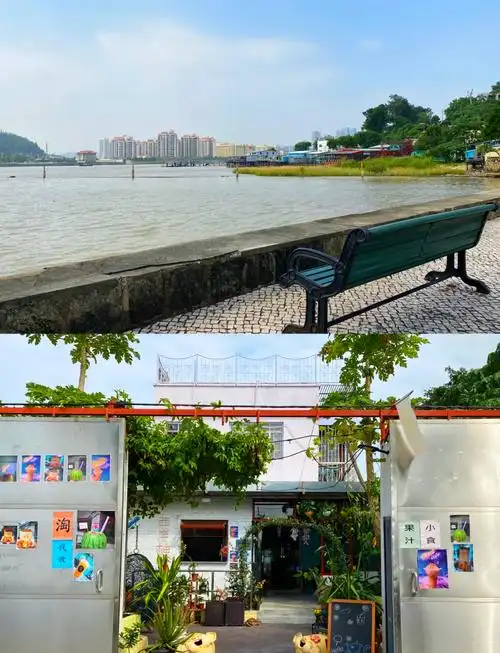
Once a standalone island off Macau's southern coast, Coloane was connected to Taipa by late-19th-century reclamation works that reshaped the Pearl River Delta. Long before the Portuguese arrived in 1557 and leased this stretch of coast, the area served as a thriving fishing and trading outpost for Cantonese merchants plying waters between Guangdong and Hong Kong. Today, while most of Macau's old quarters bowed to high-rise development, Coloane's narrow lanes, weathered stone walls, and unhurried rhythm preserve a way of life that stretches back centuries—much like Portugal's own coastal villages along the Algarve.
The village's architectural centerpiece is the butter-yellow Chapel of St. Francis Xavier, a 1928 Baroque jewel crowned with white trim and a sky-blue dome. Modest in scale, it recalls Portugal's countless gilded parish churches and has served as a backdrop for several films. Along the main Tenente Mário de Almeida Ribeiro street, wave-patterned cobblestones—a Portuguese paving tradition still seen in Lisbon's Alfama—lead past faded mint, peach, and ochre townhouses. The mint-green Coloane Library, a converted colonial residence, anchors the village's artistic identity, transforming the entire district into an open-air museum of Sino-Portuguese vernacular design.
Cultural life here revolves around two enduring traditions: fishing and pastry. At the weathered pier, rusting wooden boats still bob beside the tiny Tin Hau Temple, a 200-year-old shrine honoring the sea goddess who has watched over generations of mariners. A short walk leads to the original Lord Stow's Bakery, opened in 1989 by British-born Andrew Stow, whose custard-and-caramel egg tart revolutionized Macau's food scene and sparked a global craze. Nearby, family-run cafés serve thick Portuguese-style coffee and home-style dishes, while the abandoned shipyards of Lai Chi Vun stand as rusted monuments to the village's industrial past.
Practical details make visiting refreshingly simple. Coloane Village is open 24 hours and completely free to enter—plan for two to three hours of leisurely wandering. From the Macau Peninsula or Taipa, take bus 15, 21A, 25, or 26A to the "Coloane Village" stop; taxis from central Macau take 15–20 minutes. Several older shops accept only Macau patacas in cash, so carry around 200–500 MOP in small notes. The village is largely flat but involves considerable walking on uneven stone pavements, so comfortable shoes are essential.
Visit between 3 pm and sunset, when the late afternoon light turns the pastel facades into a photographer's dream and the waterfront glows with golden-hour reflections across the South China Sea. Summer visitors should pack sunscreen and mosquito repellent, while winter brings cooler, drier weather ideal for long walks. Adventurous travelers can extend the day to nearby Hac Sa Beach, famous for its unusual black volcanic sand, or Bamboo Bay—both reachable within ten minutes by bus—for a full half-day or full-day Coloane circuit.
Coloane Village offers something rare in modern Macau: authenticity. Where the Cotai Strip delivers engineered spectacle, this corner of the former Portuguese enclave delivers genuine atmosphere—church bells at dusk, fisherfolk mending nets, and the scent of warm custard drifting from a corner bakery. It is the perfect counterbalance to a Macau itinerary dominated by casinos and crowds, and a reminder that the territory's true soul lies in its quietest streets.