Bayi Park
⭐ 3.60
Donghu District, Nanchang, Jiangxi, China
 A garden with roots older than Charlemagne's court: Bayi Park traces its origins to 802 CE, when Tang Dynasty prefect Wei Dan dredged East Lake and laid the foundation for Nanchang's urban water system. By the Ming and Qing eras, the lake's eastern shore hosted Jiangxi's imperial examination compound, where scholars competed for civil service appointments in a system as rigorous as Europe's medieval universities. The park received its current name in 1950, commemorating Nanchang's pivotal role in the Communist revolution, lending the site a layered identity that bridges imperial antiquity and modern history.
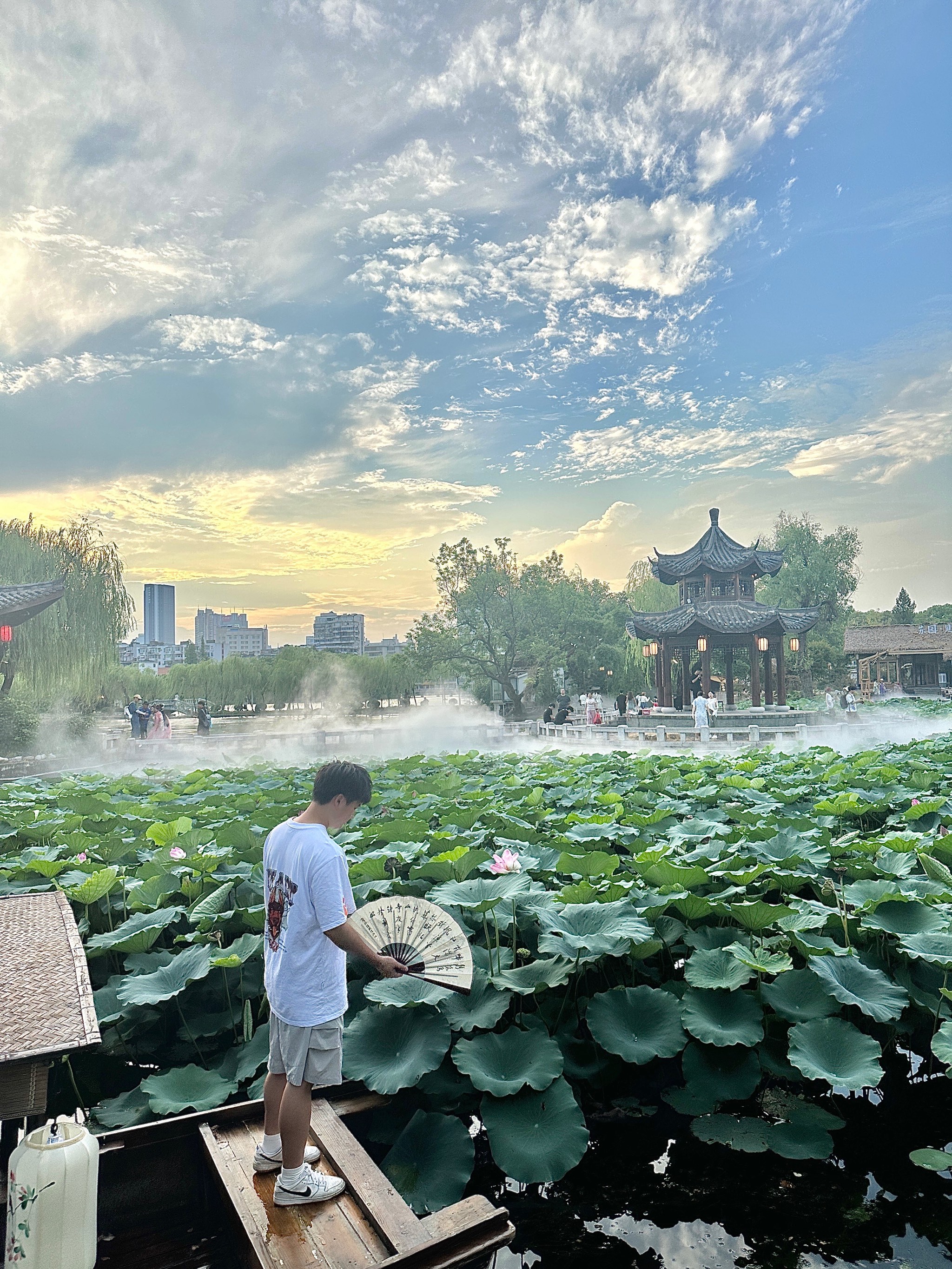
The 24-hectare landscape reads like a classical Chinese scroll painting come to life. Baihua Islet anchors the composition, its weathered steles quietly recording the city's millennium-long story. The Nine-Turn Bridge, a zigzagging walkway beloved in Chinese garden design for warding off evil spirits, links the islet to the Su Embankment, a tree-canopied causeway where locals escape the summer heat. Lotus flowers blanket the lake from June through August, evoking comparisons to Monet's Giverny or the lotus ponds at Japan's Kenroku-en.
The park functions as an open-air museum scattered across manicured lawns. More than a dozen stone sculptures, including funerary figures and mythical beasts carved between the Jin Dynasty and Qing Dynasty, stand along the Heritage Lawn. The ancient examination hall well and other ruins testify to the rise and fall of China's meritocratic civil service tradition, the world's longest-running system of professional examinations, which predated and arguably inspired European administrative reforms.
Practical access is straightforward. Enter through the south gate near Metro Line 1's Bayi Square Station, exiting from gates 4 or 5. The park is free and open daily, though some boat rides and amusement facilities carry modest charges. Mobile payment apps (WeChat Pay or Alipay) are essential, as cash is rarely accepted. The north gate connects directly to Bayi Square, where the towering August 1st Memorial Tower marks the 1927 uprising that helped shape modern China.
For the most rewarding experience, arrive between 6:00 and 9:00 AM or 5:00 and 7:00 PM, when golden light gilds the lake and lotus blossoms open in gentle pastel hues. Bring sun protection and mosquito repellent in summer, and expect lively crowds on weekends, often accompanied by impromptu square dancing and open-air karaoke. The suggested route enters through the south gate, circles Baihua Islet and the Nine-Turn Bridge, winds along Su Embankment past the heritage sculptures, then exits north toward the red-memorial heart of Nanchang.
Why visit Bayi Park? Few urban green spaces in China offer such a dense concentration of history, hydrology, and revolutionary symbolism within walking distance of a subway station. It is an ideal first stop for travelers seeking to understand Nanchang beyond its military textbooks, and a meditative counterpoint to the bustling commercial districts that surround it.
A garden with roots older than Charlemagne's court: Bayi Park traces its origins to 802 CE, when Tang Dynasty prefect Wei Dan dredged East Lake and laid the foundation for Nanchang's urban water system. By the Ming and Qing eras, the lake's eastern shore hosted Jiangxi's imperial examination compound, where scholars competed for civil service appointments in a system as rigorous as Europe's medieval universities. The park received its current name in 1950, commemorating Nanchang's pivotal role in the Communist revolution, lending the site a layered identity that bridges imperial antiquity and modern history.
The 24-hectare landscape reads like a classical Chinese scroll painting come to life. Baihua Islet anchors the composition, its weathered steles quietly recording the city's millennium-long story. The Nine-Turn Bridge, a zigzagging walkway beloved in Chinese garden design for warding off evil spirits, links the islet to the Su Embankment, a tree-canopied causeway where locals escape the summer heat. Lotus flowers blanket the lake from June through August, evoking comparisons to Monet's Giverny or the lotus ponds at Japan's Kenroku-en.
The park functions as an open-air museum scattered across manicured lawns. More than a dozen stone sculptures, including funerary figures and mythical beasts carved between the Jin Dynasty and Qing Dynasty, stand along the Heritage Lawn. The ancient examination hall well and other ruins testify to the rise and fall of China's meritocratic civil service tradition, the world's longest-running system of professional examinations, which predated and arguably inspired European administrative reforms.
Practical access is straightforward. Enter through the south gate near Metro Line 1's Bayi Square Station, exiting from gates 4 or 5. The park is free and open daily, though some boat rides and amusement facilities carry modest charges. Mobile payment apps (WeChat Pay or Alipay) are essential, as cash is rarely accepted. The north gate connects directly to Bayi Square, where the towering August 1st Memorial Tower marks the 1927 uprising that helped shape modern China.
For the most rewarding experience, arrive between 6:00 and 9:00 AM or 5:00 and 7:00 PM, when golden light gilds the lake and lotus blossoms open in gentle pastel hues. Bring sun protection and mosquito repellent in summer, and expect lively crowds on weekends, often accompanied by impromptu square dancing and open-air karaoke. The suggested route enters through the south gate, circles Baihua Islet and the Nine-Turn Bridge, winds along Su Embankment past the heritage sculptures, then exits north toward the red-memorial heart of Nanchang.
Why visit Bayi Park? Few urban green spaces in China offer such a dense concentration of history, hydrology, and revolutionary symbolism within walking distance of a subway station. It is an ideal first stop for travelers seeking to understand Nanchang beyond its military textbooks, and a meditative counterpoint to the bustling commercial districts that surround it.