Bixia Temple
⭐ 4.60
Bixia Temple, Taishan District, Tai'an City, Shandong Province, China
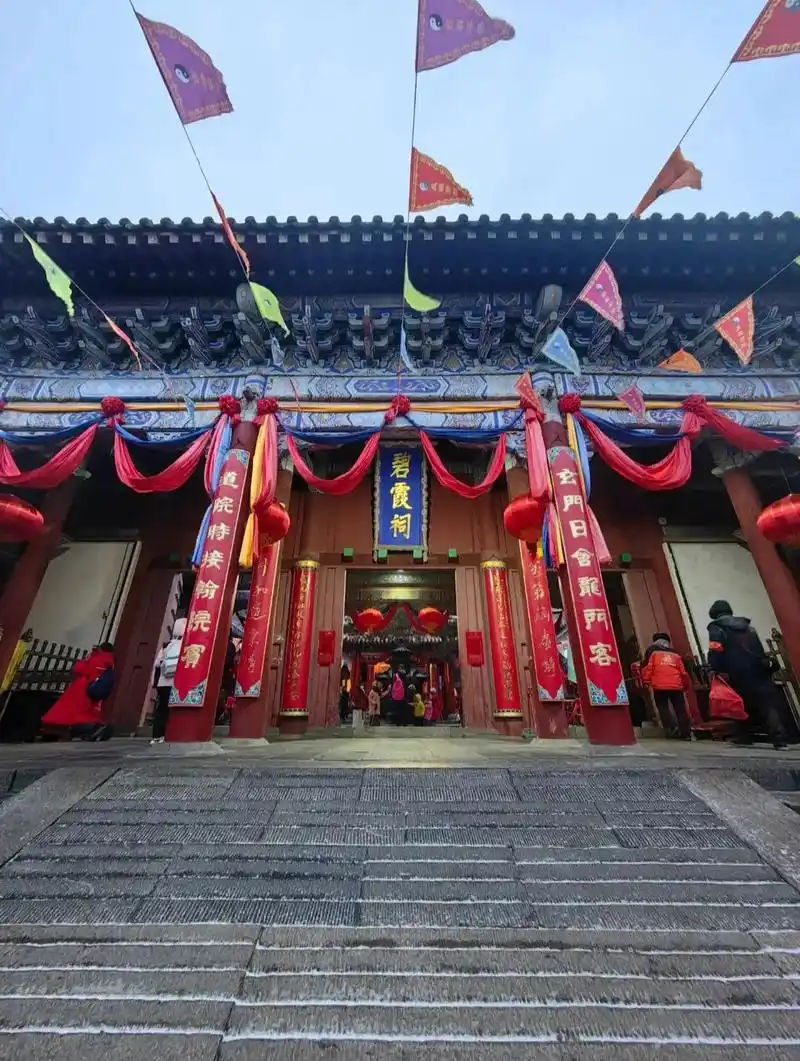 Founded in the second year of the Dazhong Xiangfu era (1009 CE), the shrine originally bore the simpler name Zhaozhen Shrine. Its construction coincided with a Europe still divided among feudal kingdoms, where Norman England was just two decades from the Domesday Book and the Holy Roman Empire was consolidating under Emperor Henry II. Through centuries of Jin, Ming, and Qing dynasty renovations, the complex reached its present form, and by the Qianlong Emperor's reign in the 18th century, it took its current evocative name: Bixia, meaning "Blue Mist of Dawn." The shrine stands as living testimony to Mount Tai's transformation from a primordial nature deity into a cultural holy mountain.
Spanning roughly 3,900 square meters, the complex is the largest ancient building ensemble on Mount Tai's summit, arranged along a strict central axis of symmetry. Think of the rigorous geometry of a Roman basilica or the processional grandeur of Chartres Cathedral—visitors progress through a sequence of twelve structures, including incense pavilions, the great hall, and spirit gates. The architectural marvel lies in the main hall's roof: 360 ridges of gleaming copper tiles that catch the alpine sunlight, giving the "Golden Pavilion" its otherworldly radiance. The flanking halls are roofed in iron tiles, a clever adaptation to extreme mountain weather that only intensifies the imperial dignity of the ensemble.
Within these walls lives one of northern China's most cherished deities: Bixia Yuanjun, affectionately called "Mount Tai Grandmother" by generations of devotees. Side halls honor complementary goddesses of fertility and eyesight, creating a complete pantheon of feminine protective powers—a rare spiritual configuration in predominantly masculine Daoist tradition. Among the shrine's treasures are a Ming-dynasty gilded bronze stele, imperial calligraphic plaques from the Yongzheng and Qianlong emperors, and the remnants of a ritual music stage. For Western visitors familiar with Catholic pilgrimage sites like Lourdes or Santiago de Compostela, Bixia Shrine offers a comparable atmosphere of devout fervor sustained across a millennium.
The shrine pulses with a distinctly participatory spirituality. Devotees rub a copper gourd for blessings of prosperity, receive blessed fruit, and leap across sacred fire pits in rituals that feel both ancient and immediate. However, this is a serious place of worship, not a museum: visitors should maintain silence, avoid stepping on door thresholds, refrain from directly photographing deities, and accept the complimentary incense offered inside rather than purchasing overpriced sticks from roadside vendors. Mount Tai's summit weather can shift rapidly—bring layered clothing even in summer.
Reaching Bixia Shrine requires one final push along the legendary Tianjie, or "Celestial Street," the narrow commercial spine connecting Nanmen Gate to the Jade Emperor Summit. The shrine occupies the prime position midway along this route, making it an unavoidable and rewarding highlight. The recommended itinerary begins with the Zhongtianmen cable car, ascends through Nanmen Gate, ambles along Tianjie, pauses at Bixia Shrine, then continues to Yuhuang Ding and Riguan Peak—the legendary vantage point for sunrise over the North China Plain. Allow 1 to 1.5 hours for the full summit circuit. For the most evocative experience, arrive in early morning or late afternoon when slanting light gilds the copper tiles and pilgrim crowds thin to a reverent hush.
Founded in the second year of the Dazhong Xiangfu era (1009 CE), the shrine originally bore the simpler name Zhaozhen Shrine. Its construction coincided with a Europe still divided among feudal kingdoms, where Norman England was just two decades from the Domesday Book and the Holy Roman Empire was consolidating under Emperor Henry II. Through centuries of Jin, Ming, and Qing dynasty renovations, the complex reached its present form, and by the Qianlong Emperor's reign in the 18th century, it took its current evocative name: Bixia, meaning "Blue Mist of Dawn." The shrine stands as living testimony to Mount Tai's transformation from a primordial nature deity into a cultural holy mountain.
Spanning roughly 3,900 square meters, the complex is the largest ancient building ensemble on Mount Tai's summit, arranged along a strict central axis of symmetry. Think of the rigorous geometry of a Roman basilica or the processional grandeur of Chartres Cathedral—visitors progress through a sequence of twelve structures, including incense pavilions, the great hall, and spirit gates. The architectural marvel lies in the main hall's roof: 360 ridges of gleaming copper tiles that catch the alpine sunlight, giving the "Golden Pavilion" its otherworldly radiance. The flanking halls are roofed in iron tiles, a clever adaptation to extreme mountain weather that only intensifies the imperial dignity of the ensemble.
Within these walls lives one of northern China's most cherished deities: Bixia Yuanjun, affectionately called "Mount Tai Grandmother" by generations of devotees. Side halls honor complementary goddesses of fertility and eyesight, creating a complete pantheon of feminine protective powers—a rare spiritual configuration in predominantly masculine Daoist tradition. Among the shrine's treasures are a Ming-dynasty gilded bronze stele, imperial calligraphic plaques from the Yongzheng and Qianlong emperors, and the remnants of a ritual music stage. For Western visitors familiar with Catholic pilgrimage sites like Lourdes or Santiago de Compostela, Bixia Shrine offers a comparable atmosphere of devout fervor sustained across a millennium.
The shrine pulses with a distinctly participatory spirituality. Devotees rub a copper gourd for blessings of prosperity, receive blessed fruit, and leap across sacred fire pits in rituals that feel both ancient and immediate. However, this is a serious place of worship, not a museum: visitors should maintain silence, avoid stepping on door thresholds, refrain from directly photographing deities, and accept the complimentary incense offered inside rather than purchasing overpriced sticks from roadside vendors. Mount Tai's summit weather can shift rapidly—bring layered clothing even in summer.
Reaching Bixia Shrine requires one final push along the legendary Tianjie, or "Celestial Street," the narrow commercial spine connecting Nanmen Gate to the Jade Emperor Summit. The shrine occupies the prime position midway along this route, making it an unavoidable and rewarding highlight. The recommended itinerary begins with the Zhongtianmen cable car, ascends through Nanmen Gate, ambles along Tianjie, pauses at Bixia Shrine, then continues to Yuhuang Ding and Riguan Peak—the legendary vantage point for sunrise over the North China Plain. Allow 1 to 1.5 hours for the full summit circuit. For the most evocative experience, arrive in early morning or late afternoon when slanting light gilds the copper tiles and pilgrim crowds thin to a reverent hush.