Bayi Square
⭐ 4.20
Bayi Square, Donghu District, Nanchang, Jiangxi Province, China
 On August 1, 1927, two years after Sun Yat-sen's death and amid the chaos of China's warlord era, Communist-led troops under Zhou Enlai, He Long, and Zhu De launched the Nanchang Uprising here, firing the opening shots of what would become the People's Liberation Army. Compare its foundational weight to the Bastille for revolutionary France or Gettysburg for the American Civil War: this is where the modern Chinese military began. The square itself was laid out in 1952 as People's Square and later renamed Bayi ("August First") to honor that 1927 date. Today it functions as both pilgrimage site and civic gathering place.
The centerpiece tower rises 53.6 meters, crowned by a stylized Hanyang-made rifle wrapped in a stone flag. Its face bears characters inscribed by Marshal Ye Jianying, while the pedestal is ringed by eight large bronze-and-stone relief panels chronicling the birth of the Red Army in vivid, almost cinematic detail. A gilded bridge and inscribed stones quote Mao Zedong's famous lines "The place where the army flag rose" and "A single spark can start a prairie fire." The scale and socialist-classical style recall Berlin's Soviet War Memorial, though the iconography is distinctly Chinese.
Beyond monuments, the square pulses with daily life. Since 2024 a formal flag-raising ceremony has been held on the first morning of each month, with grander observances on Army Day (August 1). At night, choreographed fountains shoot water up to 30 meters high, synced to patriotic melodies and projected onto a water-curtain screen, while the illuminated tower glows against the skyline, drawing photographers from across the city.
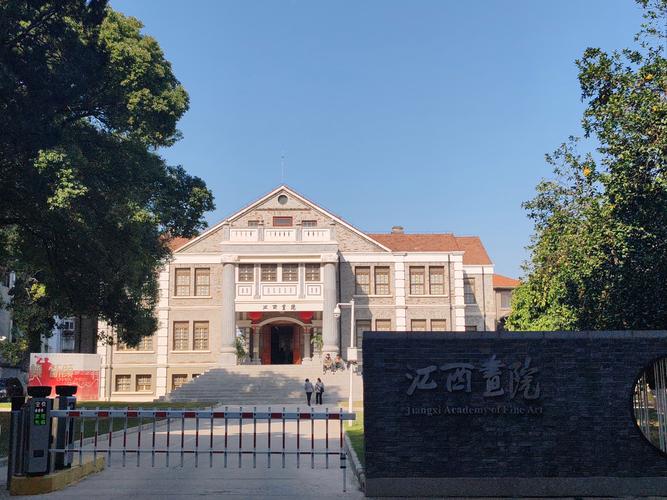
On foot, visitors can link the square to the Nanchang Uprising Memorial Hall, the Jiangxi Provincial Art Museum (housed in the original 1927 uprising site of the Jiangxi Grand Hotel), and the lantern-lit Wanshou Palace historic district, forming a satisfying half-day cultural walking loop. The square is a 24-hour free attraction with no ticket required, and Metro Lines 1 and 2 stop directly at Bayi Square Station.
For the richest experience, arrive in late afternoon: explore the tower and reliefs in daylight, then stay for the evening fountain show, when lights and water transform the plaza. Travelers visiting on the first of any month can join the flag ceremony but should check local traffic-restriction notices in advance. The paved expanse offers little shade, so bring sunscreen and water. Whether viewed as revolutionary shrine, urban park, or open-air stage, Bayi Square offers Western visitors a direct encounter with the moment China's modern military history began.
On August 1, 1927, two years after Sun Yat-sen's death and amid the chaos of China's warlord era, Communist-led troops under Zhou Enlai, He Long, and Zhu De launched the Nanchang Uprising here, firing the opening shots of what would become the People's Liberation Army. Compare its foundational weight to the Bastille for revolutionary France or Gettysburg for the American Civil War: this is where the modern Chinese military began. The square itself was laid out in 1952 as People's Square and later renamed Bayi ("August First") to honor that 1927 date. Today it functions as both pilgrimage site and civic gathering place.
The centerpiece tower rises 53.6 meters, crowned by a stylized Hanyang-made rifle wrapped in a stone flag. Its face bears characters inscribed by Marshal Ye Jianying, while the pedestal is ringed by eight large bronze-and-stone relief panels chronicling the birth of the Red Army in vivid, almost cinematic detail. A gilded bridge and inscribed stones quote Mao Zedong's famous lines "The place where the army flag rose" and "A single spark can start a prairie fire." The scale and socialist-classical style recall Berlin's Soviet War Memorial, though the iconography is distinctly Chinese.
Beyond monuments, the square pulses with daily life. Since 2024 a formal flag-raising ceremony has been held on the first morning of each month, with grander observances on Army Day (August 1). At night, choreographed fountains shoot water up to 30 meters high, synced to patriotic melodies and projected onto a water-curtain screen, while the illuminated tower glows against the skyline, drawing photographers from across the city.
On foot, visitors can link the square to the Nanchang Uprising Memorial Hall, the Jiangxi Provincial Art Museum (housed in the original 1927 uprising site of the Jiangxi Grand Hotel), and the lantern-lit Wanshou Palace historic district, forming a satisfying half-day cultural walking loop. The square is a 24-hour free attraction with no ticket required, and Metro Lines 1 and 2 stop directly at Bayi Square Station.
For the richest experience, arrive in late afternoon: explore the tower and reliefs in daylight, then stay for the evening fountain show, when lights and water transform the plaza. Travelers visiting on the first of any month can join the flag ceremony but should check local traffic-restriction notices in advance. The paved expanse offers little shade, so bring sunscreen and water. Whether viewed as revolutionary shrine, urban park, or open-air stage, Bayi Square offers Western visitors a direct encounter with the moment China's modern military history began.