Jade Emperor Summit
⭐ 4.60
Mount Tai Scenic Area, Taishan District, Tai'an City, Shandong Province, China
 **A Throne Where Heaven and Empire Met**
Long before the cathedrals of medieval Europe rose skyward, Chinese emperors were climbing Mount Tai to perform the Feng and Shan sacrifices—elaborate rituals sealing the Mandate of Heaven between ruler and cosmos. From Qin Shi Huang (221 BCE), who unified China for the first time, thirteen imperial dynasties made the arduous pilgrimage to this very summit. Two stone monuments still stand in silent witness: the Ancient Sacrificial Terrace stele and the enigmatic Wordless Stele, whose blank face remains one of China's great historical mysteries—a monument deliberately left unfinished, much like the riddles of ancient Delphi.
**The Temple at the Roof of the World**
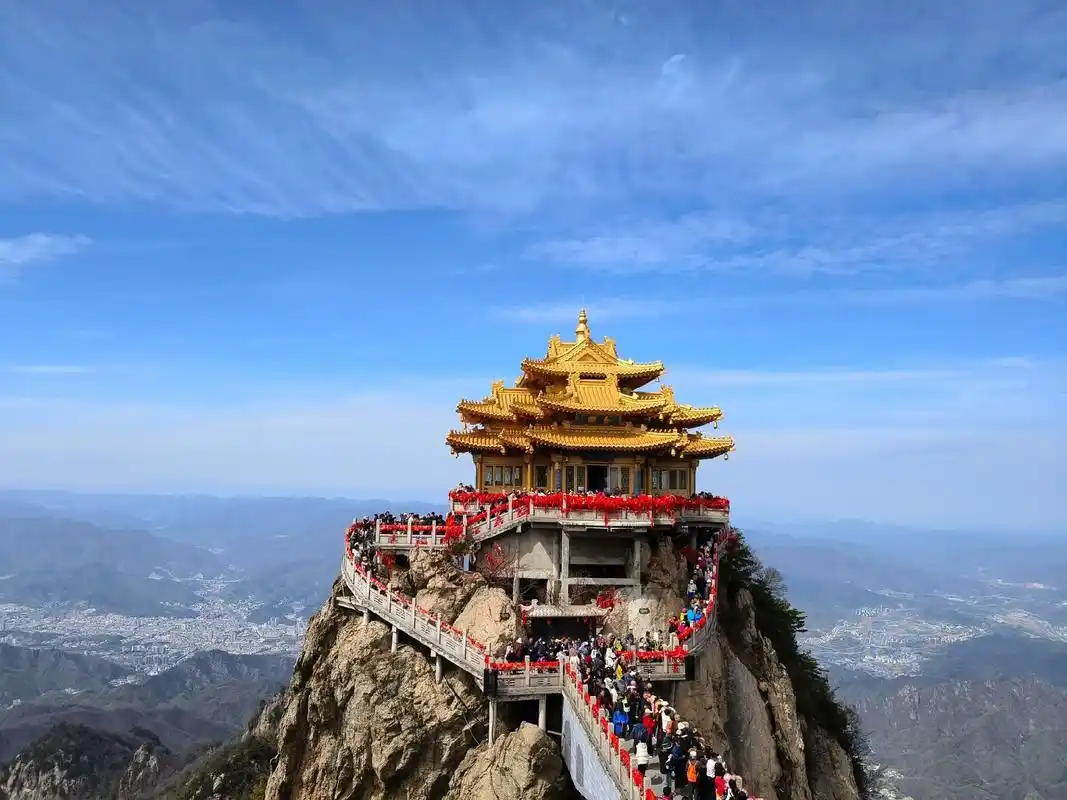
The Jade Emperor Temple, though impossible to date precisely, was thoroughly rebuilt during the Ming Dynasty's Chenghua era (1465–1487). Its main hall houses a bronze statue of the Jade Emperor—the Taoist sky-god ruling all heavens, earth, and the immortals. A plaque inscribed "Remnant of the Firewood-Gazing Rite" references an even older sacrificial tradition, while the courtyard's stone marker proudly declares "The Supreme Peak of Mount Tai." The complex blends seamlessly with the surrounding pavilions: the Sunrise-Welcoming Pavilion to the east and the Yellow River-Gazing Pavilion to the west frame the summit like living parentheses around a sacred text.
**A Cultural Symbol Forged in Stone**
The rock-carved inscription proclaiming Mount Tai as "The Sole Revered of the Five Great Mountains" has weathered centuries of wind and frost yet remains the mountain's most recognizable icon. Comparable in cultural weight to the Oracle Bone inscriptions of Anyang or the inscriptions of Persepolis in Persia, these characters distill the Chinese worldview: that this mountain stands peerless, the axis where earth touches heaven. For ordinary travelers, summiting Jade Emperor Peak represents a personal conquest as well—the ancient Chinese spirit of striving ever upward, of reaching beyond the clouds.
**Planning Your Ascent**
Jade Emperor Peak sits within the Mount Tai Scenic Area and requires no separate ticket beyond the main entrance fee (¥115 in peak season, ¥100 off-peak). From the South Gate to Heaven—a dramatic gateway pass—the summit is roughly a 20-minute walk. Alternatively, take the tourist shuttle from Tianwai Village to Zhongtian Gate, then transfer to the cable car for a quicker ride. Temperatures swing dramatically between day and night, so pack windproof layers even in summer. Remember that the Jade Emperor Temple is an active religious site: keep voices hushed and observe customary respect.
**When to Go and What to See**
For the full mythic experience, time your summit arrival for dawn, watching the sun rise over a sea of clouds from the Sunrise-Welcoming Pavilion—a spectacle that has moved Chinese poets since the Tang Dynasty. At sunset, the Yellow River-Gazing Pavilion offers the famous "Golden Belt of the Yellow River," where the distant river catches fire in slanting light. Combine your visit with the nearby Bixia Temple and South Gate to Heaven for a complete circuit. If sunrise is your priority, you'll need to either hike through the night or book one of the limited summit hotels—reservations should be made one to two months ahead during peak season.
**A Throne Where Heaven and Empire Met**
Long before the cathedrals of medieval Europe rose skyward, Chinese emperors were climbing Mount Tai to perform the Feng and Shan sacrifices—elaborate rituals sealing the Mandate of Heaven between ruler and cosmos. From Qin Shi Huang (221 BCE), who unified China for the first time, thirteen imperial dynasties made the arduous pilgrimage to this very summit. Two stone monuments still stand in silent witness: the Ancient Sacrificial Terrace stele and the enigmatic Wordless Stele, whose blank face remains one of China's great historical mysteries—a monument deliberately left unfinished, much like the riddles of ancient Delphi.
**The Temple at the Roof of the World**
The Jade Emperor Temple, though impossible to date precisely, was thoroughly rebuilt during the Ming Dynasty's Chenghua era (1465–1487). Its main hall houses a bronze statue of the Jade Emperor—the Taoist sky-god ruling all heavens, earth, and the immortals. A plaque inscribed "Remnant of the Firewood-Gazing Rite" references an even older sacrificial tradition, while the courtyard's stone marker proudly declares "The Supreme Peak of Mount Tai." The complex blends seamlessly with the surrounding pavilions: the Sunrise-Welcoming Pavilion to the east and the Yellow River-Gazing Pavilion to the west frame the summit like living parentheses around a sacred text.
**A Cultural Symbol Forged in Stone**
The rock-carved inscription proclaiming Mount Tai as "The Sole Revered of the Five Great Mountains" has weathered centuries of wind and frost yet remains the mountain's most recognizable icon. Comparable in cultural weight to the Oracle Bone inscriptions of Anyang or the inscriptions of Persepolis in Persia, these characters distill the Chinese worldview: that this mountain stands peerless, the axis where earth touches heaven. For ordinary travelers, summiting Jade Emperor Peak represents a personal conquest as well—the ancient Chinese spirit of striving ever upward, of reaching beyond the clouds.
**Planning Your Ascent**
Jade Emperor Peak sits within the Mount Tai Scenic Area and requires no separate ticket beyond the main entrance fee (¥115 in peak season, ¥100 off-peak). From the South Gate to Heaven—a dramatic gateway pass—the summit is roughly a 20-minute walk. Alternatively, take the tourist shuttle from Tianwai Village to Zhongtian Gate, then transfer to the cable car for a quicker ride. Temperatures swing dramatically between day and night, so pack windproof layers even in summer. Remember that the Jade Emperor Temple is an active religious site: keep voices hushed and observe customary respect.
**When to Go and What to See**
For the full mythic experience, time your summit arrival for dawn, watching the sun rise over a sea of clouds from the Sunrise-Welcoming Pavilion—a spectacle that has moved Chinese poets since the Tang Dynasty. At sunset, the Yellow River-Gazing Pavilion offers the famous "Golden Belt of the Yellow River," where the distant river catches fire in slanting light. Combine your visit with the nearby Bixia Temple and South Gate to Heaven for a complete circuit. If sunrise is your priority, you'll need to either hike through the night or book one of the limited summit hotels—reservations should be made one to two months ahead during peak season.