Wuyun Building
⭐ 3.80
Wuyun Building, Danjiangkou City, Shiyan City, Hubei Province, China
 Historical Context
Erected in the tenth year of the Ming Yongle reign (1412) by imperial decree of Emperor Zhu Di, the Five Cloud Tower was part of a sweeping patronage program that transformed Wudang Mountain into the supreme Daoist sanctuary of imperial China — a Chinese counterpart to the lavish building campaigns then reshaping Florence under the Medici or the great brick foundations being laid in early-Tudor England. The tower's poetic name evokes the swirling mists said to veil the sacred peaks, a fitting title for a building perched on the highest terrace of the Taizipo Fuzhen Guan temple complex. A Qing-dynasty renovation during the Kangxi period preserved its essence, ensuring that today's visitors encounter essentially the same structure that has watched over the valley for more than six centuries.
Architecture
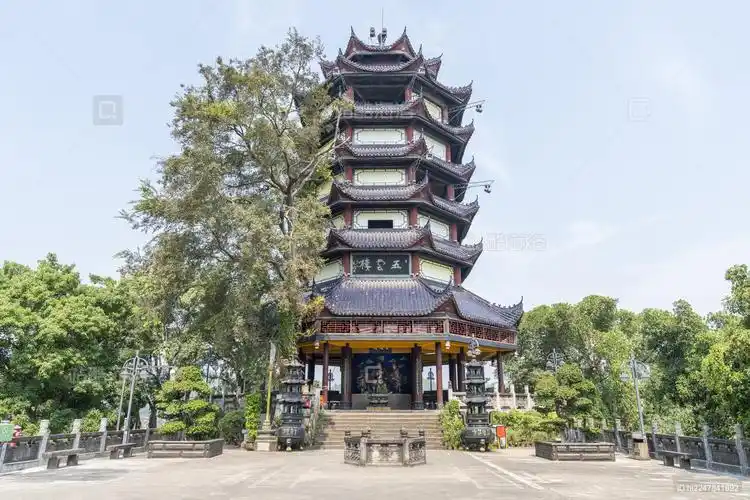
Rising 15.8 meters across five timber stories — and notably taller than many medieval European bell towers of comparable age — the Five Cloud Tower is constructed entirely of wood, without a single brick, stone, or iron nail. Each level expands as the building climbs the hillside, creating irregular, atmospheric chambers that follow the natural topography rather than forcing it. The true marvel awaits at the top floor: the "One Pillar, Twelve Beams" configuration, in which a single 12.99-meter central column supports twelve crossing beams through ingenious interlocking joints. Imagine the joint-craft of a Bavarian half-timbered hall or an English hammer-beam roof distilled into a soaring vertical monument — that scale of ingenuity is precisely what awaits inside.
Cultural Significance
The "One Pillar, Twelve Beams" feat embodies the Daoist principle of "the mountain itself remains unmoved" — achieving maximum structural stability through the simplest possible elements, in harmony with nature rather than imposed upon it. This philosophy underpins the Wudang complex's 1994 inscription as a UNESCO World Heritage Site, placing it among the great surviving religious landscapes of the medieval world alongside European Gothic cathedrals and Japanese temple complexes of the same era. Scholars from across the globe travel here specifically to study how Ming craftsmen translated spiritual philosophy into load-bearing reality, making the tower a living textbook of pre-industrial engineering.
Practical Visit Information
The Five Cloud Tower is not separately ticketed; entry requires the main Wudang Mountain admission, which includes the scenic shuttle bus. After alighting at the Taizipo stop, a gentle ten-minute walk along the mountain path brings you directly to the tower. The interior feels intimate — even a touch cramped — due to the inward-sloping terraces, but the upper floor is where the sightseeing magic happens, so plan for about fifteen to twenty minutes on site. The Taizipo area generally opens from 7:00 a.m. to 6:00 p.m., with hours shifting seasonally; mornings deliver softer light and smaller crowds.
Why Visit
Few places on Earth let you stand inside a six-hundred-year-old building that still performs its original structural function with no metal hardware whatsoever. For travelers interested in architecture, Daoist culture, or simply the romance of China's mountain heritage, the Five Cloud Tower is a quiet revelation. Photographs cannot capture the in-person wonder of seeing those twelve beams cradled by a single pillar — it is one of those rare monuments where myth, engineering, and landscape converge in a single, awe-inspiring moment.
Historical Context
Erected in the tenth year of the Ming Yongle reign (1412) by imperial decree of Emperor Zhu Di, the Five Cloud Tower was part of a sweeping patronage program that transformed Wudang Mountain into the supreme Daoist sanctuary of imperial China — a Chinese counterpart to the lavish building campaigns then reshaping Florence under the Medici or the great brick foundations being laid in early-Tudor England. The tower's poetic name evokes the swirling mists said to veil the sacred peaks, a fitting title for a building perched on the highest terrace of the Taizipo Fuzhen Guan temple complex. A Qing-dynasty renovation during the Kangxi period preserved its essence, ensuring that today's visitors encounter essentially the same structure that has watched over the valley for more than six centuries.
Architecture
Rising 15.8 meters across five timber stories — and notably taller than many medieval European bell towers of comparable age — the Five Cloud Tower is constructed entirely of wood, without a single brick, stone, or iron nail. Each level expands as the building climbs the hillside, creating irregular, atmospheric chambers that follow the natural topography rather than forcing it. The true marvel awaits at the top floor: the "One Pillar, Twelve Beams" configuration, in which a single 12.99-meter central column supports twelve crossing beams through ingenious interlocking joints. Imagine the joint-craft of a Bavarian half-timbered hall or an English hammer-beam roof distilled into a soaring vertical monument — that scale of ingenuity is precisely what awaits inside.
Cultural Significance
The "One Pillar, Twelve Beams" feat embodies the Daoist principle of "the mountain itself remains unmoved" — achieving maximum structural stability through the simplest possible elements, in harmony with nature rather than imposed upon it. This philosophy underpins the Wudang complex's 1994 inscription as a UNESCO World Heritage Site, placing it among the great surviving religious landscapes of the medieval world alongside European Gothic cathedrals and Japanese temple complexes of the same era. Scholars from across the globe travel here specifically to study how Ming craftsmen translated spiritual philosophy into load-bearing reality, making the tower a living textbook of pre-industrial engineering.
Practical Visit Information
The Five Cloud Tower is not separately ticketed; entry requires the main Wudang Mountain admission, which includes the scenic shuttle bus. After alighting at the Taizipo stop, a gentle ten-minute walk along the mountain path brings you directly to the tower. The interior feels intimate — even a touch cramped — due to the inward-sloping terraces, but the upper floor is where the sightseeing magic happens, so plan for about fifteen to twenty minutes on site. The Taizipo area generally opens from 7:00 a.m. to 6:00 p.m., with hours shifting seasonally; mornings deliver softer light and smaller crowds.
Why Visit
Few places on Earth let you stand inside a six-hundred-year-old building that still performs its original structural function with no metal hardware whatsoever. For travelers interested in architecture, Daoist culture, or simply the romance of China's mountain heritage, the Five Cloud Tower is a quiet revelation. Photographs cannot capture the in-person wonder of seeing those twelve beams cradled by a single pillar — it is one of those rare monuments where myth, engineering, and landscape converge in a single, awe-inspiring moment.