Xuanmiao Temple
⭐ 4.50
Wudang Mountain Scenic Area, Danjiangkou City, Shiyan City, Hubei Province, China
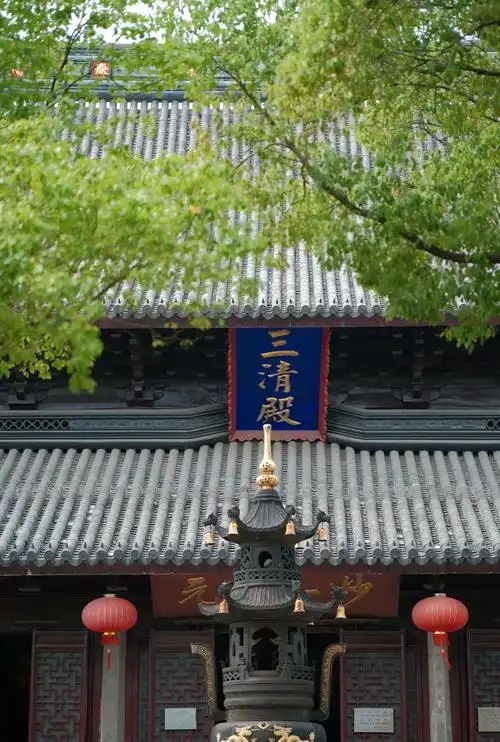 Established in the Kaiyuan era (713–741 CE) during the height of the Tang dynasty—a period when Chinese cosmopolitanism rivaled that of the Abbasid Caliphate—Xuanmiao Abbey was originally called Tianqing Temple. It was successively renamed through the Song and Yuan dynasties before receiving its present title under the Mongols. During the Qing, scholars changed the first character to avoid conflict with the personal name of the Kangxi Emperor, giving rise to the alternate name Yuanmiao that persists today. Designated a nationally protected cultural relic in 1982, the complex stands at the heart of ancient Jiangling (modern Jingzhou), a strategic city that changed hands between dynasties much like Toledo or Constantinople did in the West.
The architectural ensemble exceeds 10,000 square meters and runs along a strict north-south axis, mirroring the geometric precision found in great European cathedrals such as Chartres. Visitors approach through a ceremonial gate, ascending through a hierarchy of halls culminating in the magnificent Jade Emperor Pavilion. This centerpiece, an authentic Ming-dynasty construction, features a triple-eaved hip-and-gable roof crowned with imperial yellow and green glazed tiles. Its bracket sets (dougong) display the kind of layered craftsmanship reminiscent of Gothic rib vaulting—each interlocking wooden component bearing structural and decorative weight simultaneously. The interior caisson ceilings retain vivid polychrome paintings that have survived half a millennium.
Beyond its architectural significance, Xuanmiao Abbey served as a major stronghold of the Zhengyi (Orthodox Unity) school of Taoism across the Jianghan Plain—comparable in regional importance to how Mont Saint-Michel anchors Norman spirituality or how Assisi embodies Franciscan tradition. The temple once housed venerated deities including the North God Xuantian Shangdi and the Jade Emperor, hosting seasonal purification rituals that drew townspeople from across the Jingchu cultural region. Local legend speaks of the "Nine Elders of the Immortal Capital," a tale weaving nature worship together with immortal sage traditions, giving the surrounding scenic area its evocative name.
Located in the Jiulao Xiandu scenic zone within Jingzhou's Jingzhou District, the temple is easily reached by local bus or taxi from central Jingzhou, roughly three hours by high-speed rail from Wuhan or five hours from Xi'an. Opening hours run daily from 8:00 a.m. to 5:00 p.m., with modest admission fees. Multilingual signage remains limited, so travelers should download a translation app or—ideally—book a specialist guide in advance through the scenic area's visitor center. Comfortable walking shoes are recommended, as the complex involves substantial steps and uneven flagstones.
Unlike the sprawling, pilgrimage-scale grandeur of the Wudang Mountains—the legendary cradle of Taoist martial tradition—Xuanmiao Abbey offers an intimate, scholarly alternative where Ming-dynasty authenticity has not been overwhelmed by modern reconstruction. Plan two to three hours to absorb the Jade Emperor Pavilion's painted ceilings and to search out surviving Ming and Qing stone stelae tucked along side halls. Visitors should dress modestly and observe temple etiquette: silence near altars, no flash photography of deities, and respectful demeanor toward worshippers. For a rewarding day, combine the visit with nearby Jingzhou's ancient city walls and the Guandi Temple dedicated to the deified general Guan Yu.
Established in the Kaiyuan era (713–741 CE) during the height of the Tang dynasty—a period when Chinese cosmopolitanism rivaled that of the Abbasid Caliphate—Xuanmiao Abbey was originally called Tianqing Temple. It was successively renamed through the Song and Yuan dynasties before receiving its present title under the Mongols. During the Qing, scholars changed the first character to avoid conflict with the personal name of the Kangxi Emperor, giving rise to the alternate name Yuanmiao that persists today. Designated a nationally protected cultural relic in 1982, the complex stands at the heart of ancient Jiangling (modern Jingzhou), a strategic city that changed hands between dynasties much like Toledo or Constantinople did in the West.
The architectural ensemble exceeds 10,000 square meters and runs along a strict north-south axis, mirroring the geometric precision found in great European cathedrals such as Chartres. Visitors approach through a ceremonial gate, ascending through a hierarchy of halls culminating in the magnificent Jade Emperor Pavilion. This centerpiece, an authentic Ming-dynasty construction, features a triple-eaved hip-and-gable roof crowned with imperial yellow and green glazed tiles. Its bracket sets (dougong) display the kind of layered craftsmanship reminiscent of Gothic rib vaulting—each interlocking wooden component bearing structural and decorative weight simultaneously. The interior caisson ceilings retain vivid polychrome paintings that have survived half a millennium.
Beyond its architectural significance, Xuanmiao Abbey served as a major stronghold of the Zhengyi (Orthodox Unity) school of Taoism across the Jianghan Plain—comparable in regional importance to how Mont Saint-Michel anchors Norman spirituality or how Assisi embodies Franciscan tradition. The temple once housed venerated deities including the North God Xuantian Shangdi and the Jade Emperor, hosting seasonal purification rituals that drew townspeople from across the Jingchu cultural region. Local legend speaks of the "Nine Elders of the Immortal Capital," a tale weaving nature worship together with immortal sage traditions, giving the surrounding scenic area its evocative name.
Located in the Jiulao Xiandu scenic zone within Jingzhou's Jingzhou District, the temple is easily reached by local bus or taxi from central Jingzhou, roughly three hours by high-speed rail from Wuhan or five hours from Xi'an. Opening hours run daily from 8:00 a.m. to 5:00 p.m., with modest admission fees. Multilingual signage remains limited, so travelers should download a translation app or—ideally—book a specialist guide in advance through the scenic area's visitor center. Comfortable walking shoes are recommended, as the complex involves substantial steps and uneven flagstones.
Unlike the sprawling, pilgrimage-scale grandeur of the Wudang Mountains—the legendary cradle of Taoist martial tradition—Xuanmiao Abbey offers an intimate, scholarly alternative where Ming-dynasty authenticity has not been overwhelmed by modern reconstruction. Plan two to three hours to absorb the Jade Emperor Pavilion's painted ceilings and to search out surviving Ming and Qing stone stelae tucked along side halls. Visitors should dress modestly and observe temple etiquette: silence near altars, no flash photography of deities, and respectful demeanor toward worshippers. For a rewarding day, combine the visit with nearby Jingzhou's ancient city walls and the Guandi Temple dedicated to the deified general Guan Yu.