Qiongtai Guan
⭐ 3.80
Junxian Town, Danjiangkou City, Shiyan, Hubei Province, China
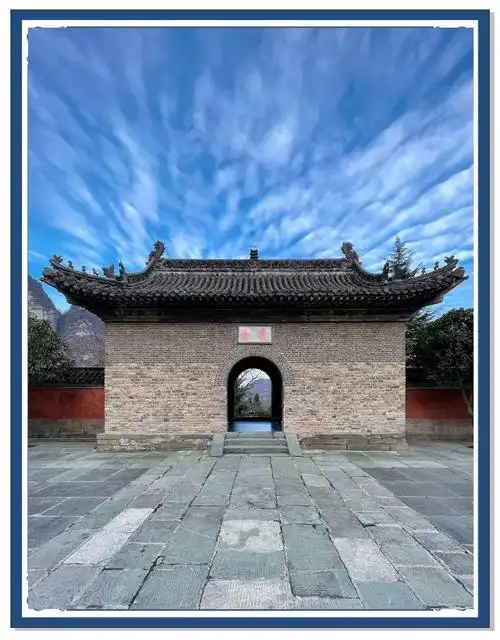 Qiongtai Temple's origins stretch back to the Yuan Dynasty (1271–1368), an era when Kublai Khan ruled a unified China while, half a world away, Marco Polo journeyed eastward and Europe's great Gothic cathedrals rose toward heaven. Originally called Qiongtai Palace, the complex reached its zenith under the Ming and Qing, expanding into twenty-four Taoist monasteries linked by covered walkways—so complete was the network that locals boasted you could "step outdoors without seeing the sky, yet stay dry in the rain." Much like Italian hilltop abbeys, the site was chosen to command both spiritual authority and visual dominance over the surrounding valleys.
Destroyed in 1856 during the Taiping Rebellion—an upheaval contemporary with the Crimean War's blood-soaked trenches—the complex was only partially restored under the Guangxu Emperor. Today visitors encounter three distinct tiers ascending the slope. The Upper Temple, "White Jade Tortoise Platform," survives chiefly as foundations but guards Wudang Mountain's largest stone carving of the Dark Warrior deity Xuanwu. The Middle Temple, "Purple Peak Qiongtai," is the architectural jewel—its Yuan-era bluestone hall still houses a deity statue, its weathered masonry carrying the gravitas of seven centuries.
Qiongtai holds singular importance in Chinese Taoist devotion as the legendary site where the deity Zhenwu, Lord of the North, was invested by the Jade Emperor with the celestial title "North Pole Mysterious Heaven Sovereign." This mythological coronation finds echoes in consecrations worldwide, from ancient Jerusalem to imperial Rome's transformation under Constantine. UNESCO's 1994 inscription of Wudang Mountain recognized not merely aesthetic merit but the cosmological worldview that shaped imperial China's religious imagination for half a millennium.
Reached from the main Wudang Mountain Visitor Center via a scenic twenty-minute shuttle bus, the temple sits within the protected scenic area. Entrance is included in the Wudang Mountain ticket (110–140 RMB), while the cable car round-trip costs roughly 170 RMB. Cable car operations run 8:00 AM to 4:30 PM, though services can be suspended during summer fog or winter ice—conditions worth checking before ascending.
For Western travelers, Qiongtai offers far more than a way station: imagine the spiritual prelude to summiting a holy mountain like Montserrat or a Greek Orthodox peak, before the cable car carries you onward. Plan thirty to sixty minutes here, ascending the three tiers respectfully as this remains an active devotional site. Spring and autumn bring the clearest skies, while summer mists lend mystery but obscure summit views. Arriving before 9:00 AM helps beat the tour-bus crowds and preserves the meditative atmosphere that makes Wudang legendary.
Qiongtai Temple's origins stretch back to the Yuan Dynasty (1271–1368), an era when Kublai Khan ruled a unified China while, half a world away, Marco Polo journeyed eastward and Europe's great Gothic cathedrals rose toward heaven. Originally called Qiongtai Palace, the complex reached its zenith under the Ming and Qing, expanding into twenty-four Taoist monasteries linked by covered walkways—so complete was the network that locals boasted you could "step outdoors without seeing the sky, yet stay dry in the rain." Much like Italian hilltop abbeys, the site was chosen to command both spiritual authority and visual dominance over the surrounding valleys.
Destroyed in 1856 during the Taiping Rebellion—an upheaval contemporary with the Crimean War's blood-soaked trenches—the complex was only partially restored under the Guangxu Emperor. Today visitors encounter three distinct tiers ascending the slope. The Upper Temple, "White Jade Tortoise Platform," survives chiefly as foundations but guards Wudang Mountain's largest stone carving of the Dark Warrior deity Xuanwu. The Middle Temple, "Purple Peak Qiongtai," is the architectural jewel—its Yuan-era bluestone hall still houses a deity statue, its weathered masonry carrying the gravitas of seven centuries.
Qiongtai holds singular importance in Chinese Taoist devotion as the legendary site where the deity Zhenwu, Lord of the North, was invested by the Jade Emperor with the celestial title "North Pole Mysterious Heaven Sovereign." This mythological coronation finds echoes in consecrations worldwide, from ancient Jerusalem to imperial Rome's transformation under Constantine. UNESCO's 1994 inscription of Wudang Mountain recognized not merely aesthetic merit but the cosmological worldview that shaped imperial China's religious imagination for half a millennium.
Reached from the main Wudang Mountain Visitor Center via a scenic twenty-minute shuttle bus, the temple sits within the protected scenic area. Entrance is included in the Wudang Mountain ticket (110–140 RMB), while the cable car round-trip costs roughly 170 RMB. Cable car operations run 8:00 AM to 4:30 PM, though services can be suspended during summer fog or winter ice—conditions worth checking before ascending.
For Western travelers, Qiongtai offers far more than a way station: imagine the spiritual prelude to summiting a holy mountain like Montserrat or a Greek Orthodox peak, before the cable car carries you onward. Plan thirty to sixty minutes here, ascending the three tiers respectfully as this remains an active devotional site. Spring and autumn bring the clearest skies, while summer mists lend mystery but obscure summit views. Arriving before 9:00 AM helps beat the tour-bus crowds and preserves the meditative atmosphere that makes Wudang legendary.