Bamboo Creek Valley
⭐ 3.80
Chashu Village, Qiaozhuang Town, Qingchuan County, Guangyuan City, Sichuan Province, China
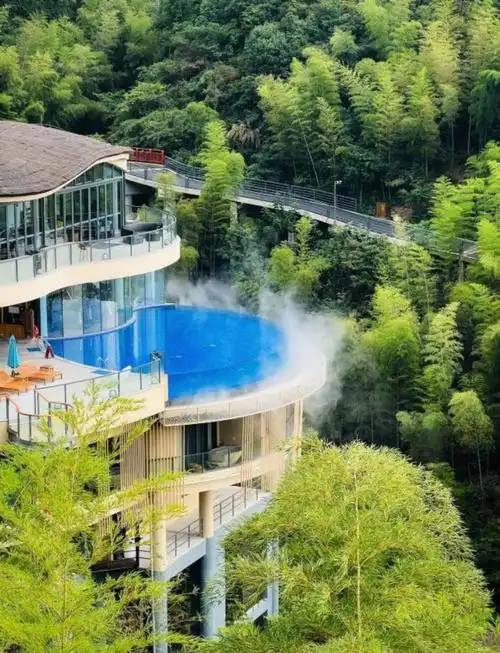 Bamboo Creek Valley sits within the folded mountain belt of a tributary of the Jialing River, a landscape geologically shaped by the same tectonic forces that lifted the Longmen Shan range. The valley's gentle terrain and dense bamboo canopy—covering slopes in stands so uniform they resemble the columned halls of a Gothic monastery—create an atmosphere reminiscent of Bavaria's quiet forest valleys or the sylvan glades immortalized by the Romantic poets. Four distinct seasons transform the experience: spring shoots pushing through loam, summer's cathedral-like shade, autumn's russet tones, and winter's occasional icefalls that recall Alpine cascades frozen mid-flow.
The site weaves bamboo culture into every scenic pause. Murals along the trail depict the legendary Seven Sages of the Bamboo Grove—the Wei-Jin dynasty intellectuals whose hedonistic, nature-worshipping philosophy parallels the Greek Symposium tradition or the salon culture of Enlightenment Europe. Visitors encounter bamboo-carved sculptures, a Crane Pool with motifs echoing Daoist longevity symbolism, and a bamboo-framed corridor that serves as both rest stop and living gallery. These artistic touches draw a compelling line from classical Chinese literati culture to the Western arts-and-crafts movement's reverence for natural materials.
At the valley's heart, Guanyin Temple continues centuries of Buddhist practice, its incense and quiet courtyards lending the landscape a contemplative depth akin to Tuscany's hillside hermitages or the chapels hidden in Austria's Wachau Valley. The temple anchors the site spiritually, offering Western visitors a glimpse of living religious tradition integrated into a rural setting rather than isolated as historic monument. This human dimension transforms a scenic walk into cultural encounter.
Practical experience ranges from gentle creek-side hiking and grass-field picnics to wading in shallow pools during summer. Farmhouse restaurants serve fire-stove chicken, a Sichuan mountain specialty, and spring visitors can join locals in harvesting bamboo shoots—an activity that compares hands-on appeal to Italian truffle hunting or French mushroom foraging. The site maintains a deliberately uncommercialized atmosphere, free of loudspeaker guides and souvenir stalls, allowing the valley's natural acoustics—rushing water, rustling leaves, songbirds—to dominate.
Admission is typically free, with fees only for select farmstays and activities. Self-driving is most convenient; navigate to "Qingchuan County Chashu Village," where parking is available. Allow two to four hours for a thorough visit, or extend into an overnight stay for sunrise photography. The valley pairs naturally with a half-day at Qingchuan County's Warring States Wooden Tablet Cultural Eco-Park, where inscribed timber documents from the 4th century BCE offer a rare archaeological parallel to Roman wax tablets. Mosquitoes and slippery paths in summer, icy trails in winter, require basic precautions—rewards include one of Sichuan's most quietly beautiful escapes.
Bamboo Creek Valley sits within the folded mountain belt of a tributary of the Jialing River, a landscape geologically shaped by the same tectonic forces that lifted the Longmen Shan range. The valley's gentle terrain and dense bamboo canopy—covering slopes in stands so uniform they resemble the columned halls of a Gothic monastery—create an atmosphere reminiscent of Bavaria's quiet forest valleys or the sylvan glades immortalized by the Romantic poets. Four distinct seasons transform the experience: spring shoots pushing through loam, summer's cathedral-like shade, autumn's russet tones, and winter's occasional icefalls that recall Alpine cascades frozen mid-flow.
The site weaves bamboo culture into every scenic pause. Murals along the trail depict the legendary Seven Sages of the Bamboo Grove—the Wei-Jin dynasty intellectuals whose hedonistic, nature-worshipping philosophy parallels the Greek Symposium tradition or the salon culture of Enlightenment Europe. Visitors encounter bamboo-carved sculptures, a Crane Pool with motifs echoing Daoist longevity symbolism, and a bamboo-framed corridor that serves as both rest stop and living gallery. These artistic touches draw a compelling line from classical Chinese literati culture to the Western arts-and-crafts movement's reverence for natural materials.
At the valley's heart, Guanyin Temple continues centuries of Buddhist practice, its incense and quiet courtyards lending the landscape a contemplative depth akin to Tuscany's hillside hermitages or the chapels hidden in Austria's Wachau Valley. The temple anchors the site spiritually, offering Western visitors a glimpse of living religious tradition integrated into a rural setting rather than isolated as historic monument. This human dimension transforms a scenic walk into cultural encounter.
Practical experience ranges from gentle creek-side hiking and grass-field picnics to wading in shallow pools during summer. Farmhouse restaurants serve fire-stove chicken, a Sichuan mountain specialty, and spring visitors can join locals in harvesting bamboo shoots—an activity that compares hands-on appeal to Italian truffle hunting or French mushroom foraging. The site maintains a deliberately uncommercialized atmosphere, free of loudspeaker guides and souvenir stalls, allowing the valley's natural acoustics—rushing water, rustling leaves, songbirds—to dominate.
Admission is typically free, with fees only for select farmstays and activities. Self-driving is most convenient; navigate to "Qingchuan County Chashu Village," where parking is available. Allow two to four hours for a thorough visit, or extend into an overnight stay for sunrise photography. The valley pairs naturally with a half-day at Qingchuan County's Warring States Wooden Tablet Cultural Eco-Park, where inscribed timber documents from the 4th century BCE offer a rare archaeological parallel to Roman wax tablets. Mosquitoes and slippery paths in summer, icy trails in winter, require basic precautions—rewards include one of Sichuan's most quietly beautiful escapes.