Wuyishan Tea Culture Museum
⭐ 3.80
Wuyishan Tea Culture Museum, Wuyishan City, Nanping City, Fujian Province, China
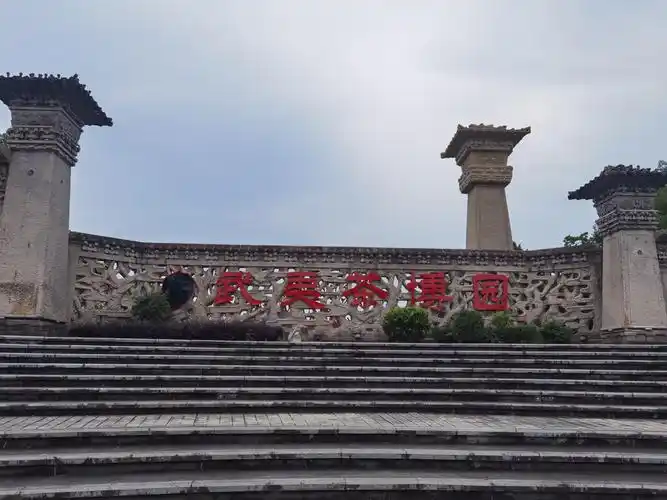 Nestled along the scenic Chongyang Stream and just steps from the dazzling outdoor stage of the "Impression Da Hong Pao" performance, the Wuyi Tea Culture Park occupies a privileged position in a landscape that has shaped Chinese tea cultivation for over a millennium. The Wuyi mountain range, a UNESCO World Heritage Site, is to Chinese tea what the Champagne region is to sparkling wine—the original terroir where a distinctive style was perfected. The park itself spans several hectares, functioning both as a botanical retreat and an open-air cultural classroom, where visitors can wander between artistic installations and the iconic jagged peaks that define this corner of Fujian province.
The park's most striking feature is the Tea History Relief Corridor, a sweeping sculptural promenade that traces the evolution of Chinese tea from the mythical Emperor Shennong, traditionally credited with discovering tea around 2737 BCE, through the Tang dynasty sage Lu Yu (author of the world's first tea treatise, comparable in influence to Pliny the Elder's Natural History), and onward to modern Wuyi production. The narrative continues with local legends of the Wuyi Jun mountain deity. This accessible outdoor gallery rewards curious walkers with both Instagram-worthy moments and a condensed education in millennia of tea heritage.
Inside the climate-controlled Tea Museum, visitors encounter meticulously crafted dioramas demonstrating the intricate, multi-stage process behind Yan (rock) tea production—a labor-intensive craft now recognized on China's intangible cultural heritage list. Exhibits trace the evolution of teaware through the dynasties, paralleling the development of porcelain traditions in nearby Jingdezhen. Displays cover the legendary grades including the prized Da Hong Pao, whose original mother trees reportedly fetched auction prices exceeding $1.3 million per kilogram. A complete visit typically requires 40 minutes to one hour, with content scholarly enough to satisfy enthusiasts yet accessible to first-time tea drinkers.
Practical planning requires attention to the park's distinctive schedule: gates are open from 08:00 to 11:30 and again from 14:30 to 18:00, with a midday closure when staff retreat from the subtropical heat. The park itself remains free, while the indoor museum and specialized tea experiences carry a modest fee of around 30 yuan. Visitors are advised to call ahead during holidays or off-season visits, as schedules occasionally shift.
For the optimal experience, plan a leisurely 1.5 to two-hour visit timed around either morning or afternoon opening hours. Enter through the north gate past the imposing Han Dynasty-inspired ceremonial gateway, then proceed through the Tea Soul Plaza and past the Three Sages of Wuyi sculpture group before reaching the museum. From there, the path descends toward the stream bank for a postcard view of Da Wang Feng, the imposing King Peak that dominates the skyline—a sight that echoes the dramatic monadnocks of the Wachau Valley or the dolomitic spires of the Italian Dolomites.
Those with additional time should consider pairing the park with a morning stroll through Xiamei Ancient Village, a Qing dynasty trading post where tea was once loaded onto boats bound for distant markets, or an evening attendance at the "Impression Da Hong Pao" theatrical spectacular, directed by film legend Zhang Yimou. Together, these experiences transform a simple tea museum visit into a comprehensive immersion in one of the world's most sophisticated tea cultures.
Nestled along the scenic Chongyang Stream and just steps from the dazzling outdoor stage of the "Impression Da Hong Pao" performance, the Wuyi Tea Culture Park occupies a privileged position in a landscape that has shaped Chinese tea cultivation for over a millennium. The Wuyi mountain range, a UNESCO World Heritage Site, is to Chinese tea what the Champagne region is to sparkling wine—the original terroir where a distinctive style was perfected. The park itself spans several hectares, functioning both as a botanical retreat and an open-air cultural classroom, where visitors can wander between artistic installations and the iconic jagged peaks that define this corner of Fujian province.
The park's most striking feature is the Tea History Relief Corridor, a sweeping sculptural promenade that traces the evolution of Chinese tea from the mythical Emperor Shennong, traditionally credited with discovering tea around 2737 BCE, through the Tang dynasty sage Lu Yu (author of the world's first tea treatise, comparable in influence to Pliny the Elder's Natural History), and onward to modern Wuyi production. The narrative continues with local legends of the Wuyi Jun mountain deity. This accessible outdoor gallery rewards curious walkers with both Instagram-worthy moments and a condensed education in millennia of tea heritage.
Inside the climate-controlled Tea Museum, visitors encounter meticulously crafted dioramas demonstrating the intricate, multi-stage process behind Yan (rock) tea production—a labor-intensive craft now recognized on China's intangible cultural heritage list. Exhibits trace the evolution of teaware through the dynasties, paralleling the development of porcelain traditions in nearby Jingdezhen. Displays cover the legendary grades including the prized Da Hong Pao, whose original mother trees reportedly fetched auction prices exceeding $1.3 million per kilogram. A complete visit typically requires 40 minutes to one hour, with content scholarly enough to satisfy enthusiasts yet accessible to first-time tea drinkers.
Practical planning requires attention to the park's distinctive schedule: gates are open from 08:00 to 11:30 and again from 14:30 to 18:00, with a midday closure when staff retreat from the subtropical heat. The park itself remains free, while the indoor museum and specialized tea experiences carry a modest fee of around 30 yuan. Visitors are advised to call ahead during holidays or off-season visits, as schedules occasionally shift.
For the optimal experience, plan a leisurely 1.5 to two-hour visit timed around either morning or afternoon opening hours. Enter through the north gate past the imposing Han Dynasty-inspired ceremonial gateway, then proceed through the Tea Soul Plaza and past the Three Sages of Wuyi sculpture group before reaching the museum. From there, the path descends toward the stream bank for a postcard view of Da Wang Feng, the imposing King Peak that dominates the skyline—a sight that echoes the dramatic monadnocks of the Wachau Valley or the dolomitic spires of the Italian Dolomites.
Those with additional time should consider pairing the park with a morning stroll through Xiamei Ancient Village, a Qing dynasty trading post where tea was once loaded onto boats bound for distant markets, or an evening attendance at the "Impression Da Hong Pao" theatrical spectacular, directed by film legend Zhang Yimou. Together, these experiences transform a simple tea museum visit into a comprehensive immersion in one of the world's most sophisticated tea cultures.