Tianxin Yongle Temple
⭐ 3.50
Tianxin Yongle Temple, Wuyishan City, Nanping City, Fujian Province, China
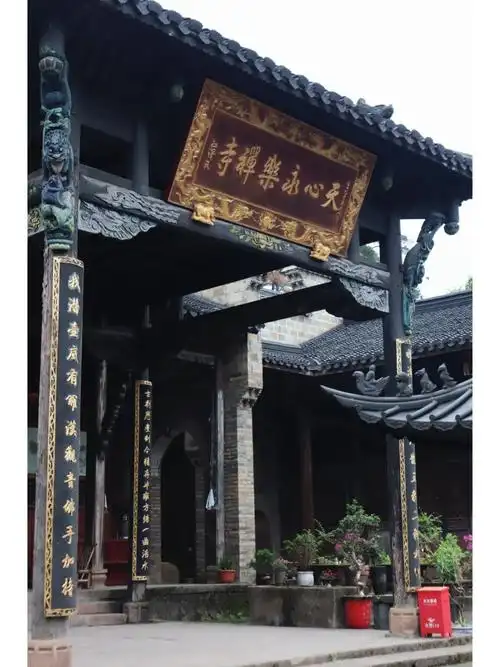 Tianxin Yongle Temple traces its origins to the Tang dynasty (618–907), the same era when Charlemagne was crowned Emperor of the Romans and the great monasteries of Europe were taking shape. By the Song and Yuan dynasties it had become a major center of Chan (Zen) Buddhism, and in 1404 the Yongle Emperor—better known for dispatching Admiral Zheng He's treasure fleets—bestowed the temple's present name. A celebrated legend tells of a Ming-dynasty examination graduate who, after passing the imperial exams, draped his crimson scholar's robe over the six original Da Hong Pao bushes here; "Da Hong Pao" means "Big Red Robe," making the temple the symbolic heart of rock-tea culture in China.
The complex climbs the hillside in successive tiers, much like the hillside monasteries of Meteora in Greece or the terraced sanctuaries of Montserrat in Spain. Its surviving halls—Maitreya Hall, the Hall of Heavenly Kings, the Great Buddha Hall, and the luminous Puguang Hall—are Ming and Qing dynasty reconstructions built in the classical Chinese temple style, with sweeping eaves and deep verandas. The weathered imperial-stone gate, the unassuming Tea Ancestor Hall, and the venerable stupas containing the relics of eminent monks lend the site an air comparable to a centuries-old Benedictine abbey, while the surrounding Danya cliffs—named for their resemblance to red sandstone formations—frame everything in cinematic drama.
The temple's defining philosophy is "Chan Cha Yi Wei," or "Zen and tea are one." Much like how Carthusian monks in the French Alps have crafted their famous liqueur in silence for centuries, the monks here have cultivated and processed the famous Wuyi rock teas for generations. A serene teahouse within the grounds invites visitors to taste small-batch oolongs harvested from nearby cliffs, while a meditation clearing in the bamboo forest behind the temple offers a place for quiet contemplation. Stone inscriptions and rock-cut reliefs scattered along the paths add a layer of humanistic depth reminiscent of the pilgrim routes of Santiago de Compostela.
Visiting is straightforward and excellent value. The temple is open daily from 7:30 a.m. to 5:30 p.m. and is included in the main Wuyishan Scenic Area ticket—no separate entry fee is required. The easiest access is by Wuyi sightseeing shuttle bus to the Water Curtain Cave stop, followed by a short walk; private cars are also welcome, with ample parking. The atmosphere is refreshingly uncommercial: incense is provided free for those wishing to pay respects, and at 11 a.m. a vegetarian lunch is served in the monks' refectory, featuring seasonal vegetables and mountain herbs. Dress modestly, keep voices low, and bring a warm layer—mountain temperatures swing sharply between morning and afternoon. Allow half a day minimum, or a full day if you plan to walk the trail.
The Tianxin Wenchan ("Heart-of-Heaven Zen Inquiry") walking route stretches roughly 7.5 kilometers and takes about three hours, threading through three of Wuyi Mountain's most prestigious tea valleys—Niu Lan Gang, Dao Shui Keng, and Liu Xiang Jian. Along the way, you'll pass terraced tea gardens clinging to sheer cliffs (a sight that rivals the dramatic vineyard terraces of the Douro Valley or the Lavaux in Switzerland), ancient rock inscriptions, and quiet streams. This is not a stroll but a proper cultural hike, ideally suited to travelers who want to understand why Wuyi rock tea has been coveted by emperors and, more recently, by connoisseurs worldwide.
Tianxin Yongle Temple traces its origins to the Tang dynasty (618–907), the same era when Charlemagne was crowned Emperor of the Romans and the great monasteries of Europe were taking shape. By the Song and Yuan dynasties it had become a major center of Chan (Zen) Buddhism, and in 1404 the Yongle Emperor—better known for dispatching Admiral Zheng He's treasure fleets—bestowed the temple's present name. A celebrated legend tells of a Ming-dynasty examination graduate who, after passing the imperial exams, draped his crimson scholar's robe over the six original Da Hong Pao bushes here; "Da Hong Pao" means "Big Red Robe," making the temple the symbolic heart of rock-tea culture in China.
The complex climbs the hillside in successive tiers, much like the hillside monasteries of Meteora in Greece or the terraced sanctuaries of Montserrat in Spain. Its surviving halls—Maitreya Hall, the Hall of Heavenly Kings, the Great Buddha Hall, and the luminous Puguang Hall—are Ming and Qing dynasty reconstructions built in the classical Chinese temple style, with sweeping eaves and deep verandas. The weathered imperial-stone gate, the unassuming Tea Ancestor Hall, and the venerable stupas containing the relics of eminent monks lend the site an air comparable to a centuries-old Benedictine abbey, while the surrounding Danya cliffs—named for their resemblance to red sandstone formations—frame everything in cinematic drama.
The temple's defining philosophy is "Chan Cha Yi Wei," or "Zen and tea are one." Much like how Carthusian monks in the French Alps have crafted their famous liqueur in silence for centuries, the monks here have cultivated and processed the famous Wuyi rock teas for generations. A serene teahouse within the grounds invites visitors to taste small-batch oolongs harvested from nearby cliffs, while a meditation clearing in the bamboo forest behind the temple offers a place for quiet contemplation. Stone inscriptions and rock-cut reliefs scattered along the paths add a layer of humanistic depth reminiscent of the pilgrim routes of Santiago de Compostela.
Visiting is straightforward and excellent value. The temple is open daily from 7:30 a.m. to 5:30 p.m. and is included in the main Wuyishan Scenic Area ticket—no separate entry fee is required. The easiest access is by Wuyi sightseeing shuttle bus to the Water Curtain Cave stop, followed by a short walk; private cars are also welcome, with ample parking. The atmosphere is refreshingly uncommercial: incense is provided free for those wishing to pay respects, and at 11 a.m. a vegetarian lunch is served in the monks' refectory, featuring seasonal vegetables and mountain herbs. Dress modestly, keep voices low, and bring a warm layer—mountain temperatures swing sharply between morning and afternoon. Allow half a day minimum, or a full day if you plan to walk the trail.
The Tianxin Wenchan ("Heart-of-Heaven Zen Inquiry") walking route stretches roughly 7.5 kilometers and takes about three hours, threading through three of Wuyi Mountain's most prestigious tea valleys—Niu Lan Gang, Dao Shui Keng, and Liu Xiang Jian. Along the way, you'll pass terraced tea gardens clinging to sheer cliffs (a sight that rivals the dramatic vineyard terraces of the Douro Valley or the Lavaux in Switzerland), ancient rock inscriptions, and quiet streams. This is not a stroll but a proper cultural hike, ideally suited to travelers who want to understand why Wuyi rock tea has been coveted by emperors and, more recently, by connoisseurs worldwide.