Golmud Martyrs' Cemetery
⭐ 4.60
No. 18, Kunlun East Road, Golmud City, Qinghai Province, China
 Founded in the 1950s amid construction of the Qinghai–Tibet Highway, the cemetery is one of China’s national memorial sites. It honors 331 servicemen, road and railway builders, and support personnel who died on the plateau during three major projects: the highway, the first phase of the railway, and the Golmud–Lhasa oil pipeline. The undertaking unfolded in the early decades after the founding of the People’s Republic, when countries across the world were rebuilding after the Second World War. Here, however, the obstacles were extreme altitude, thin air, permafrost, and vast distances. Like Europe’s wartime cemeteries, the site turns private loss into public remembrance, while honoring civilian engineering as well as service.
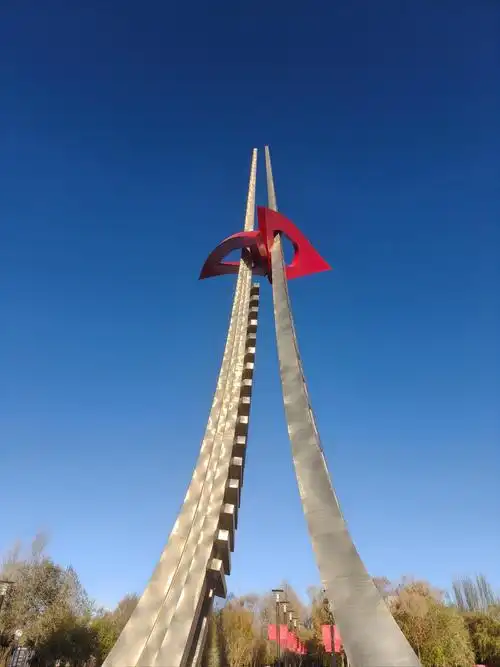
At the center rises the tall “Everlasting Glory to the People’s Martyrs” monument, its clean vertical form dominating the square and catching the intense high-altitude light. Broad paved spaces lead to grave plots shaded by mature pines and cypresses, while sculptures such as “Swords into Plowshares” reinforce themes of sacrifice, peace, and nation-building. The formal, axial layout feels closer to a European civic war memorial than to a decorative garden. Inside, the memorial hall shifts to a more intimate scale, presenting photographs, documents, tools, and personal accounts. These objects make the statistics of altitude, harsh weather, tight schedules, and loss feel immediately human.
More than a burial ground, the cemetery records the effort to connect the Tibetan Plateau with the rest of China. The highway, railway, and pipeline became vital arteries for passengers, freight, fuel, and state administration, transforming remote Golmud into a major transport hub. Museum panels address working conditions, altitude, deadlines, and casualties, celebrating the “Two Roads” spirit of endurance, solidarity, sacrifice, and public service. This is a state-centered commemorative tradition, and visitors may encounter political language different from Western memorial culture. Yet the central emotions—grief, duty, courage, and remembrance—are universally understandable. The unusual focus is the price paid to build everyday infrastructure in one of Earth’s harshest environments.
Admission is free, with the main visiting period generally running from about 5:30 a.m. to 9:30 p.m.; check local notices for seasonal changes. Allow 40–60 minutes for the core grounds, museum, and memorial square. Wear modest, respectful clothing, speak quietly, and avoid laughter or boisterous behavior. Do not photograph graves unless permission is clearly given, and follow posted rules around exhibits. The site has little commercial development, so bring water, sun protection, and a light layer. Move slowly at first because Golmud sits at roughly 2,800 meters; visitors arriving from lower elevations should allow time to acclimatize.
Pair the cemetery with the nearby Qinghai–Tibet Highway Memorial Hall and General’s Tower Park to trace Golmud’s evolution from a remote route post into the logistical heart of the plateau. Student groups can arrange a guide in advance for project details, biographical stories, and the political context behind the “Two Roads” and railway-building ideals. Independent travelers can explore the inscriptions and museum displays at their own pace. Come for solemn remembrance, but also for a rare understanding of the human cost behind the roads, rail lines, and fuel systems that made large-scale travel across the Roof of the World possible.
Founded in the 1950s amid construction of the Qinghai–Tibet Highway, the cemetery is one of China’s national memorial sites. It honors 331 servicemen, road and railway builders, and support personnel who died on the plateau during three major projects: the highway, the first phase of the railway, and the Golmud–Lhasa oil pipeline. The undertaking unfolded in the early decades after the founding of the People’s Republic, when countries across the world were rebuilding after the Second World War. Here, however, the obstacles were extreme altitude, thin air, permafrost, and vast distances. Like Europe’s wartime cemeteries, the site turns private loss into public remembrance, while honoring civilian engineering as well as service.
At the center rises the tall “Everlasting Glory to the People’s Martyrs” monument, its clean vertical form dominating the square and catching the intense high-altitude light. Broad paved spaces lead to grave plots shaded by mature pines and cypresses, while sculptures such as “Swords into Plowshares” reinforce themes of sacrifice, peace, and nation-building. The formal, axial layout feels closer to a European civic war memorial than to a decorative garden. Inside, the memorial hall shifts to a more intimate scale, presenting photographs, documents, tools, and personal accounts. These objects make the statistics of altitude, harsh weather, tight schedules, and loss feel immediately human.
More than a burial ground, the cemetery records the effort to connect the Tibetan Plateau with the rest of China. The highway, railway, and pipeline became vital arteries for passengers, freight, fuel, and state administration, transforming remote Golmud into a major transport hub. Museum panels address working conditions, altitude, deadlines, and casualties, celebrating the “Two Roads” spirit of endurance, solidarity, sacrifice, and public service. This is a state-centered commemorative tradition, and visitors may encounter political language different from Western memorial culture. Yet the central emotions—grief, duty, courage, and remembrance—are universally understandable. The unusual focus is the price paid to build everyday infrastructure in one of Earth’s harshest environments.
Admission is free, with the main visiting period generally running from about 5:30 a.m. to 9:30 p.m.; check local notices for seasonal changes. Allow 40–60 minutes for the core grounds, museum, and memorial square. Wear modest, respectful clothing, speak quietly, and avoid laughter or boisterous behavior. Do not photograph graves unless permission is clearly given, and follow posted rules around exhibits. The site has little commercial development, so bring water, sun protection, and a light layer. Move slowly at first because Golmud sits at roughly 2,800 meters; visitors arriving from lower elevations should allow time to acclimatize.
Pair the cemetery with the nearby Qinghai–Tibet Highway Memorial Hall and General’s Tower Park to trace Golmud’s evolution from a remote route post into the logistical heart of the plateau. Student groups can arrange a guide in advance for project details, biographical stories, and the political context behind the “Two Roads” and railway-building ideals. Independent travelers can explore the inscriptions and museum displays at their own pace. Come for solemn remembrance, but also for a rare understanding of the human cost behind the roads, rail lines, and fuel systems that made large-scale travel across the Roof of the World possible.