Golmud City Museum
⭐ 3.20
No. 18, Kunlun Middle Road, Golmud City, Qinghai Province, China
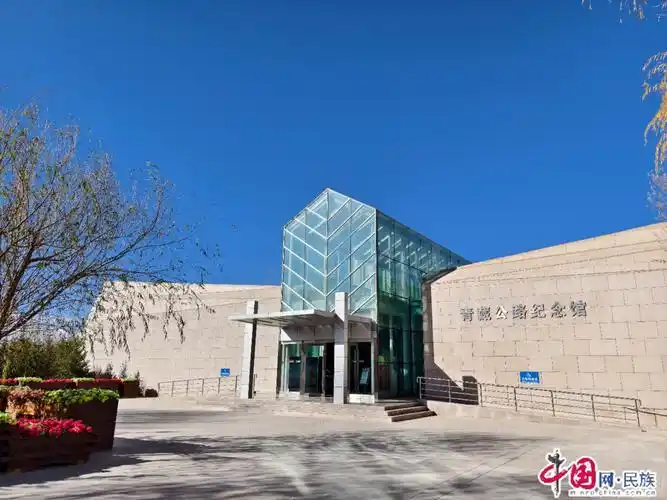 Housed in a utilitarian municipal building on Kunlun Road, the Golmud City Museum opened in 1999 and was redesignated as a branch of the Qinghai Provincial Museum in 2022. It shares premises with the city's cultural center, reflecting a practical approach common to regional Chinese museums, where institutional partnerships maximize limited resources. Think of it as a counterpart to Europe's smaller provincial museums, such as the Museo Tridentino di Scienze Naturali in Trento, which similarly distills vast regional complexity into accessible exhibits.
The museum's intellectual backbone is its geology narrative. The Tibetan Plateau, often called the "Roof of the World," began rising from the ancient Tethys Sea some 50 million years ago as the Indian subcontinent collided with Eurasia, a process geologists recognize as the same slow-motion collision that birthed the Alps and the Himalayas. Dioramas, fossil specimens, and topographic models clarify these continental forces, making the museum a natural stop for readers of John McPhee's "Annals of the Former World" or visitors familiar with Alpine geological centers.
Human history occupies the second pillar. The Nuomuhong Culture, dating back roughly three thousand years, represents Bronze Age pastoralists of the Qaidam Basin's southern fringe, contemporaries of early Mycenaean Greece and the Shang Dynasty. Displayed artifacts, including Western Zhou oracle bones and Yuan Dynasty paper currency, trace the long continuity of Silk Road exchange that linked Cathay to the Mediterranean, much as Marco Polo's accounts later documented for European readers.
The third and most emotionally resonant section commemorates the Qinghai-Tibet Railway, completed in 2006 at an average elevation exceeding 4,000 meters, a feat comparable in ambition and engineering audacity to Switzerland's Jungfrau Railway or the Trans-Siberian line. Construction tools, archival photographs, and personal memorabilia honor the workers who built the world's highest railway across permafrost and oxygen-thin air.
Practical considerations matter here. Located at 88 Middle Kunlun Road, the museum was undergoing renovation from late 2022, so travelers should confirm opening status by phone or online before visiting. Admission is free, typical visits last 60 to 90 minutes, and the climate-controlled interior offers welcome refuge during Golmud's dusty summers or cold winters, when temperatures swing from 30°C to minus 20°C.
The museum suits visitors with specific interests in earth sciences, Silk Road ethnography, or modern infrastructure history, as well as study tours and families with curious children. Pure sightseers seeking natural wonder should prioritize Chaka Salt Lake or the Kunlun Pass, then return to the museum afterward as a contextual complement rather than a headline destination.
Housed in a utilitarian municipal building on Kunlun Road, the Golmud City Museum opened in 1999 and was redesignated as a branch of the Qinghai Provincial Museum in 2022. It shares premises with the city's cultural center, reflecting a practical approach common to regional Chinese museums, where institutional partnerships maximize limited resources. Think of it as a counterpart to Europe's smaller provincial museums, such as the Museo Tridentino di Scienze Naturali in Trento, which similarly distills vast regional complexity into accessible exhibits.
The museum's intellectual backbone is its geology narrative. The Tibetan Plateau, often called the "Roof of the World," began rising from the ancient Tethys Sea some 50 million years ago as the Indian subcontinent collided with Eurasia, a process geologists recognize as the same slow-motion collision that birthed the Alps and the Himalayas. Dioramas, fossil specimens, and topographic models clarify these continental forces, making the museum a natural stop for readers of John McPhee's "Annals of the Former World" or visitors familiar with Alpine geological centers.
Human history occupies the second pillar. The Nuomuhong Culture, dating back roughly three thousand years, represents Bronze Age pastoralists of the Qaidam Basin's southern fringe, contemporaries of early Mycenaean Greece and the Shang Dynasty. Displayed artifacts, including Western Zhou oracle bones and Yuan Dynasty paper currency, trace the long continuity of Silk Road exchange that linked Cathay to the Mediterranean, much as Marco Polo's accounts later documented for European readers.
The third and most emotionally resonant section commemorates the Qinghai-Tibet Railway, completed in 2006 at an average elevation exceeding 4,000 meters, a feat comparable in ambition and engineering audacity to Switzerland's Jungfrau Railway or the Trans-Siberian line. Construction tools, archival photographs, and personal memorabilia honor the workers who built the world's highest railway across permafrost and oxygen-thin air.
Practical considerations matter here. Located at 88 Middle Kunlun Road, the museum was undergoing renovation from late 2022, so travelers should confirm opening status by phone or online before visiting. Admission is free, typical visits last 60 to 90 minutes, and the climate-controlled interior offers welcome refuge during Golmud's dusty summers or cold winters, when temperatures swing from 30°C to minus 20°C.
The museum suits visitors with specific interests in earth sciences, Silk Road ethnography, or modern infrastructure history, as well as study tours and families with curious children. Pure sightseers seeking natural wonder should prioritize Chaka Salt Lake or the Kunlun Pass, then return to the museum afterward as a contextual complement rather than a headline destination.