Chaerhan Salt Lake
⭐ 4.60
Chaerhan Salt Lake, Golmud City, Qinghai Province, China
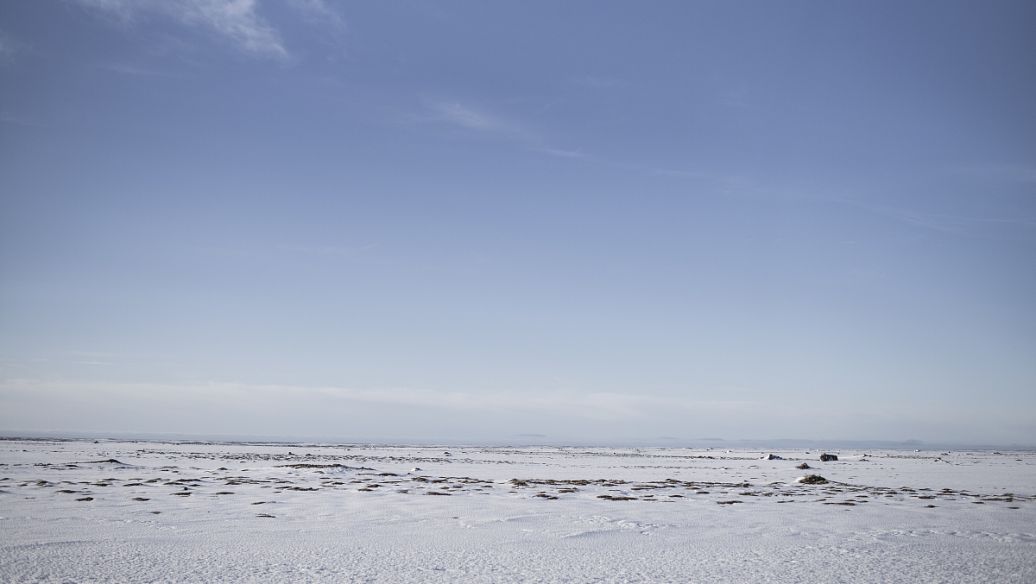 Stretching across the southern Qaidam Basin's ancient seabed, Chaerhan has been accumulating mineral riches for millions of years. Since the 1950s, when China's industrial awakening turned to its western frontiers, this remote expanse transformed from forgotten wasteland into a strategic resource hub. The salt crust—averaging 15 to 18 meters thick and exceeding 20 meters in places—caps a reservoir of sodium chloride and potash so vast it sustains a significant share of global fertilizer demand, paralleling the economic importance of Chile's Atacama salt flats in the world commodities market.
The "Wanzhang Salt Bridge" stands as one of modern China's most poetic engineering achievements. For 32 kilometers, vehicles and trains share a unified causeway hewn directly from the lake's salt surface, with no bridge piers, no asphalt, and no concrete—only the compacted, gleaming salt itself bearing the weight. Comparable in audacity to Bolivia's salt highways yet vastly longer, this route connects remote mining operations to the national rail network. Driving across feels like piloting a ship across a white ocean, the brine pools stretching to every horizon.
Beneath the surface, brine saturated far beyond seawater concentration sculpts bizarre salt flowers—delicate crystalline towers, coral-like clusters, and uncanny animal shapes. These formations, untouched by human design, have emerged through the patient alchemy of evaporation and chemistry. Photographers prize them at golden hour, when sunlight fractures through translucent crystals. Visitors wearing white or brightly colored garments appear to float among these formations, creating scenes reminiscent of the surreal Martian landscapes imagined by science fiction.
The lake's centerpiece, however, is its breathtaking reflective quality. On windless days or after brief desert rains, the shallow brine pools become nature's mirrors, doubling the vast Tibetan Plateau sky. Low-angle photography captures the disorienting illusion of standing between twin heavens—a phenomenon that has made this region, alongside Bolivia's Uyuni, one of Earth's most celebrated "mirror of the sky" destinations. From the central dock area, visitors can also witness industrial salt harvesters at work, watching massive machinery glide across the lake like mechanical whales.
Practical planning requires some preparation. The lake sits 60 to 160 kilometers from Golmud depending on entrance chosen, making self-driving or chartered vehicles essential. Admission runs approximately 100 yuan, including shuttle service, and half a day suffices for a satisfying visit. Afternoon arrival on a clear, calm day maximizes both photography and color intensity. Travelers must observe strict safety protocols: the highly corrosive brine destroys footwear and burns tissue within minutes, so wading is absolutely forbidden. Full sun protection is mandatory given the extreme high-altitude UV exposure, and visitors should remain on marked walkways, as hidden voids lurk beneath seemingly solid salt crusts.
Chaerhan rewards those willing to venture beyond China's more famous circuits. Where most tourists flock to the turquoise lakes nearer Dunhuang or the temples of Tongren, this frontier offers something rarer: a place where Earth's deep geology, modern industrial ambition, and pure optical wonder converge. Few locations on the planet deliver such a visceral sense of standing on a different world while remaining unmistakably human in achievement.
Stretching across the southern Qaidam Basin's ancient seabed, Chaerhan has been accumulating mineral riches for millions of years. Since the 1950s, when China's industrial awakening turned to its western frontiers, this remote expanse transformed from forgotten wasteland into a strategic resource hub. The salt crust—averaging 15 to 18 meters thick and exceeding 20 meters in places—caps a reservoir of sodium chloride and potash so vast it sustains a significant share of global fertilizer demand, paralleling the economic importance of Chile's Atacama salt flats in the world commodities market.
The "Wanzhang Salt Bridge" stands as one of modern China's most poetic engineering achievements. For 32 kilometers, vehicles and trains share a unified causeway hewn directly from the lake's salt surface, with no bridge piers, no asphalt, and no concrete—only the compacted, gleaming salt itself bearing the weight. Comparable in audacity to Bolivia's salt highways yet vastly longer, this route connects remote mining operations to the national rail network. Driving across feels like piloting a ship across a white ocean, the brine pools stretching to every horizon.
Beneath the surface, brine saturated far beyond seawater concentration sculpts bizarre salt flowers—delicate crystalline towers, coral-like clusters, and uncanny animal shapes. These formations, untouched by human design, have emerged through the patient alchemy of evaporation and chemistry. Photographers prize them at golden hour, when sunlight fractures through translucent crystals. Visitors wearing white or brightly colored garments appear to float among these formations, creating scenes reminiscent of the surreal Martian landscapes imagined by science fiction.
The lake's centerpiece, however, is its breathtaking reflective quality. On windless days or after brief desert rains, the shallow brine pools become nature's mirrors, doubling the vast Tibetan Plateau sky. Low-angle photography captures the disorienting illusion of standing between twin heavens—a phenomenon that has made this region, alongside Bolivia's Uyuni, one of Earth's most celebrated "mirror of the sky" destinations. From the central dock area, visitors can also witness industrial salt harvesters at work, watching massive machinery glide across the lake like mechanical whales.
Practical planning requires some preparation. The lake sits 60 to 160 kilometers from Golmud depending on entrance chosen, making self-driving or chartered vehicles essential. Admission runs approximately 100 yuan, including shuttle service, and half a day suffices for a satisfying visit. Afternoon arrival on a clear, calm day maximizes both photography and color intensity. Travelers must observe strict safety protocols: the highly corrosive brine destroys footwear and burns tissue within minutes, so wading is absolutely forbidden. Full sun protection is mandatory given the extreme high-altitude UV exposure, and visitors should remain on marked walkways, as hidden voids lurk beneath seemingly solid salt crusts.
Chaerhan rewards those willing to venture beyond China's more famous circuits. Where most tourists flock to the turquoise lakes nearer Dunhuang or the temples of Tongren, this frontier offers something rarer: a place where Earth's deep geology, modern industrial ambition, and pure optical wonder converge. Few locations on the planet deliver such a visceral sense of standing on a different world while remaining unmistakably human in achievement.