Mainling Airport
⭐ 3.80
Mainling Airport, Mainling County, Nyingchi City, Tibet Autonomous Region, China
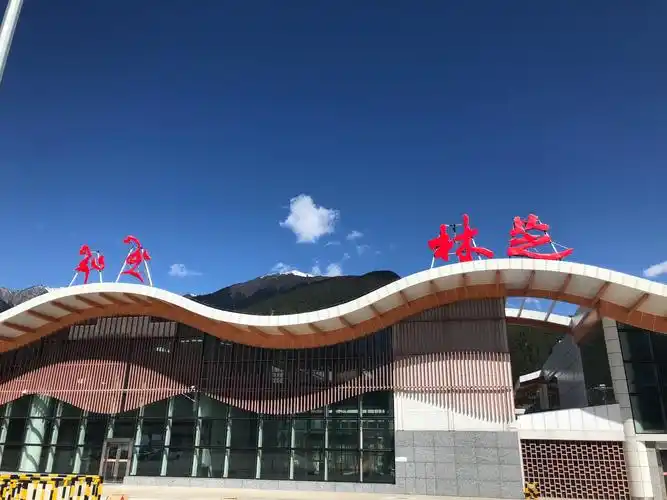 Built in 2006 at 2,949 meters along the narrow Yarlung Tsangpo valley, Nyingchi Mainling Airport is a triumph of high-altitude engineering. Comparable in difficulty to Nepal's Tenzing-Hillary Airport at Lukla — yet serving far larger jets — its runway threads between ridges so close that pilots enjoy only kilometers of clearance. Complex mountain turbulence makes the field reliably navigable just 100 days a year, with most flights scheduled for morning hours when the air is calmest. By afternoon, sudden valley gusts frequently cause delays, earning the field the nickname "Sky Cliff Runway."
The landing approach itself is the principal attraction. Roughly forty minutes before touchdown, aircraft descend through the upper reaches of the Yarlung Tsangpo Grand Canyon — deeper than America's Grand Canyon and barely explored by Western geographers before the late twentieth century. On clear days, passengers glimpse the 7,782-meter Mount Namcha Barwa, often called the most beautiful peak in the Himalayas, alongside its twin Mount Galhaipere. Travelers should request a left-side window seat to avoid wing obstruction, and photographers recommend polarizing filters to cut haze. Many seasoned travelers rate this descent among the most spectacular commercial flights on Earth.
Classified as a 4D military-civilian regional airport (IATA: LZY), the facility features a 3,000-meter runway, nineteen Class C aircraft stands, and a 10,400-square-meter terminal. By 2025, annual throughput exceeded 900,000 passengers — modest by global standards yet remarkable for one of the most isolated airfields ever built. It serves as Tibet's primary eastern gateway, connecting visitors from Chengdu, Lhasa, and Chongqing to the region's marquee destinations: the Yarlung Tsangpo Grand Canyon, the alpine meadows of Lulang, and the turquoise waters of Basum Tso.
Plane-spotters and landscape photographers gather at vantage points such as Gangga Bridge and Caimen Village to capture aircraft framed against snow peaks, the Yarlung Tsangpo River, and — during March and April — blooming peach orchards. The combination of pink blossoms, white summits, and descending jets produces some of Asia's most striking travel imagery. Autumn brings clearer skies and equally dramatic light. Note that the airport grounds themselves offer nothing to tour on foot; the nearest Grand Canyon entrance lies roughly ninety minutes by road, and onward journeys require arranged transport.
At 2,949 meters, Mainling sits dramatically lower than Lhasa, making it the gentlest introduction to Tibetan altitudes. First-day visitors should still avoid bathing, alcohol, and strenuous activity, and keep portable oxygen and glucose handy. Travelers heading to border regions like Medog or Nanyi Valley must arrange Tibet Travel Permits and military passes through licensed agencies in advance. Check-in closes forty minutes before departure, though weather-driven schedule changes are common — flexibility matters more than tight onward connections. From Mainling, travelers typically continue overland to absorb the region's Himalayan grandeur at ground level.
Built in 2006 at 2,949 meters along the narrow Yarlung Tsangpo valley, Nyingchi Mainling Airport is a triumph of high-altitude engineering. Comparable in difficulty to Nepal's Tenzing-Hillary Airport at Lukla — yet serving far larger jets — its runway threads between ridges so close that pilots enjoy only kilometers of clearance. Complex mountain turbulence makes the field reliably navigable just 100 days a year, with most flights scheduled for morning hours when the air is calmest. By afternoon, sudden valley gusts frequently cause delays, earning the field the nickname "Sky Cliff Runway."
The landing approach itself is the principal attraction. Roughly forty minutes before touchdown, aircraft descend through the upper reaches of the Yarlung Tsangpo Grand Canyon — deeper than America's Grand Canyon and barely explored by Western geographers before the late twentieth century. On clear days, passengers glimpse the 7,782-meter Mount Namcha Barwa, often called the most beautiful peak in the Himalayas, alongside its twin Mount Galhaipere. Travelers should request a left-side window seat to avoid wing obstruction, and photographers recommend polarizing filters to cut haze. Many seasoned travelers rate this descent among the most spectacular commercial flights on Earth.
Classified as a 4D military-civilian regional airport (IATA: LZY), the facility features a 3,000-meter runway, nineteen Class C aircraft stands, and a 10,400-square-meter terminal. By 2025, annual throughput exceeded 900,000 passengers — modest by global standards yet remarkable for one of the most isolated airfields ever built. It serves as Tibet's primary eastern gateway, connecting visitors from Chengdu, Lhasa, and Chongqing to the region's marquee destinations: the Yarlung Tsangpo Grand Canyon, the alpine meadows of Lulang, and the turquoise waters of Basum Tso.
Plane-spotters and landscape photographers gather at vantage points such as Gangga Bridge and Caimen Village to capture aircraft framed against snow peaks, the Yarlung Tsangpo River, and — during March and April — blooming peach orchards. The combination of pink blossoms, white summits, and descending jets produces some of Asia's most striking travel imagery. Autumn brings clearer skies and equally dramatic light. Note that the airport grounds themselves offer nothing to tour on foot; the nearest Grand Canyon entrance lies roughly ninety minutes by road, and onward journeys require arranged transport.
At 2,949 meters, Mainling sits dramatically lower than Lhasa, making it the gentlest introduction to Tibetan altitudes. First-day visitors should still avoid bathing, alcohol, and strenuous activity, and keep portable oxygen and glucose handy. Travelers heading to border regions like Medog or Nanyi Valley must arrange Tibet Travel Permits and military passes through licensed agencies in advance. Check-in closes forty minutes before departure, though weather-driven schedule changes are common — flexibility matters more than tight onward connections. From Mainling, travelers typically continue overland to absorb the region's Himalayan grandeur at ground level.