Basom Lake National Park
⭐ 4.80
Basom Lake National Park, Nyingchi City, Tibet Autonomous Region, China
 The Cuozong Gongba Temple on Basongcuo's central island traces its origins to the Tang Dynasty (618–907 AD), an era when the Tibetan Empire under King Songtsen Gampo was exchanging embassies with Tang China and Charlemagne was being crowned Emperor of the Romans in the West. Belonging to the Nyingma school—the oldest tradition of Tibetan Buddhism, founded in the 8th century by the legendary Indian master Padmasambhava—the temple has weathered over a millennium of Himalayan winters. Its survival parallels that of remote European mountain chapels like the little Chapel of San Romedio in the Italian Dolomites, both serving as enduring pockets of devotion in landscapes that feel carved from another age.
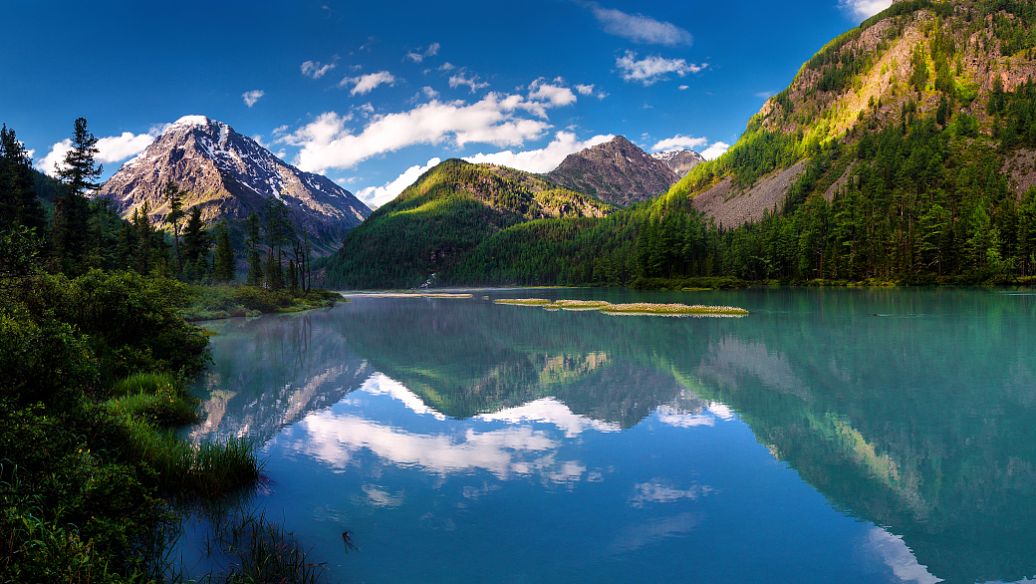
Often dubbed the "Jiangnan of Tibet" for its surprisingly lush surroundings, Basongcuo sits at 3,480 meters in the Gongbu region, where glacier-fed streams feed a lake so still it mirrors the surrounding peaks with mirror-like precision. The water carries a distinctive jade-green hue caused by suspended glacial silt and dissolved minerals, reminiscent of the famed turquoise of Lake Louise in the Canadian Rockies or the deep greens of Norway's Geirangerfjord. Compared to the barren high-altitude expanses most travelers associate with Tibet, Basongcuo feels closer to an Alpine retreat—think Lake Annecy in France or the Italian Dolomites—yet with the unmistakable presence of Himalayan giants rising in every direction.
A slender wooden footbridge connects the lake's shore to the forested island, where ancient cypresses draped in moss shelter the modest temple complex. Cuozong Gongba's whitewashed walls, fluttering prayer flags, and weathered wooden prayer wheels embody the austere beauty of Nyingma architecture—simpler and older in style than the ornate Gelug monasteries of Lhasa, yet carrying echoes of early Tang Dynasty Buddhist building traditions transplanted onto the Tibetan Plateau. Visitors should walk clockwise around the temple and stupas, following Buddhist custom, and dress modestly before stepping inside. Photography inside the prayer halls is generally prohibited, in keeping with the site's status as an active place of worship.
Beyond the lake, the traditional Gongbu Tibetan villages of Jieba and Cuogao preserve a way of life increasingly rare across modernizing China. Stone-built farmhouses stacked with firewood, prayer flags fluttering over barley fields, and yaks grazing in alpine meadows evoke a pastoral scene closer to Tyrolean hamlets than to the bustling cities of the Tibetan plateau. For travelers with extra energy, the bumpy road leading to Xincuo ("New Lake") rewards adventurous visitors with raw glacial panoramas, hidden pastures, and a near-total absence of other tourists—a taste of pristine wilderness that even hikers in the Swiss National Park would find impressive.
Most travelers should arrive in Nyingchi town (around 2,900 m) the day before visiting and spend a night acclimatizing before heading to the lake—the same precaution advised for trekkers heading into the Andes or the Himalayas. The park opens from 8:30 AM to 7:00 PM, and arriving before 10:00 AM helps avoid the mid-morning tour-bus crowd. The essential ticket is the combined pass covering park entry, sightseeing bus, and boat to the island, which is a must-do rather than optional. The Daqiela Viewpoint offers the most photographed panorama of the entire lake. Foreign visitors can purchase tickets with a valid passport and visa; online real-name booking in advance is strongly recommended during peak season from May to October.
Because Basongcuo sits above 3,000 meters, altitude sickness is a real concern on the first day—avoid strenuous activity, alcohol, and showers until adjusted, much as in Cusco or Lhasa. Pack a windproof shell, light down jacket, rain gear, and high-SPF sunscreen; even summer temperatures can swing dramatically between midday sun and glacial winds. What makes Basongcuo unforgettable is the contrast: photograph one of the world's clearest alpine lakes in the morning, walk through a 1,200-year-old Buddhist sanctuary by midday, and end the day among Tibetan villagers whose ancestors tended these valleys since Charlemagne's reign. Few destinations so seamlessly blend raw natural beauty, living spirituality, and high-altitude drama within a single accessible day.
The Cuozong Gongba Temple on Basongcuo's central island traces its origins to the Tang Dynasty (618–907 AD), an era when the Tibetan Empire under King Songtsen Gampo was exchanging embassies with Tang China and Charlemagne was being crowned Emperor of the Romans in the West. Belonging to the Nyingma school—the oldest tradition of Tibetan Buddhism, founded in the 8th century by the legendary Indian master Padmasambhava—the temple has weathered over a millennium of Himalayan winters. Its survival parallels that of remote European mountain chapels like the little Chapel of San Romedio in the Italian Dolomites, both serving as enduring pockets of devotion in landscapes that feel carved from another age.
Often dubbed the "Jiangnan of Tibet" for its surprisingly lush surroundings, Basongcuo sits at 3,480 meters in the Gongbu region, where glacier-fed streams feed a lake so still it mirrors the surrounding peaks with mirror-like precision. The water carries a distinctive jade-green hue caused by suspended glacial silt and dissolved minerals, reminiscent of the famed turquoise of Lake Louise in the Canadian Rockies or the deep greens of Norway's Geirangerfjord. Compared to the barren high-altitude expanses most travelers associate with Tibet, Basongcuo feels closer to an Alpine retreat—think Lake Annecy in France or the Italian Dolomites—yet with the unmistakable presence of Himalayan giants rising in every direction.
A slender wooden footbridge connects the lake's shore to the forested island, where ancient cypresses draped in moss shelter the modest temple complex. Cuozong Gongba's whitewashed walls, fluttering prayer flags, and weathered wooden prayer wheels embody the austere beauty of Nyingma architecture—simpler and older in style than the ornate Gelug monasteries of Lhasa, yet carrying echoes of early Tang Dynasty Buddhist building traditions transplanted onto the Tibetan Plateau. Visitors should walk clockwise around the temple and stupas, following Buddhist custom, and dress modestly before stepping inside. Photography inside the prayer halls is generally prohibited, in keeping with the site's status as an active place of worship.
Beyond the lake, the traditional Gongbu Tibetan villages of Jieba and Cuogao preserve a way of life increasingly rare across modernizing China. Stone-built farmhouses stacked with firewood, prayer flags fluttering over barley fields, and yaks grazing in alpine meadows evoke a pastoral scene closer to Tyrolean hamlets than to the bustling cities of the Tibetan plateau. For travelers with extra energy, the bumpy road leading to Xincuo ("New Lake") rewards adventurous visitors with raw glacial panoramas, hidden pastures, and a near-total absence of other tourists—a taste of pristine wilderness that even hikers in the Swiss National Park would find impressive.
Most travelers should arrive in Nyingchi town (around 2,900 m) the day before visiting and spend a night acclimatizing before heading to the lake—the same precaution advised for trekkers heading into the Andes or the Himalayas. The park opens from 8:30 AM to 7:00 PM, and arriving before 10:00 AM helps avoid the mid-morning tour-bus crowd. The essential ticket is the combined pass covering park entry, sightseeing bus, and boat to the island, which is a must-do rather than optional. The Daqiela Viewpoint offers the most photographed panorama of the entire lake. Foreign visitors can purchase tickets with a valid passport and visa; online real-name booking in advance is strongly recommended during peak season from May to October.
Because Basongcuo sits above 3,000 meters, altitude sickness is a real concern on the first day—avoid strenuous activity, alcohol, and showers until adjusted, much as in Cusco or Lhasa. Pack a windproof shell, light down jacket, rain gear, and high-SPF sunscreen; even summer temperatures can swing dramatically between midday sun and glacial winds. What makes Basongcuo unforgettable is the contrast: photograph one of the world's clearest alpine lakes in the morning, walk through a 1,200-year-old Buddhist sanctuary by midday, and end the day among Tibetan villagers whose ancestors tended these valleys since Charlemagne's reign. Few destinations so seamlessly blend raw natural beauty, living spirituality, and high-altitude drama within a single accessible day.