Lulang International Tourism Town
⭐ 4.20
Lulang International Tourism Town, Bayi District, Nyingchi City, Tibet Autonomous Region, China
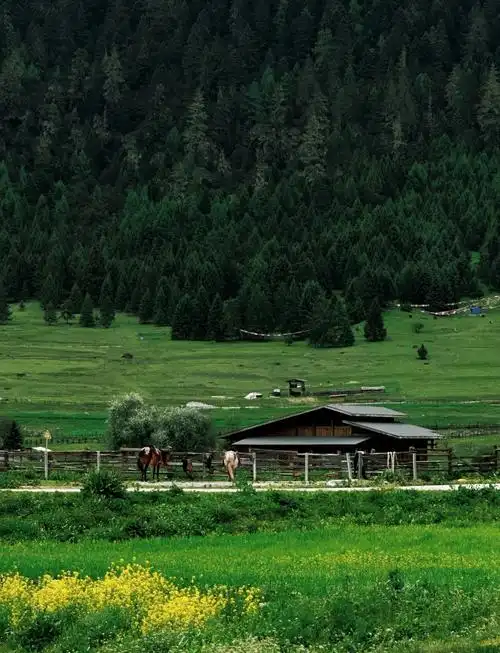 Tucked into the forested heart of southeastern Tibet, Lulang—meaning "Dragon King Valley" or "Abode of the Immortals" in Tibetan—has been inhabited for centuries by the Gongbo people, an ancient Tibetan subgroup whose pastoral traditions echo the timeless rhythms of Alpine villages like Grindelwald or Zermatt in Switzerland. Its reputation as the "Oriental Switzerland," bestowed since the early 20th century by Western explorers surveying the eastern Himalayan fringe, rests on its remarkable blend of glacier-fed meadows, primeval spruce forests, and panoramic views of Namcha Barwa (7,782 m), one of the world's last unclimbed great peaks.
The town's architecture strikes a thoughtful balance between tradition and contemporary comfort: stone-and-timber Tibetan facades line the main avenues alongside boutique hotels and well-appointed guesthouses, while a dedicated dining street serves authentic Gongbo cuisine, most famously the celebrated stone-pot chicken cooked with local mushrooms and herbs. Just outside the planned resort zone lies Zhaxigang Village, where weathered wooden homes, stone hearths, and smoldering juniper incense altars preserve a living slice of pastoral Tibetan life reminiscent of pre-industrial Alpine hamlets.
Culturally, Lulang offers a rare window into Gongbo heritage, including the distinctive archery tradition known as "shooting arrows with melodious twang"—a festive sport where participants shoot at targets while singing and shouting, much like Swiss yodeling and festive shooting matches in Appenzell. Visitors can partake in butter tea rituals, watch local herders guide yaks across summer pastures, and explore nearby pilgrimage sites associated with the early Tibetan Buddhist kings of the 7th–9th centuries, when this region served as a vital corridor linking the Tibetan heartland with the tea-horse trade networks of Yunnan and Sichuan.
For travelers, the practical logistics are straightforward: the town sits about 1.5 hours by chartered car from Nyingchi city, en route to the Sichuan-Tibet Highway's dramatic passes. Lodging ranges from centrally located four-star resorts with diffused oxygen and underfloor heating—essential comforts at altitude—to rustic family-run homestays in Zhaxigang. Peak travel seasons run from July to August, when alpine wildflowers carpet the meadows, and September to October, when the forests blaze in autumn gold; both windows demand advance booking, as do the cherry blossom weeks of late March and early April.
Nature lovers and photographers will find endless rewards within walking distance: the Segrila Pass viewpoint offers sweeping vistas over cloud-shrouded pine forests with Namcha Barwa rising majestically in the distance, while Zhatang Luco Lake mirrors the snow peaks in glassy stillness. Gentle trails wind through rhododendron groves and yak pastures suitable for casual hikers, and horseback excursions can be arranged with local herders. To fully absorb the magical golden-hour light, allow at least one overnight stay—two or three nights if combining with the nearby Lulang Forest Sea and Galongla Mountain excursions.
Tucked into the forested heart of southeastern Tibet, Lulang—meaning "Dragon King Valley" or "Abode of the Immortals" in Tibetan—has been inhabited for centuries by the Gongbo people, an ancient Tibetan subgroup whose pastoral traditions echo the timeless rhythms of Alpine villages like Grindelwald or Zermatt in Switzerland. Its reputation as the "Oriental Switzerland," bestowed since the early 20th century by Western explorers surveying the eastern Himalayan fringe, rests on its remarkable blend of glacier-fed meadows, primeval spruce forests, and panoramic views of Namcha Barwa (7,782 m), one of the world's last unclimbed great peaks.
The town's architecture strikes a thoughtful balance between tradition and contemporary comfort: stone-and-timber Tibetan facades line the main avenues alongside boutique hotels and well-appointed guesthouses, while a dedicated dining street serves authentic Gongbo cuisine, most famously the celebrated stone-pot chicken cooked with local mushrooms and herbs. Just outside the planned resort zone lies Zhaxigang Village, where weathered wooden homes, stone hearths, and smoldering juniper incense altars preserve a living slice of pastoral Tibetan life reminiscent of pre-industrial Alpine hamlets.
Culturally, Lulang offers a rare window into Gongbo heritage, including the distinctive archery tradition known as "shooting arrows with melodious twang"—a festive sport where participants shoot at targets while singing and shouting, much like Swiss yodeling and festive shooting matches in Appenzell. Visitors can partake in butter tea rituals, watch local herders guide yaks across summer pastures, and explore nearby pilgrimage sites associated with the early Tibetan Buddhist kings of the 7th–9th centuries, when this region served as a vital corridor linking the Tibetan heartland with the tea-horse trade networks of Yunnan and Sichuan.
For travelers, the practical logistics are straightforward: the town sits about 1.5 hours by chartered car from Nyingchi city, en route to the Sichuan-Tibet Highway's dramatic passes. Lodging ranges from centrally located four-star resorts with diffused oxygen and underfloor heating—essential comforts at altitude—to rustic family-run homestays in Zhaxigang. Peak travel seasons run from July to August, when alpine wildflowers carpet the meadows, and September to October, when the forests blaze in autumn gold; both windows demand advance booking, as do the cherry blossom weeks of late March and early April.
Nature lovers and photographers will find endless rewards within walking distance: the Segrila Pass viewpoint offers sweeping vistas over cloud-shrouded pine forests with Namcha Barwa rising majestically in the distance, while Zhatang Luco Lake mirrors the snow peaks in glassy stillness. Gentle trails wind through rhododendron groves and yak pastures suitable for casual hikers, and horseback excursions can be arranged with local herders. To fully absorb the magical golden-hour light, allow at least one overnight stay—two or three nights if combining with the nearby Lulang Forest Sea and Galongla Mountain excursions.