Kongpo Chokhorling Monastery
⭐ 3.60
Kongpo Chokhorling Monastery, Bayi District, Nyingchi City, Tibet Autonomous Region, China
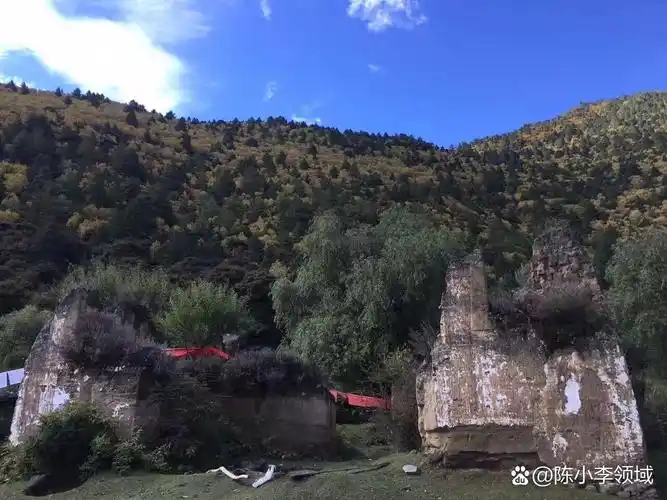 The monastery was once an important retreat for practitioners of the Nyingma school—Tibetan Buddhism's oldest tradition, founded in the 8th century by Padmasambhava, whose teachings predate Europe's great medieval universities by several generations. Like the romanesque abbey ruins scattered across the French countryside, the temple's collapse over centuries of weather and upheaval has left evocative foundations rather than a complete structure, lending the site a melancholy grandeur that history enthusiasts find compelling. Local lore adds an exotic flourish: tales of an Indian prince who once meditated here, leaving behind legends such as the "Prince's Search for Eyes," which echo the migration of Buddhist thought along the ancient trade routes connecting India to the Tibetan plateau.
The architectural remnants are modest but atmospheric. Two stupas—one black, one white—stand in the Tibetan tradition of paired reliquary monuments comparable to the paired bell towers of Romanesque cathedrals. Their weathered forms still reveal the characteristic square base, dome, and spire that symbolize the five elements. Nearby, a graceful Green Tara bas-relief is carved into a cliff face. Green Tara, the female embodiment of compassion and swift assistance, occupies in Tibetan devotion a role similar to the Virgin of Mercy in medieval European piety—a compassionate protector to whom devotees turn in moments of need. The site is further animated by colorful prayer flags and small cairns of mani stones, the Tibetan equivalent of leaving a votive offering.
Culturally, the site represents the deep fusion of folk religion with orthodox Buddhism in Tibet's Kongpo region. Unlike the elaborate ritual programs at major monasteries such as Sera or Drepung, this humble place has seen its formal ceremonies fade. What remains is a living folk tradition: pilgrims still come to pray to Green Tara for love and marriage, mirroring how rural European chapels often outlive their formal clergy to become sites of local devotion and superstition. The unblending confluence of rivers below is itself sacred geography—a phenomenon reminiscent of the meeting of the Rhone and Arve near Geneva, but rendered more dramatic by the contrast of jade-green against ochre-yellow waters.
For practical planning, the temple sits approximately 18 kilometers from Nyingchi Milin Airport, making it an easy half-day excursion or a stop on a longer Nyingchi circuit. Travelers can combine it with visits to nearby Lhamo Latso Monastery and the scenic Nyingchi River corridor. Facilities are minimal, so bring water, sunscreen, and sturdy shoes for the uneven paths. The site is currently under protective maintenance—resist the urge to climb the ruins or touch the carvings and prayer flags, which are fragile historical artifacts.
The ideal time to visit is on a clear afternoon between spring and early autumn, when Namcha Barwa's 7,782-meter peak reveals itself in full glory. Standing before the silhouetted mountain with the dual-colored rivers below, it is easy to understand why Buddhist masters chose such places for contemplation. For travelers seeking a lesser-known encounter with Tibetan heritage—away from the busier circuits of Lhasa—this riverside ruin offers a rare combination of historical depth, natural spectacle, and unforced spirituality.
The monastery was once an important retreat for practitioners of the Nyingma school—Tibetan Buddhism's oldest tradition, founded in the 8th century by Padmasambhava, whose teachings predate Europe's great medieval universities by several generations. Like the romanesque abbey ruins scattered across the French countryside, the temple's collapse over centuries of weather and upheaval has left evocative foundations rather than a complete structure, lending the site a melancholy grandeur that history enthusiasts find compelling. Local lore adds an exotic flourish: tales of an Indian prince who once meditated here, leaving behind legends such as the "Prince's Search for Eyes," which echo the migration of Buddhist thought along the ancient trade routes connecting India to the Tibetan plateau.
The architectural remnants are modest but atmospheric. Two stupas—one black, one white—stand in the Tibetan tradition of paired reliquary monuments comparable to the paired bell towers of Romanesque cathedrals. Their weathered forms still reveal the characteristic square base, dome, and spire that symbolize the five elements. Nearby, a graceful Green Tara bas-relief is carved into a cliff face. Green Tara, the female embodiment of compassion and swift assistance, occupies in Tibetan devotion a role similar to the Virgin of Mercy in medieval European piety—a compassionate protector to whom devotees turn in moments of need. The site is further animated by colorful prayer flags and small cairns of mani stones, the Tibetan equivalent of leaving a votive offering.
Culturally, the site represents the deep fusion of folk religion with orthodox Buddhism in Tibet's Kongpo region. Unlike the elaborate ritual programs at major monasteries such as Sera or Drepung, this humble place has seen its formal ceremonies fade. What remains is a living folk tradition: pilgrims still come to pray to Green Tara for love and marriage, mirroring how rural European chapels often outlive their formal clergy to become sites of local devotion and superstition. The unblending confluence of rivers below is itself sacred geography—a phenomenon reminiscent of the meeting of the Rhone and Arve near Geneva, but rendered more dramatic by the contrast of jade-green against ochre-yellow waters.
For practical planning, the temple sits approximately 18 kilometers from Nyingchi Milin Airport, making it an easy half-day excursion or a stop on a longer Nyingchi circuit. Travelers can combine it with visits to nearby Lhamo Latso Monastery and the scenic Nyingchi River corridor. Facilities are minimal, so bring water, sunscreen, and sturdy shoes for the uneven paths. The site is currently under protective maintenance—resist the urge to climb the ruins or touch the carvings and prayer flags, which are fragile historical artifacts.
The ideal time to visit is on a clear afternoon between spring and early autumn, when Namcha Barwa's 7,782-meter peak reveals itself in full glory. Standing before the silhouetted mountain with the dual-colored rivers below, it is easy to understand why Buddhist masters chose such places for contemplation. For travelers seeking a lesser-known encounter with Tibetan heritage—away from the busier circuits of Lhasa—this riverside ruin offers a rare combination of historical depth, natural spectacle, and unforced spirituality.