Sishui Riverside
⭐ 3.50
Sishui Riverside, Qufu City, Shandong Province, China
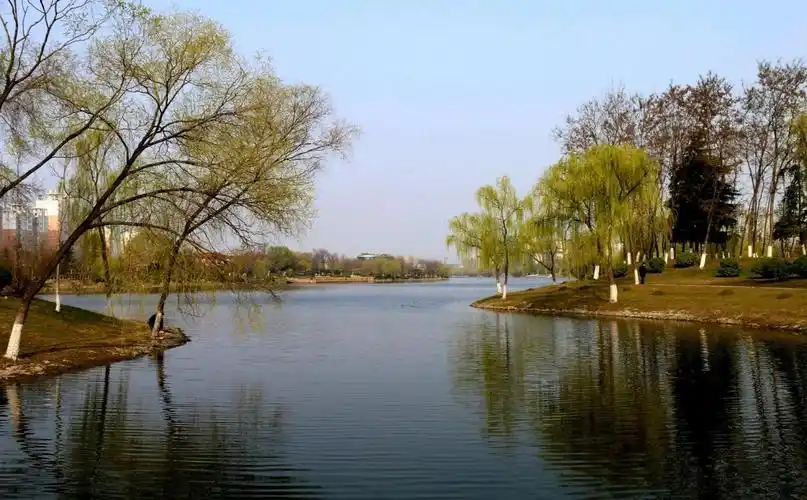 The Sishui River draws its fame from one of the most quoted moments in Chinese philosophy. In the 5th century BCE—roughly contemporary with Socrates walking the streets of Athens—Confucius stood on its banks and lamented the relentless flow of time, words later recorded in the Analects: "It passes on like this, never ceasing day or night." Comparable in cultural weight to the River Tiber's role in Roman civilization or the Thames in English letters, the Sishui is the spiritual artery of Confucian thought. The riverside park commemorates this legacy through stone-carved verses, sculptural tributes, and themed walkways that trace the very stretch of water where the Master once reflected.
Stretching along both riverbanks, the park unfolds as a series of linked cultural stations—Poetry on the River, Famous Streams of Hai and Dai, and The Sishui Cauldron—each marked by calligraphic inscriptions and bronze reliefs. Wooden boardwalks glide over marshland where egrets and herons stalk the shallows, while a dedicated egret-viewing pavilion rises above the reeds. A rainbow-colored pedestrian bridge arches across the water like a contemporary sculpture, and the 2A-rated Folk Culture Garden on the south bank houses a folk museum, a scholar's rock garden, a small zoo, and family rides. The aesthetic recalls Europe's landscaped public gardens—think Parc de la Villette in Paris reimagined in Chinese calligraphic style.
Beyond scenic beauty, Sishui Riverside functions as a living classroom for Confucian culture, one of the world's longest-enduring ethical traditions. Stone inscriptions quoting the Analects appear beside traditional performances of folk canal crafts—axe-marching drills and grain-boat pulling demonstrations—offering a tangible connection to over two millennia of ritual civilization. The park anchors a broader cultural circuit: visitors with extra time can continue to the Temple of Confucius's disciple Zilu, the Quanlin Springs at the river's source, and a rare imperial stele left by the Qianlong Emperor. For those tracing the roots of East Asian philosophy, this corner of Shandong offers a quieter, more intimate experience than Qufu's better-known sites.
The park is open daily and free of charge—no reservation required. Self-drivers can navigate to "Sishui River Park South Gate," where ample parking is available. Public transport users can take Bus B11 to Binjiang Park Station, followed by a 15-minute stroll along the riverside boardwalk. Jining has modernized payment options for foreign visitors: most surrounding hotels, shops, and scenic sites accept Visa and Mastercard, with cash exchange and "small change pouches" available for those preferring RMB. Plan for half a day to a full day, depending on whether you explore the Folk Culture Garden or venture onward to the Quanlin Springs.
The best experiences here are unhurried ones: walk the poetry-lined paths at dawn, settle into the egret pavilion at midday to watch white birds skim the river, and stay until sunset when the rainbow bridge frames the sky in gold. From June through September, the Sishui enters flood season—heavy rain can make riverside paths slippery, so avoid storms and wear sturdy, non-slip footwear. Mosquito repellent is advisable near the wetlands, and as vending machines are sparse, bring your own water and snacks. For Western travelers tracing the foundations of Chinese civilization, Sishui Riverside offers something rare: a place where philosophy, nature, and everyday local life flow together, much as they have for twenty-five centuries.
The Sishui River draws its fame from one of the most quoted moments in Chinese philosophy. In the 5th century BCE—roughly contemporary with Socrates walking the streets of Athens—Confucius stood on its banks and lamented the relentless flow of time, words later recorded in the Analects: "It passes on like this, never ceasing day or night." Comparable in cultural weight to the River Tiber's role in Roman civilization or the Thames in English letters, the Sishui is the spiritual artery of Confucian thought. The riverside park commemorates this legacy through stone-carved verses, sculptural tributes, and themed walkways that trace the very stretch of water where the Master once reflected.
Stretching along both riverbanks, the park unfolds as a series of linked cultural stations—Poetry on the River, Famous Streams of Hai and Dai, and The Sishui Cauldron—each marked by calligraphic inscriptions and bronze reliefs. Wooden boardwalks glide over marshland where egrets and herons stalk the shallows, while a dedicated egret-viewing pavilion rises above the reeds. A rainbow-colored pedestrian bridge arches across the water like a contemporary sculpture, and the 2A-rated Folk Culture Garden on the south bank houses a folk museum, a scholar's rock garden, a small zoo, and family rides. The aesthetic recalls Europe's landscaped public gardens—think Parc de la Villette in Paris reimagined in Chinese calligraphic style.
Beyond scenic beauty, Sishui Riverside functions as a living classroom for Confucian culture, one of the world's longest-enduring ethical traditions. Stone inscriptions quoting the Analects appear beside traditional performances of folk canal crafts—axe-marching drills and grain-boat pulling demonstrations—offering a tangible connection to over two millennia of ritual civilization. The park anchors a broader cultural circuit: visitors with extra time can continue to the Temple of Confucius's disciple Zilu, the Quanlin Springs at the river's source, and a rare imperial stele left by the Qianlong Emperor. For those tracing the roots of East Asian philosophy, this corner of Shandong offers a quieter, more intimate experience than Qufu's better-known sites.
The park is open daily and free of charge—no reservation required. Self-drivers can navigate to "Sishui River Park South Gate," where ample parking is available. Public transport users can take Bus B11 to Binjiang Park Station, followed by a 15-minute stroll along the riverside boardwalk. Jining has modernized payment options for foreign visitors: most surrounding hotels, shops, and scenic sites accept Visa and Mastercard, with cash exchange and "small change pouches" available for those preferring RMB. Plan for half a day to a full day, depending on whether you explore the Folk Culture Garden or venture onward to the Quanlin Springs.
The best experiences here are unhurried ones: walk the poetry-lined paths at dawn, settle into the egret pavilion at midday to watch white birds skim the river, and stay until sunset when the rainbow bridge frames the sky in gold. From June through September, the Sishui enters flood season—heavy rain can make riverside paths slippery, so avoid storms and wear sturdy, non-slip footwear. Mosquito repellent is advisable near the wetlands, and as vending machines are sparse, bring your own water and snacks. For Western travelers tracing the foundations of Chinese civilization, Sishui Riverside offers something rare: a place where philosophy, nature, and everyday local life flow together, much as they have for twenty-five centuries.