Kongfu Family Liquor Museum
⭐ 3.20
Lucheng Street, Qufu City, Shandong Province, China
 Qufu, the cradle of Confucianism, has produced ritual wines for temple ceremonies since at least the Han dynasty, and the museum traces this lineage back to the Qing-era Yanshenggong household—the hereditary estate of Confucius's direct descendants, who maintained a palace distillery to supply sacrificial banquets. Much like Scotland's whisky heritage sites around Speyside, this museum blends agricultural tradition with commercial branding, showing how a regional craft evolved into a national product through the 1956 joint state-private reforms and subsequent modernization, giving visitors a tangible timeline of Chinese industrial transformation over three centuries.
The museum's architecture draws on Confucian aesthetics rather than imitation palace grandeur, employing restrained stone facades and muted earth tones that complement Qufu's solemn heritage zone. Inside, the centerpiece is a working five-vessel mixed-steam production line—comparable to a living exhibit at Ireland's Old Jameson Distillery—where guests can watch grains being steamed, fermented in earthen pits, and double-distilled. Adjacent wooden "wine sea" cellars hold thousands of liters in massive timber vessels, echoing the barrel halls of cognac houses in France, while a temperature-stable underground vault protects vintages dating back decades.
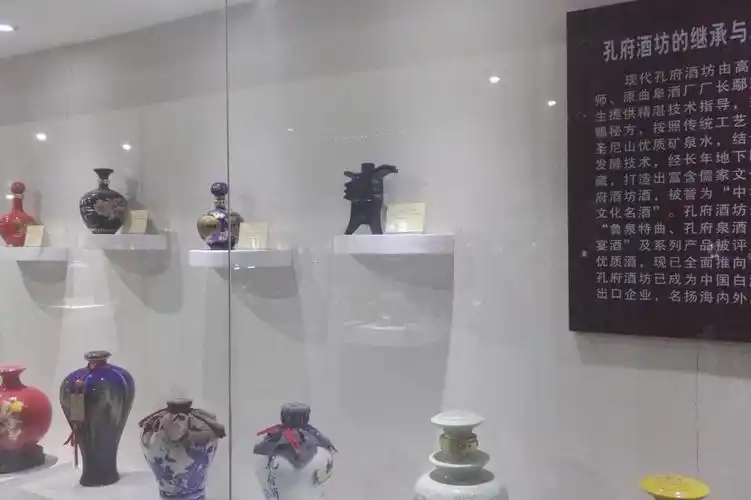
Beyond production, the museum celebrates brand memory through a gallery replicating the golden age of 1990s Chinese television advertising. The slogan "Kongfu Jiajiu, makes you think of home" became cultural shorthand for family reunion dinners, similar to how iconic European liquor campaigns shaped postwar consumer identity. Antique vessels, period labels, and recreated living-room sets immerse older visitors in their youth, while younger guests encounter a vanished media aesthetic.
Practical planning is essential: the museum sits at 166 Hede Road within the Kongfu Jiajiu Eco-Industrial Park and requires advance reservation plus a guided escort. Standard tours last 45 to 60 minutes, and some sessions include a tasting flight, though availability varies with production schedules. Opening hours shift with corporate and visitor plans, so calling ahead or checking official channels is strongly advised to avoid a wasted trip.
For travelers focused primarily on Confucian pilgrimage—Confucius Temple, Cemetery, and Forest—the museum works best as a brief add-on rather than a centerpiece. However, those with extra time, an interest in baijiu craftsmanship, or curiosity about industrial tourism will find rich rewards, as will families seeking an engaging lesson in fermentation science and Chinese consumer history.
Qufu, the cradle of Confucianism, has produced ritual wines for temple ceremonies since at least the Han dynasty, and the museum traces this lineage back to the Qing-era Yanshenggong household—the hereditary estate of Confucius's direct descendants, who maintained a palace distillery to supply sacrificial banquets. Much like Scotland's whisky heritage sites around Speyside, this museum blends agricultural tradition with commercial branding, showing how a regional craft evolved into a national product through the 1956 joint state-private reforms and subsequent modernization, giving visitors a tangible timeline of Chinese industrial transformation over three centuries.
The museum's architecture draws on Confucian aesthetics rather than imitation palace grandeur, employing restrained stone facades and muted earth tones that complement Qufu's solemn heritage zone. Inside, the centerpiece is a working five-vessel mixed-steam production line—comparable to a living exhibit at Ireland's Old Jameson Distillery—where guests can watch grains being steamed, fermented in earthen pits, and double-distilled. Adjacent wooden "wine sea" cellars hold thousands of liters in massive timber vessels, echoing the barrel halls of cognac houses in France, while a temperature-stable underground vault protects vintages dating back decades.
Beyond production, the museum celebrates brand memory through a gallery replicating the golden age of 1990s Chinese television advertising. The slogan "Kongfu Jiajiu, makes you think of home" became cultural shorthand for family reunion dinners, similar to how iconic European liquor campaigns shaped postwar consumer identity. Antique vessels, period labels, and recreated living-room sets immerse older visitors in their youth, while younger guests encounter a vanished media aesthetic.
Practical planning is essential: the museum sits at 166 Hede Road within the Kongfu Jiajiu Eco-Industrial Park and requires advance reservation plus a guided escort. Standard tours last 45 to 60 minutes, and some sessions include a tasting flight, though availability varies with production schedules. Opening hours shift with corporate and visitor plans, so calling ahead or checking official channels is strongly advised to avoid a wasted trip.
For travelers focused primarily on Confucian pilgrimage—Confucius Temple, Cemetery, and Forest—the museum works best as a brief add-on rather than a centerpiece. However, those with extra time, an interest in baijiu craftsmanship, or curiosity about industrial tourism will find rich rewards, as will families seeking an engaging lesson in fermentation science and Chinese consumer history.