Temple of Yan
⭐ 4.20
Yan Temple Scenic Area, Qufu City, Jining, Shandong Province, China
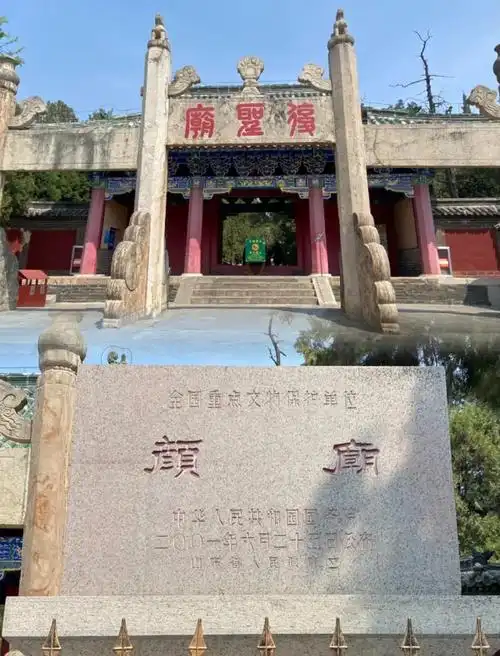 YAN TEMPLE stands as a singular tribute to Yan Hui (521–481 BCE), the disciple Confucius himself mourned as "uncrowned king of virtue." While Confucius drew the philosophical map of ancient China, Yan Hui embodied its purest practice—a parallel that invites comparison to the relationship between Socrates and Plato in the Western canon. The temple's main structures were reestablished during the Yuan Dynasty around 1340 CE, an era when Mongol rule unified China from Beijing to Central Asia, a fact made vivid by rare bilingual Mongol-Chinese steles within the complex. Designated a nationally protected site in 2001, Yan Temple sits within Qufu's Ming-era walled city, sharing the same sacred urban footprint as the Confucius Temple just across the street—much as medieval European cathedrals anchor historic town centers like those of Bruges or York.
The architecture unfolds along a strict north-south axis stretching 247 meters across 23,000 square meters, organized into five sequential courtyards in classic Chinese ceremonial style. Twenty-four buildings housing 159 rooms include the towering Fusheng Hall (Hall of the Restored Sage), whose timber brackets and beam work preserve Yuan-Ming construction techniques. Where European pilgrims might admire the soaring vaults of Chartres or the carved tympana of Romanesque churches, visitors here encounter a different spiritual grammar: horizontal sweep, painted eaves, and stone-paved processional ways designed for ritual circumambulation rather than vertical transcendence.
Beyond its physical beauty, Yan Temple is the spiritual heart of the Confucian ideal called "Kong-Yan Le Chu"—the "shared joy of Confucius and Yan Hui." This refers to the famous passage where Yan Hui finds perfect contentment living on a single bowl of rice in a humble alley, a philosophy akin to the Stoic and Franciscan embrace of voluntary simplicity. The side halls venerate later Yan family luminaries, including the Tang-Dynasty calligrapher-general Yan Zhenqing, whose monumental inscriptions adorn numerous Chinese monuments. The stele gallery is itself a treasure, blending historical chronicles, calligraphy, and the unique paleographic record of Yuan-era Mongol script.
Practical visiting details are refreshingly straightforward. Entry is free, though foreign visitors must present a passport for registration at the gate, similar to security procedures at many European museums. The temple operates from 8:30 AM to 4:30 PM, with last admission at closing. Signage is predominantly Chinese, so travelers should download a translation app or arrange an English-speaking guide in advance through the Qufu Cultural Tourism Bureau. Stone-paved paths can be slick after rain, so flat, comfortable shoes are essential—imagine navigating the polished marble floors of St. Peter's Basilica on a damp day.
The optimal strategy is to combine Yan Temple with the "Three Confucius" sites (Temple, Mansion, and Cemetery) in a single day, a UNESCO World Heritage ensemble unrivaled in East Asia. From the Confucius Temple's eastern gate, a ten-minute walk brings you to Yan Temple's threshold. Allow 90 minutes to two hours here, ideally between 9 and 11 AM or 3 and 5 PM, when soft light illuminates the calligraphic stones and carved eaves. Visit on weekday mornings for near-silence, when the courtyard's ancient cypresses and the quiet drip of the Humble Alley Well offer a contemplative pause rare in modern China—comparable to finding a forgotten cloister during an early-morning walk through Assisi.
YAN TEMPLE stands as a singular tribute to Yan Hui (521–481 BCE), the disciple Confucius himself mourned as "uncrowned king of virtue." While Confucius drew the philosophical map of ancient China, Yan Hui embodied its purest practice—a parallel that invites comparison to the relationship between Socrates and Plato in the Western canon. The temple's main structures were reestablished during the Yuan Dynasty around 1340 CE, an era when Mongol rule unified China from Beijing to Central Asia, a fact made vivid by rare bilingual Mongol-Chinese steles within the complex. Designated a nationally protected site in 2001, Yan Temple sits within Qufu's Ming-era walled city, sharing the same sacred urban footprint as the Confucius Temple just across the street—much as medieval European cathedrals anchor historic town centers like those of Bruges or York.
The architecture unfolds along a strict north-south axis stretching 247 meters across 23,000 square meters, organized into five sequential courtyards in classic Chinese ceremonial style. Twenty-four buildings housing 159 rooms include the towering Fusheng Hall (Hall of the Restored Sage), whose timber brackets and beam work preserve Yuan-Ming construction techniques. Where European pilgrims might admire the soaring vaults of Chartres or the carved tympana of Romanesque churches, visitors here encounter a different spiritual grammar: horizontal sweep, painted eaves, and stone-paved processional ways designed for ritual circumambulation rather than vertical transcendence.
Beyond its physical beauty, Yan Temple is the spiritual heart of the Confucian ideal called "Kong-Yan Le Chu"—the "shared joy of Confucius and Yan Hui." This refers to the famous passage where Yan Hui finds perfect contentment living on a single bowl of rice in a humble alley, a philosophy akin to the Stoic and Franciscan embrace of voluntary simplicity. The side halls venerate later Yan family luminaries, including the Tang-Dynasty calligrapher-general Yan Zhenqing, whose monumental inscriptions adorn numerous Chinese monuments. The stele gallery is itself a treasure, blending historical chronicles, calligraphy, and the unique paleographic record of Yuan-era Mongol script.
Practical visiting details are refreshingly straightforward. Entry is free, though foreign visitors must present a passport for registration at the gate, similar to security procedures at many European museums. The temple operates from 8:30 AM to 4:30 PM, with last admission at closing. Signage is predominantly Chinese, so travelers should download a translation app or arrange an English-speaking guide in advance through the Qufu Cultural Tourism Bureau. Stone-paved paths can be slick after rain, so flat, comfortable shoes are essential—imagine navigating the polished marble floors of St. Peter's Basilica on a damp day.
The optimal strategy is to combine Yan Temple with the "Three Confucius" sites (Temple, Mansion, and Cemetery) in a single day, a UNESCO World Heritage ensemble unrivaled in East Asia. From the Confucius Temple's eastern gate, a ten-minute walk brings you to Yan Temple's threshold. Allow 90 minutes to two hours here, ideally between 9 and 11 AM or 3 and 5 PM, when soft light illuminates the calligraphic stones and carved eaves. Visit on weekday mornings for near-silence, when the courtyard's ancient cypresses and the quiet drip of the Humble Alley Well offer a contemplative pause rare in modern China—comparable to finding a forgotten cloister during an early-morning walk through Assisi.