Temple of Duke of Zhou
⭐ 3.50
Zhou Gong Temple Scenic Area, Qufu City, Jining City, Shandong Province, China
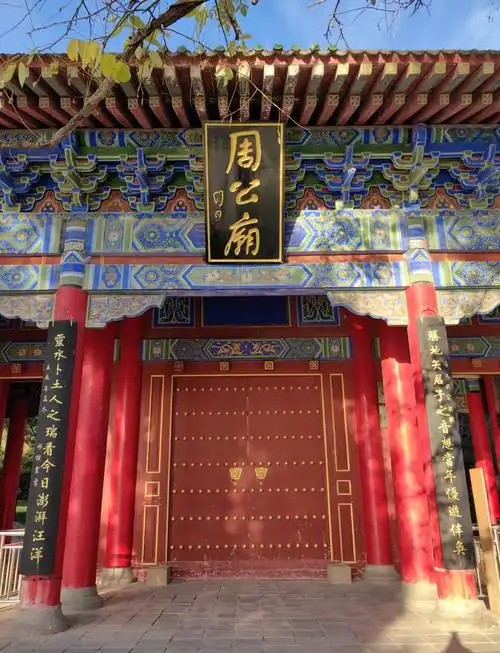 The temple was originally built in 1008 CE during the Northern Song dynasty, though the surviving halls, pavilions, and gates were largely reconstructed during the Ming and Qing periods. Standing roughly 75 mu within the old Lu state capital, it mirrors the layout of imperial ancestral shrines across East Asia: three sequential courtyards aligned along a north-south axis. Positioned just 1–2 kilometers from the Confucius Temple and Mansion, the site forms part of Qufu's trinity of Confucian monuments, a relationship comparable to how the Pantheon, Capitoline Hill, and Vatican anchor Rome's sacred topography.
Two monumental stone memorial arches, or pailou, frame the entrance: "Spanning Heaven and Earth" and "Establishing Rites and Creating Music." Four-pillared, three-bayed structures in the classic Chinese gateway style, they signal the Duke's towering contribution to civilizational ethics. Behind them, the Lingxing Gate and an Imperial Stele Pavilion lead visitors deeper along a processional path shaded by ancient cypresses, evoking the contemplative atmosphere of a European cathedral close or a Greek sacred grove.
The Primordial Sage Hall serves as the spiritual core, housing a statue of the Duke beneath a plaque inscribed by the Qianlong Emperor reading "Bright Virtue, Diligently Bestowed." Most prized is the "Inscription on the Golden Figure" stele before the hall, a pre-Qin text warning against careless speech, considered a masterpiece of early Chinese moral philosophy and a parallel to the Delphic maxim "know thyself." Altogether, 35 stone steles record centuries of imperial rituals and restorations, offering rich material for calligraphy enthusiasts and historians alike.
Visitor facilities are minimal and authentic: admission is free or around 20 RMB, but foreign and domestic guests alike must present identification to register. The temple opens roughly 8:30 a.m. to 5:00 p.m., with no restaurants, shops, or interpretive exhibits on site. Allow one to two hours for a thoughtful visit. Because the experience is contemplative rather than performative, it suits travelers who, like pilgrims to Assisi or Canterbury, seek quiet engagement with foundational ideas rather than spectacle.
The most rewarding visit combines the temple with the Confucius Temple and Mansion across town, ideally early morning or late afternoon when slanting light washes the red walls and ancient cypresses. Reading briefly about the Duke of Zhou and the "rites and music" reforms before arrival transforms the visit from sightseeing into genuine cultural immersion, illuminating how this often-overlooked sage helped author the ethical vocabulary still resonating across East Asia today.
The temple was originally built in 1008 CE during the Northern Song dynasty, though the surviving halls, pavilions, and gates were largely reconstructed during the Ming and Qing periods. Standing roughly 75 mu within the old Lu state capital, it mirrors the layout of imperial ancestral shrines across East Asia: three sequential courtyards aligned along a north-south axis. Positioned just 1–2 kilometers from the Confucius Temple and Mansion, the site forms part of Qufu's trinity of Confucian monuments, a relationship comparable to how the Pantheon, Capitoline Hill, and Vatican anchor Rome's sacred topography.
Two monumental stone memorial arches, or pailou, frame the entrance: "Spanning Heaven and Earth" and "Establishing Rites and Creating Music." Four-pillared, three-bayed structures in the classic Chinese gateway style, they signal the Duke's towering contribution to civilizational ethics. Behind them, the Lingxing Gate and an Imperial Stele Pavilion lead visitors deeper along a processional path shaded by ancient cypresses, evoking the contemplative atmosphere of a European cathedral close or a Greek sacred grove.
The Primordial Sage Hall serves as the spiritual core, housing a statue of the Duke beneath a plaque inscribed by the Qianlong Emperor reading "Bright Virtue, Diligently Bestowed." Most prized is the "Inscription on the Golden Figure" stele before the hall, a pre-Qin text warning against careless speech, considered a masterpiece of early Chinese moral philosophy and a parallel to the Delphic maxim "know thyself." Altogether, 35 stone steles record centuries of imperial rituals and restorations, offering rich material for calligraphy enthusiasts and historians alike.
Visitor facilities are minimal and authentic: admission is free or around 20 RMB, but foreign and domestic guests alike must present identification to register. The temple opens roughly 8:30 a.m. to 5:00 p.m., with no restaurants, shops, or interpretive exhibits on site. Allow one to two hours for a thoughtful visit. Because the experience is contemplative rather than performative, it suits travelers who, like pilgrims to Assisi or Canterbury, seek quiet engagement with foundational ideas rather than spectacle.
The most rewarding visit combines the temple with the Confucius Temple and Mansion across town, ideally early morning or late afternoon when slanting light washes the red walls and ancient cypresses. Reading briefly about the Duke of Zhou and the "rites and music" reforms before arrival transforms the visit from sightseeing into genuine cultural immersion, illuminating how this often-overlooked sage helped author the ethical vocabulary still resonating across East Asia today.