Jingdezhen Ancient Kiln Folk Customs Exhibition Area
⭐ 4.50
Jingdezhen, Jiangxi Province, China
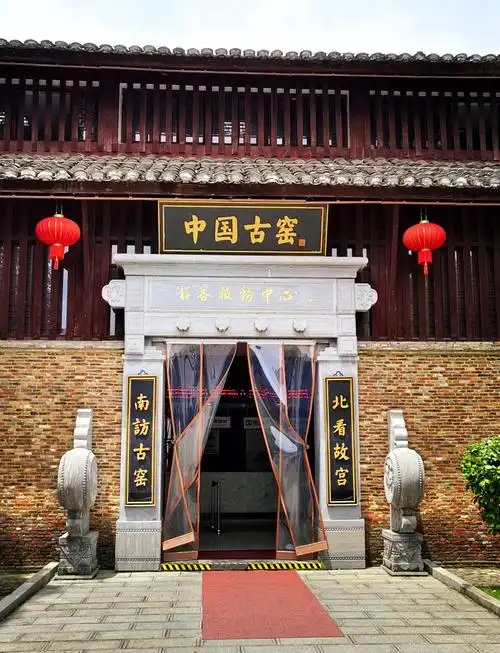 Long before Meissen, Sèvres, or Wedgwood established Europe's porcelain dynasties, Jingdezhen was already supplying emperors, sultans, and royal courts across Eurasia with its legendary "white gold." Crowned China's "Porcelain Capital" for over a thousand years, the city has witnessed the evolution of ceramic technology from primitive dragon kilns of the Song era to sophisticated Qing dynasty industrial-scale operations. The Guinness-certified Qing dynasty kiln here holds the world record for largest wood-fired porcelain kiln—a feat of engineering comparable in ambition to the great blast furnaces of the Industrial Revolution, yet built centuries earlier using only traditional materials and human craft.
The thirteen historic kilns represent every major phase of Chinese ceramic history, from sloping dragon-shaped Song kilns to dome-topped Qing furnaces. These are not sterile museum pieces but working monuments, periodically fired using authentic methods. The Qingyuan and Minglu architectural complexes recreate the streetscapes and guild halls of imperial-era Jingdezhen, while the Fenghuo Xianshi Temple honors the patron deity that kiln workers have worshipped for centuries—a reminder that for these artisans, ceramic-making was sacred craft as much as commerce.
What truly distinguishes this site is its living heritage approach. National Treasure-level inheritors demonstrate the complete 72-step process—from throwing clay on the wheel to trimming, painting, and glazing—explaining the science and philosophy behind each gesture. Equally unforgettable is the porcelain orchestra, where musicians coax ethereal melodies from specially crafted celadon bowls, porcelain chimes, and clay percussion. The sound evokes the otherworldly tones of gamelan orchestras, yet remains uniquely Chinese in its resonance and refined delicacy.
The grounds unfold as a classical Jiangnan-style garden, with shaded pathways winding between pavilions, lotus ponds, and ancient kilns draped in climbing vines. Early morning and late afternoon light transforms the weathered brick kilns into photographic subjects of remarkable character, rivaling the romantic ruins of European abbeys. For active engagement, paid workshops allow visitors to throw their own bowls or paint porcelain under master guidance, with finished pieces shipped home afterward—an experience parallel to participating in a traditional Venetian glassblowing session in Murano.
Practical planning is straightforward. Located at Guyáo Road 1 in Changjiang District, the site sits roughly 10 to 30 minutes by taxi from both Jingdezhen Airport and the high-speed rail station. Doors open daily from 8:00 AM to 5:30 PM, with last entry at 4:30 PM. Adult admission runs approximately 85 yuan and includes the scheduled porcelain music performance. Allow two to three hours for the core visit, or half a day if including a workshop. English guided tours require advance booking. Comfortable walking shoes, sun protection, and water are essential, as the garden terrain involves significant walking. Pair your visit with the adjacent China Ceramic Museum for comprehensive historical context—seeing the artifacts first, then witnessing their creation, creates an intellectually satisfying loop that deepens appreciation considerably.
Long before Meissen, Sèvres, or Wedgwood established Europe's porcelain dynasties, Jingdezhen was already supplying emperors, sultans, and royal courts across Eurasia with its legendary "white gold." Crowned China's "Porcelain Capital" for over a thousand years, the city has witnessed the evolution of ceramic technology from primitive dragon kilns of the Song era to sophisticated Qing dynasty industrial-scale operations. The Guinness-certified Qing dynasty kiln here holds the world record for largest wood-fired porcelain kiln—a feat of engineering comparable in ambition to the great blast furnaces of the Industrial Revolution, yet built centuries earlier using only traditional materials and human craft.
The thirteen historic kilns represent every major phase of Chinese ceramic history, from sloping dragon-shaped Song kilns to dome-topped Qing furnaces. These are not sterile museum pieces but working monuments, periodically fired using authentic methods. The Qingyuan and Minglu architectural complexes recreate the streetscapes and guild halls of imperial-era Jingdezhen, while the Fenghuo Xianshi Temple honors the patron deity that kiln workers have worshipped for centuries—a reminder that for these artisans, ceramic-making was sacred craft as much as commerce.
What truly distinguishes this site is its living heritage approach. National Treasure-level inheritors demonstrate the complete 72-step process—from throwing clay on the wheel to trimming, painting, and glazing—explaining the science and philosophy behind each gesture. Equally unforgettable is the porcelain orchestra, where musicians coax ethereal melodies from specially crafted celadon bowls, porcelain chimes, and clay percussion. The sound evokes the otherworldly tones of gamelan orchestras, yet remains uniquely Chinese in its resonance and refined delicacy.
The grounds unfold as a classical Jiangnan-style garden, with shaded pathways winding between pavilions, lotus ponds, and ancient kilns draped in climbing vines. Early morning and late afternoon light transforms the weathered brick kilns into photographic subjects of remarkable character, rivaling the romantic ruins of European abbeys. For active engagement, paid workshops allow visitors to throw their own bowls or paint porcelain under master guidance, with finished pieces shipped home afterward—an experience parallel to participating in a traditional Venetian glassblowing session in Murano.
Practical planning is straightforward. Located at Guyáo Road 1 in Changjiang District, the site sits roughly 10 to 30 minutes by taxi from both Jingdezhen Airport and the high-speed rail station. Doors open daily from 8:00 AM to 5:30 PM, with last entry at 4:30 PM. Adult admission runs approximately 85 yuan and includes the scheduled porcelain music performance. Allow two to three hours for the core visit, or half a day if including a workshop. English guided tours require advance booking. Comfortable walking shoes, sun protection, and water are essential, as the garden terrain involves significant walking. Pair your visit with the adjacent China Ceramic Museum for comprehensive historical context—seeing the artifacts first, then witnessing their creation, creates an intellectually satisfying loop that deepens appreciation considerably.