Fuliang Tea Township
⭐ 4.60
Fuliang Tea Township, Fuliang County, Jingdezhen City, Jiangxi Province, China
 Fuliang has been a major tea-trading hub since the Tang dynasty. The poet Bai Juyi immortalized it in his masterpiece "Pipa Xing," mourning a merchant who had departed for Fuliang to buy tea — a single line that tells you this was the Hangzhou or Amsterdam of its day. By the Ming and Qing, Fuliang's tea taxes supplied fully one-third of imperial China's tea revenue, a scale comparable to the East India Company's later grip on Asian trade. Today the county remains an open-air archive of ancient commerce and governance.
The architectural heart is the Fuliang Old Yamen, the only surviving fifth-rank Qing-dynasty county magistrate's office in all of China, paired dramatically with the seven-story Red Pagoda dating to the Western Han. Together they form the historic county's ceremonial spine, much as a European town might be anchored by its cathedral and bell tower. Nearby, the Ming-era Yao Li village unfurls classic Anhui-style lanes along a rushing creek, while the strikingly modern Bingding Kiln — a poured-concrete sanctuary of light — has earned the nickname "architects' pilgrimage site."
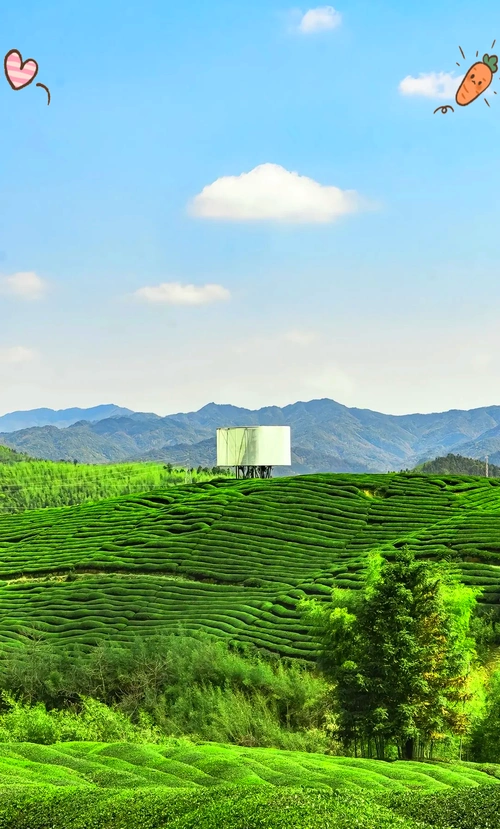
What sets Fuliang apart from other porcelain towns is its claim as a birthplace of kaolin clay. The hamlet of Gaoling gave the international ceramics world the very word "kaolin," without which there would be no Meissen, no Sèvres, no Wedgwood. A short drive away, the Hanxi Village tea fields stretch endlessly into mist, now dotted with monumental land-art installations by Ma Yansong (the Beijing-based architect of Toronto's Absolute Towers), transforming the terraces into what locals call "a museum without a roof." The newly built Gaoling China Village recreates Tang-dynasty grandeur, where visitors can don period costume and experience the elegant art of Tang-style whisked tea.
The region spreads linearly across valleys and hillsides, roughly thirty minutes to ninety minutes by car from central Jingdezhen, so renting a vehicle or hiring a driver is essential. The finest seasons are March through May, when tea pickers dot the bright green slopes, and September through November, when autumn light gilds the whitewashed walls. Avoid the punishing midsummer heat, but if rain rolls through, do not despair — post-storm mists swirling around the tea terraces produce some of the most cinematic scenery in eastern China.
Do not leave without tasting the alkaline rice cakes (a local staple with a chewy, almost pasta-like texture), the herb-stuffed red carp from local ponds, and the bittersweet chestnut tofu, all paired, of course, with a pot of Fuliang red tea — the very brew merchants once loaded onto river barges here. A hearty farmhouse meal runs roughly $8–10 per person, and most homestays offer evening tea tastings on wooden verandas overlooking the moonlit fields.
Fuliang rewards travelers who arrive curious and leave slowly. Where else can you trace a single thread from a Tang dynasty poem, through a Qing magistrate's court, into a contemporary art installation, and back to the very clay that gave porcelain its English name? It is, quite simply, the most quietly profound day trip in Jiangxi.
Fuliang has been a major tea-trading hub since the Tang dynasty. The poet Bai Juyi immortalized it in his masterpiece "Pipa Xing," mourning a merchant who had departed for Fuliang to buy tea — a single line that tells you this was the Hangzhou or Amsterdam of its day. By the Ming and Qing, Fuliang's tea taxes supplied fully one-third of imperial China's tea revenue, a scale comparable to the East India Company's later grip on Asian trade. Today the county remains an open-air archive of ancient commerce and governance.
The architectural heart is the Fuliang Old Yamen, the only surviving fifth-rank Qing-dynasty county magistrate's office in all of China, paired dramatically with the seven-story Red Pagoda dating to the Western Han. Together they form the historic county's ceremonial spine, much as a European town might be anchored by its cathedral and bell tower. Nearby, the Ming-era Yao Li village unfurls classic Anhui-style lanes along a rushing creek, while the strikingly modern Bingding Kiln — a poured-concrete sanctuary of light — has earned the nickname "architects' pilgrimage site."
What sets Fuliang apart from other porcelain towns is its claim as a birthplace of kaolin clay. The hamlet of Gaoling gave the international ceramics world the very word "kaolin," without which there would be no Meissen, no Sèvres, no Wedgwood. A short drive away, the Hanxi Village tea fields stretch endlessly into mist, now dotted with monumental land-art installations by Ma Yansong (the Beijing-based architect of Toronto's Absolute Towers), transforming the terraces into what locals call "a museum without a roof." The newly built Gaoling China Village recreates Tang-dynasty grandeur, where visitors can don period costume and experience the elegant art of Tang-style whisked tea.
The region spreads linearly across valleys and hillsides, roughly thirty minutes to ninety minutes by car from central Jingdezhen, so renting a vehicle or hiring a driver is essential. The finest seasons are March through May, when tea pickers dot the bright green slopes, and September through November, when autumn light gilds the whitewashed walls. Avoid the punishing midsummer heat, but if rain rolls through, do not despair — post-storm mists swirling around the tea terraces produce some of the most cinematic scenery in eastern China.
Do not leave without tasting the alkaline rice cakes (a local staple with a chewy, almost pasta-like texture), the herb-stuffed red carp from local ponds, and the bittersweet chestnut tofu, all paired, of course, with a pot of Fuliang red tea — the very brew merchants once loaded onto river barges here. A hearty farmhouse meal runs roughly $8–10 per person, and most homestays offer evening tea tastings on wooden verandas overlooking the moonlit fields.
Fuliang rewards travelers who arrive curious and leave slowly. Where else can you trace a single thread from a Tang dynasty poem, through a Qing magistrate's court, into a contemporary art installation, and back to the very clay that gave porcelain its English name? It is, quite simply, the most quietly profound day trip in Jiangxi.