Hongya Cave and Red Well in Meiling, Nanchang City, Jiangxi Province
⭐ 4.00
Hongya Danjing Scenic Area, Meiling, Nanchang City, Jiangxi Province, China
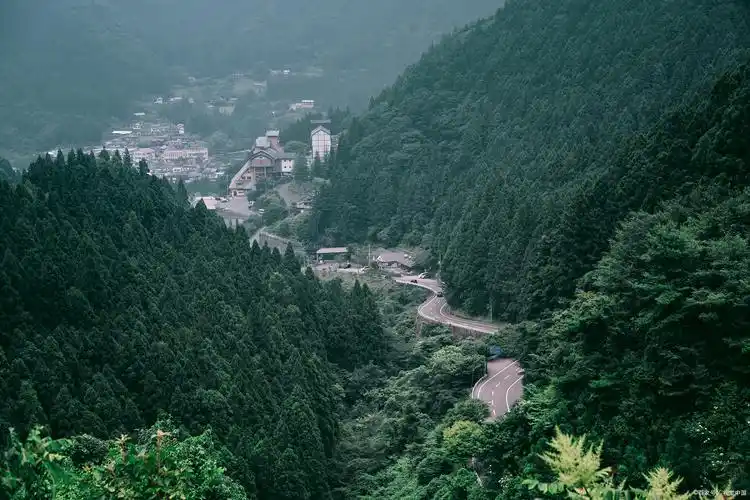 Hongya Crimson Well is steeped in one of China's oldest musical legends. Around 2600 BCE—roughly contemporaneous with the early pyramids of Egypt—the mythic Yellow Emperor dispatched his court musician Ling Lun to this secluded valley. Here, in caves fragrant with bamboo, Ling Lun is said to have drilled a deep well, refined alchemical compounds, and split bamboo tubes into the twelve fundamental pitches (lü) that underpin all subsequent Chinese music. Western visitors may find echoes of Pythagoras, who centuries later in ancient Greece reportedly discovered musical ratios from a blacksmith's hammer. The site thus offers a tangible link to a parallel, Eastern foundation story of acoustic science.
The site's surviving monuments reward close attention. The crimson well itself plunges more than ten meters into living rock, its waters flowing ceaselessly. Struck with a stone, it is said to produce all eight timbres of traditional Chinese music—an acoustic curiosity that rivals the resonant stone chimes of European medieval cathedrals. Towering above, a cliff face bears the bold calligraphic characters "Hongya" brushed by the Kangxi Emperor during his southern tours in the 1680s. The adjacent Music Deity Palace interprets the twelve-tone system through elegant exhibits, while the babbling Fairy Music Stream ties the entire landscape into a unified sonic experience.
Just steps away, the Cuiyan Zen Temple stands as the foremost of West Mountain's eight great monasteries. Founded in the early Tang dynasty, its weathered wooden halls and tiered roofs recall the contemplative austerity of smaller Japanese Zen compounds such as Kyoto's Kennin-ji. Morning bells and evening drums still punctuate the day, and pilgrims and travelers alike find the convergence of Buddhist chant and ancient tonal theory unexpectedly moving—a rare meeting point where two of Asia's most profound sound traditions echo off the same forested slopes.
Nature takes equal billing here. The Hongya Waterfall plunges from a forested gorge in a silver ribbon, earning the admiration of Tang dynasty tea sage Lu Yu, who ranked its spring water as the "Eighth Finest Under Heaven"—a distinction comparable to the famed wells of Europe's spa towns. Lush subtropical forest, gentle walking paths, and cooling mountain breezes make summer hiking a pleasure, while post-rain or peak flow in July and August transforms the cascade into a thundering spectacle reminiscent of Alpine falls in miniature scale.
Practicalities are straightforward. The site opens daily from 8:00 to 17:00, with tickets around 30 RMB. City buses 169, 540, and 217 serve a stop directly named "Hongya Danjing," and drivers can navigate to the on-site parking lot. Plan 1.5 to 2 hours for the core circuit, or extend to a leisurely half-day by combining the temple, Music Tribe cultural area, and footbridges that appeal especially to families with children.
For the best experience, arrive on a spring or autumn morning when light slants softly across the cliff inscriptions and crowds are thin—conditions that allow the waterfall's murmur and the chime-stone well to be heard as they once were. Pair the visit with nearby Shizifeng Peak and the Xiyacao Lake for a full day of Meiling exploration, and you will leave with a rare sensory impression of how early Chinese civilization wove music, meditation, and mountain landscape into a single, enduring harmony.
Hongya Crimson Well is steeped in one of China's oldest musical legends. Around 2600 BCE—roughly contemporaneous with the early pyramids of Egypt—the mythic Yellow Emperor dispatched his court musician Ling Lun to this secluded valley. Here, in caves fragrant with bamboo, Ling Lun is said to have drilled a deep well, refined alchemical compounds, and split bamboo tubes into the twelve fundamental pitches (lü) that underpin all subsequent Chinese music. Western visitors may find echoes of Pythagoras, who centuries later in ancient Greece reportedly discovered musical ratios from a blacksmith's hammer. The site thus offers a tangible link to a parallel, Eastern foundation story of acoustic science.
The site's surviving monuments reward close attention. The crimson well itself plunges more than ten meters into living rock, its waters flowing ceaselessly. Struck with a stone, it is said to produce all eight timbres of traditional Chinese music—an acoustic curiosity that rivals the resonant stone chimes of European medieval cathedrals. Towering above, a cliff face bears the bold calligraphic characters "Hongya" brushed by the Kangxi Emperor during his southern tours in the 1680s. The adjacent Music Deity Palace interprets the twelve-tone system through elegant exhibits, while the babbling Fairy Music Stream ties the entire landscape into a unified sonic experience.
Just steps away, the Cuiyan Zen Temple stands as the foremost of West Mountain's eight great monasteries. Founded in the early Tang dynasty, its weathered wooden halls and tiered roofs recall the contemplative austerity of smaller Japanese Zen compounds such as Kyoto's Kennin-ji. Morning bells and evening drums still punctuate the day, and pilgrims and travelers alike find the convergence of Buddhist chant and ancient tonal theory unexpectedly moving—a rare meeting point where two of Asia's most profound sound traditions echo off the same forested slopes.
Nature takes equal billing here. The Hongya Waterfall plunges from a forested gorge in a silver ribbon, earning the admiration of Tang dynasty tea sage Lu Yu, who ranked its spring water as the "Eighth Finest Under Heaven"—a distinction comparable to the famed wells of Europe's spa towns. Lush subtropical forest, gentle walking paths, and cooling mountain breezes make summer hiking a pleasure, while post-rain or peak flow in July and August transforms the cascade into a thundering spectacle reminiscent of Alpine falls in miniature scale.
Practicalities are straightforward. The site opens daily from 8:00 to 17:00, with tickets around 30 RMB. City buses 169, 540, and 217 serve a stop directly named "Hongya Danjing," and drivers can navigate to the on-site parking lot. Plan 1.5 to 2 hours for the core circuit, or extend to a leisurely half-day by combining the temple, Music Tribe cultural area, and footbridges that appeal especially to families with children.
For the best experience, arrive on a spring or autumn morning when light slants softly across the cliff inscriptions and crowds are thin—conditions that allow the waterfall's murmur and the chime-stone well to be heard as they once were. Pair the visit with nearby Shizifeng Peak and the Xiyacao Lake for a full day of Meiling exploration, and you will leave with a rare sensory impression of how early Chinese civilization wove music, meditation, and mountain landscape into a single, enduring harmony.