Jingdezhen Ceramics Museum
⭐ 4.30
Taoxiling Cultural and Creative Block, Zhushan District, Jingdezhen City, Jiangxi Province, China
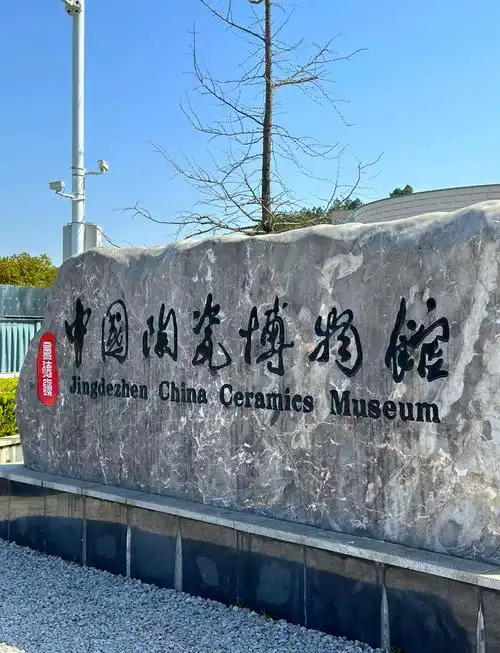 Founded in 1954, the Jingdezhen China Ceramics Museum predates China's modern ceramic revival and ranks as the country's first national-level museum dedicated to porcelain. While European collectors chased Chinese "white gold" from the Mongol era onward—inspiring royal factories at Meissen and Sèvres by the early 1700s—Jingdezhen had already been firing imperial wares for over seven centuries. The museum's 50,000-plus artifacts and 1,800 graded treasures form what locals call a "porcelain encyclopedia," charting kilns from the Han dynasty through the great imperial dynasties to the masters of today.
The 32,000-square-meter building takes the form of a luminous dragon pearl cradled inside a porcelain vessel, a sculptural nod to the dragon kilns that once dotted the surrounding hills. Inside, seven floors unfold chronologically: levels one and two house the entrance hall, cultural shops, and introductory galleries, while levels three through seven climb through Tang-Song, Yuan, Ming, Qing, and modern ceramics. Displays blend original masterpieces with wall texts, video screens, and lighting that mimics the glow of ancient kilns.
The undisputed crown jewel is a Yuan-dynasty blue-and-white plum vase with scrolling peony motifs—its massive size and brilliant cobalt glaze represent the peak of fourteenth-century underglaze technology, the very style that would later captivate Ottoman sultans and Portuguese traders. Equally compelling is a Qing-dynasty famille-rose Hundred-Deer Vase, painted with astonishing naturalism. Up on the seventh floor, a 1920s Republic-era ceramic sculpture of a pensive arhat has become a social-media sensation as the "Speechless Buddha"—visitors regularly queue for photos beside its deadpan, world-weary expression.
Admission is free, but visitors must reserve through the local "Jingdezhen Travel" mini-program on WeChat and present a physical ID at the gate. The museum closes on Mondays (except public holidays) and runs 9 a.m. to 5 p.m. Tuesday through Sunday, with last entry at 4:30 p.m. Morning slots fill fast; book early to dodge the crowds. Seating is limited, and there are few hands-on activities—renting an audio guide or booking a human-led tour is highly recommended to avoid gliding past treasures without context.
Insiders suggest reversing the usual flow: take the elevator to the seventh floor and descend. This way you journey backward through time, starting with Republic-era and contemporary pieces, then descending through Qing, Ming, Yuan, and Tang-Song galleries, ending at the Neolithic prototypes that began China's 8,000-year ceramic story. Budget 2.5 to 3 hours for the highlights. Travelers with mobility concerns should note that elevators connect every floor, but seating is sparse—plan short rests between sections.
Beyond the masterpieces, the museum offers something rare—a clear, single-thread narrative of one craft across millennia. For anyone who has admired Ming vases in the British Museum or Meissen figurines in Dresden, a visit here reveals the original source, where imperial kilns once fired the dishes of Persian shahs, Mughal emperors, and European monarchs, all under the same smoke-blackened roof in the valley of Jingdezhen.
Founded in 1954, the Jingdezhen China Ceramics Museum predates China's modern ceramic revival and ranks as the country's first national-level museum dedicated to porcelain. While European collectors chased Chinese "white gold" from the Mongol era onward—inspiring royal factories at Meissen and Sèvres by the early 1700s—Jingdezhen had already been firing imperial wares for over seven centuries. The museum's 50,000-plus artifacts and 1,800 graded treasures form what locals call a "porcelain encyclopedia," charting kilns from the Han dynasty through the great imperial dynasties to the masters of today.
The 32,000-square-meter building takes the form of a luminous dragon pearl cradled inside a porcelain vessel, a sculptural nod to the dragon kilns that once dotted the surrounding hills. Inside, seven floors unfold chronologically: levels one and two house the entrance hall, cultural shops, and introductory galleries, while levels three through seven climb through Tang-Song, Yuan, Ming, Qing, and modern ceramics. Displays blend original masterpieces with wall texts, video screens, and lighting that mimics the glow of ancient kilns.
The undisputed crown jewel is a Yuan-dynasty blue-and-white plum vase with scrolling peony motifs—its massive size and brilliant cobalt glaze represent the peak of fourteenth-century underglaze technology, the very style that would later captivate Ottoman sultans and Portuguese traders. Equally compelling is a Qing-dynasty famille-rose Hundred-Deer Vase, painted with astonishing naturalism. Up on the seventh floor, a 1920s Republic-era ceramic sculpture of a pensive arhat has become a social-media sensation as the "Speechless Buddha"—visitors regularly queue for photos beside its deadpan, world-weary expression.
Admission is free, but visitors must reserve through the local "Jingdezhen Travel" mini-program on WeChat and present a physical ID at the gate. The museum closes on Mondays (except public holidays) and runs 9 a.m. to 5 p.m. Tuesday through Sunday, with last entry at 4:30 p.m. Morning slots fill fast; book early to dodge the crowds. Seating is limited, and there are few hands-on activities—renting an audio guide or booking a human-led tour is highly recommended to avoid gliding past treasures without context.
Insiders suggest reversing the usual flow: take the elevator to the seventh floor and descend. This way you journey backward through time, starting with Republic-era and contemporary pieces, then descending through Qing, Ming, Yuan, and Tang-Song galleries, ending at the Neolithic prototypes that began China's 8,000-year ceramic story. Budget 2.5 to 3 hours for the highlights. Travelers with mobility concerns should note that elevators connect every floor, but seating is sparse—plan short rests between sections.
Beyond the masterpieces, the museum offers something rare—a clear, single-thread narrative of one craft across millennia. For anyone who has admired Ming vases in the British Museum or Meissen figurines in Dresden, a visit here reveals the original source, where imperial kilns once fired the dishes of Persian shahs, Mughal emperors, and European monarchs, all under the same smoke-blackened roof in the valley of Jingdezhen.