Yaoli Ancient Town
⭐ 4.20
Yaoli Ancient Town, Yaoli Town, Fuliang County, Jingdezhen City, Jiangxi Province, China
 Yaoli's roots stretch back to the Han dynasty, when potters first fired kilns along the Yao River to supply what would become Jingdezhen—the "Porcelain Capital" of imperial China. By the Ming and Qing dynastions, local kaolin quarries fed a thriving waterborne trade, and the pure white clay shipped from here became known the world over simply as "kaolin," from the nearby Gaoling mines. European manufactories like Meissen and Sèvres in the 18th century depended entirely on this Chinese clay to develop their own hard-paste porcelains, making Yaoli quietly foundational to the entire Western porcelain tradition. The town's 20th-century role as a base for the New Fourth Army adds a poignant revolutionary chapter to its two-millennia sweep of history.
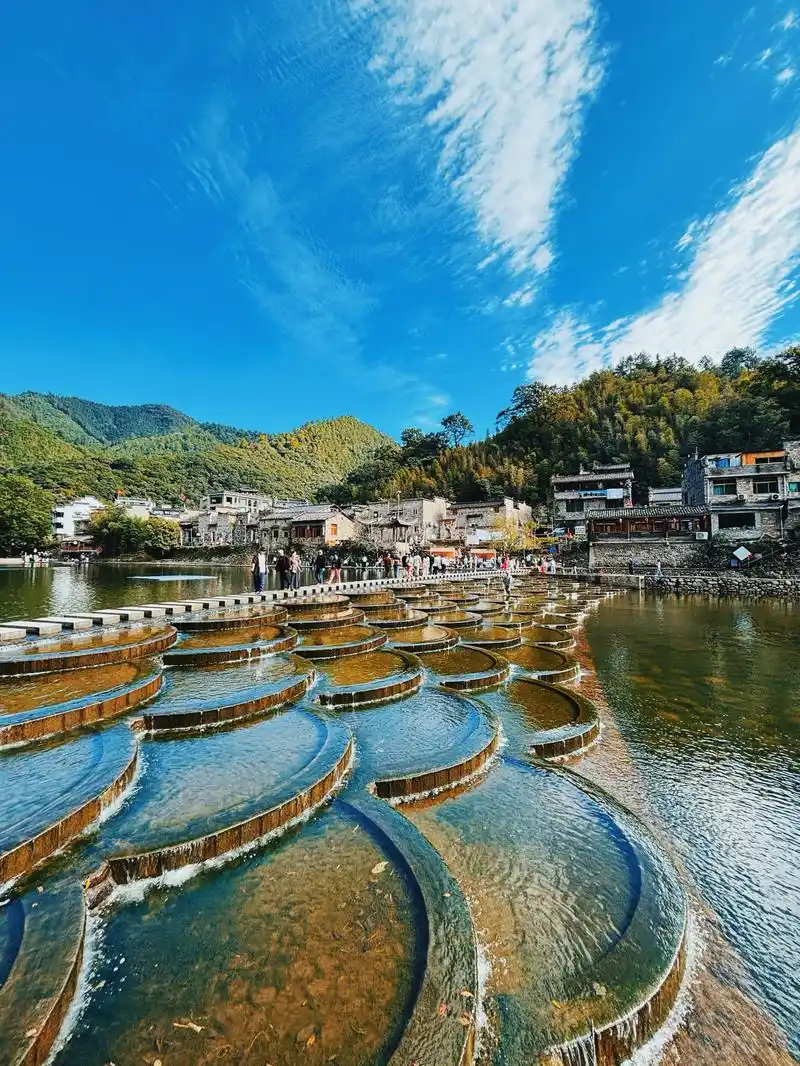
The old town unfolds along both banks of the Yao River, its flagstone main street linking timber-framed Hui-style houses, ancestral halls, and courtyard residences. Standout structures like the Cheng Family Ancestral Hall display the celebrated "three carvings" of Huizhou craftsmanship—intricate wood, brick, and stone reliefs—rivaling the decorative exuberance of baroque European guildhalls in their density of detail. Bridges of wooden planks, stepped fish-scale weirs, and scenes of locals washing vegetables and drying bamboo shoots give the place the lived-in authenticity that over-restored heritage towns often lack.
For ceramics enthusiasts, Yaoli is a pilgrimage site. Surrounding sites include the Raonan ancient kiln cluster, a Southern Song dragon kiln, and weathered water-powered stampers that once processed porcelain stone. The East Wharf (Dongfu) still bears the ruts of wooden wheelbarrows in its stone paving—the literal tracks of kaolin exports that once journeyed down to the Yangtze. Maoist-era sites such as the former residence of General Chen Yi round out a uniquely layered heritage experience.
Entry to the historic core is free and open around the clock, while interior museums and exhibition halls typically operate 8:00–17:00. A combined ticket covering the Gaoling Mine Park, Raonan Ceramic Park, and other outlying sites runs roughly 110–150 yuan. The town lies about 50 km from Jingdezhen city center; driving or hiring a car is strongly recommended, as public buses are infrequent. Local guesthouses are modest but atmospheric, with simple rooms overlooking tiled rooftops and river mist.
Plan to linger one to two nights rather than rushing through. Early mornings or soft post-rain drizzle create the most photogenic light along the riverbanks. Summers invite cool wading in the mountain streams, while autumn cloaks the surrounding forests in russet and gold—best enjoyed over a pot of local Fuliang tea. Devotees of porcelain history should pair a Yaoli stay with Jingdezhen's historic kiln sites and the contemporary Taoxichuan creative district for a complete journey from imperial craft to modern ceramic art.
Yaoli's roots stretch back to the Han dynasty, when potters first fired kilns along the Yao River to supply what would become Jingdezhen—the "Porcelain Capital" of imperial China. By the Ming and Qing dynastions, local kaolin quarries fed a thriving waterborne trade, and the pure white clay shipped from here became known the world over simply as "kaolin," from the nearby Gaoling mines. European manufactories like Meissen and Sèvres in the 18th century depended entirely on this Chinese clay to develop their own hard-paste porcelains, making Yaoli quietly foundational to the entire Western porcelain tradition. The town's 20th-century role as a base for the New Fourth Army adds a poignant revolutionary chapter to its two-millennia sweep of history.
The old town unfolds along both banks of the Yao River, its flagstone main street linking timber-framed Hui-style houses, ancestral halls, and courtyard residences. Standout structures like the Cheng Family Ancestral Hall display the celebrated "three carvings" of Huizhou craftsmanship—intricate wood, brick, and stone reliefs—rivaling the decorative exuberance of baroque European guildhalls in their density of detail. Bridges of wooden planks, stepped fish-scale weirs, and scenes of locals washing vegetables and drying bamboo shoots give the place the lived-in authenticity that over-restored heritage towns often lack.
For ceramics enthusiasts, Yaoli is a pilgrimage site. Surrounding sites include the Raonan ancient kiln cluster, a Southern Song dragon kiln, and weathered water-powered stampers that once processed porcelain stone. The East Wharf (Dongfu) still bears the ruts of wooden wheelbarrows in its stone paving—the literal tracks of kaolin exports that once journeyed down to the Yangtze. Maoist-era sites such as the former residence of General Chen Yi round out a uniquely layered heritage experience.
Entry to the historic core is free and open around the clock, while interior museums and exhibition halls typically operate 8:00–17:00. A combined ticket covering the Gaoling Mine Park, Raonan Ceramic Park, and other outlying sites runs roughly 110–150 yuan. The town lies about 50 km from Jingdezhen city center; driving or hiring a car is strongly recommended, as public buses are infrequent. Local guesthouses are modest but atmospheric, with simple rooms overlooking tiled rooftops and river mist.
Plan to linger one to two nights rather than rushing through. Early mornings or soft post-rain drizzle create the most photogenic light along the riverbanks. Summers invite cool wading in the mountain streams, while autumn cloaks the surrounding forests in russet and gold—best enjoyed over a pot of local Fuliang tea. Devotees of porcelain history should pair a Yaoli stay with Jingdezhen's historic kiln sites and the contemporary Taoxichuan creative district for a complete journey from imperial craft to modern ceramic art.