Jingdezhen Imperial Kiln Site
⭐ 4.60
Imperial Kiln Village, Xianghu Town, Fuliang County, Zhushan District, Jingdezhen, Jiangxi, China
 For more than five centuries—from the Mongol-ruled Yuan dynasty through the final Qing emperors—this sprawling complex produced the only porcelain deemed worthy of Chinese imperial tables. Jingdezhen during this period was to Asia what Meissen was to 18th-century Saxony or Sèvres to Napoleonic France, but on a vastly larger scale and with a far older pedigree. Archaeologists have recovered over ten million ceramic shards here, making it the single richest archive of imperial kiln technology on earth—comparable in scholarly importance to the marble quarries that supplied imperial Rome.
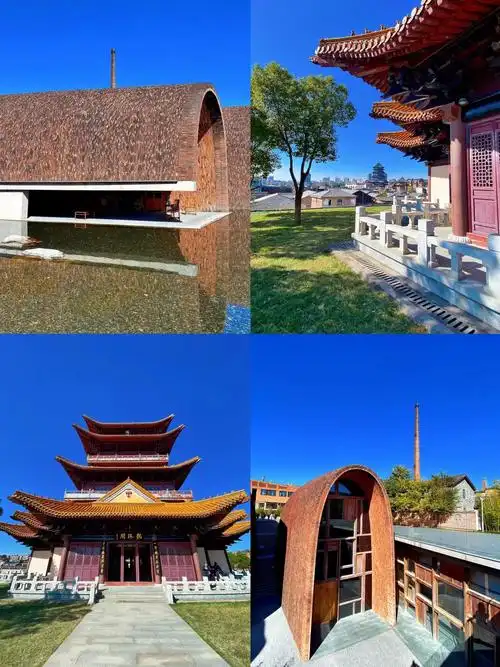
The site's centerpiece is the Imperial Kiln Museum, whose eight interlocking red-brick vaults echo the ovoid form of Qing-dynasty kilns. Designed by architect Zhu Pei, it has won the Aga Khan Award for Architecture and other international honors, joining the ranks of contemporary museums that turn industrial heritage into art. By day the brickwork reads rugged and earthy; by night, warm light bleeds through the arches, transforming the structure into what photographers call a "kiln glowing from within."
Inside, curators embrace a "shard aesthetic," displaying broken fragments alongside painstakingly restored masterworks—vessels once shattered and then reassembled by artisans. The approach recalls the Japanese reverence for kintsugi, the gold-laced repair, and resonates with European Romantic ideas of beauty in ruins. Visitors can stand inches from imperial eggshell cups, monochrome glazes, and underglaze-blue masterpieces that once graced the Forbidden City.
A short climb leads to Dragon Pearl Pavilion, the site's highest point and the finest vantage over Taoyangli Historic District. From here, the landscape unfolds in layers: green-gray roof tiles of Ming-era workers' lanes, the museum's curving vaults, and the surviving factory chimneys of a still-brewing porcelain city. Sunset is the magic hour, when slivers of gold catch both ancient tiles and modern skylines.
Admission to the surrounding Imperial Kiln Archaeological Park is free but requires advance booking through the "畅游景德镇" (Visit Jingdezhen) WeChat mini-program. The museum itself sits within the ticketed Taoyangli Scenic Area (around 53 RMB for adults), though both become free after 9:30 p.m. The site closes on Mondays (except public holidays). Allow two to three hours: museum first, kiln ruins at midday via the glass walkway, then Dragon Pearl Pavilion for evening light, and finally a night stroll through the illuminated brickwork.
For Western travelers who have admired porcelain in European palaces without ever seeing where it was actually born, this site offers the missing chapter. Few places on earth allow you to trace a single craft—from raw clay, through imperial ambition, into world history—with such immediacy. Jingdezhen rewards not just the museum-goer but the curious traveler who wants to understand why "china" became the English word for porcelain itself.
For more than five centuries—from the Mongol-ruled Yuan dynasty through the final Qing emperors—this sprawling complex produced the only porcelain deemed worthy of Chinese imperial tables. Jingdezhen during this period was to Asia what Meissen was to 18th-century Saxony or Sèvres to Napoleonic France, but on a vastly larger scale and with a far older pedigree. Archaeologists have recovered over ten million ceramic shards here, making it the single richest archive of imperial kiln technology on earth—comparable in scholarly importance to the marble quarries that supplied imperial Rome.
The site's centerpiece is the Imperial Kiln Museum, whose eight interlocking red-brick vaults echo the ovoid form of Qing-dynasty kilns. Designed by architect Zhu Pei, it has won the Aga Khan Award for Architecture and other international honors, joining the ranks of contemporary museums that turn industrial heritage into art. By day the brickwork reads rugged and earthy; by night, warm light bleeds through the arches, transforming the structure into what photographers call a "kiln glowing from within."
Inside, curators embrace a "shard aesthetic," displaying broken fragments alongside painstakingly restored masterworks—vessels once shattered and then reassembled by artisans. The approach recalls the Japanese reverence for kintsugi, the gold-laced repair, and resonates with European Romantic ideas of beauty in ruins. Visitors can stand inches from imperial eggshell cups, monochrome glazes, and underglaze-blue masterpieces that once graced the Forbidden City.
A short climb leads to Dragon Pearl Pavilion, the site's highest point and the finest vantage over Taoyangli Historic District. From here, the landscape unfolds in layers: green-gray roof tiles of Ming-era workers' lanes, the museum's curving vaults, and the surviving factory chimneys of a still-brewing porcelain city. Sunset is the magic hour, when slivers of gold catch both ancient tiles and modern skylines.
Admission to the surrounding Imperial Kiln Archaeological Park is free but requires advance booking through the "畅游景德镇" (Visit Jingdezhen) WeChat mini-program. The museum itself sits within the ticketed Taoyangli Scenic Area (around 53 RMB for adults), though both become free after 9:30 p.m. The site closes on Mondays (except public holidays). Allow two to three hours: museum first, kiln ruins at midday via the glass walkway, then Dragon Pearl Pavilion for evening light, and finally a night stroll through the illuminated brickwork.
For Western travelers who have admired porcelain in European palaces without ever seeing where it was actually born, this site offers the missing chapter. Few places on earth allow you to trace a single craft—from raw clay, through imperial ambition, into world history—with such immediacy. Jingdezhen rewards not just the museum-goer but the curious traveler who wants to understand why "china" became the English word for porcelain itself.