Nanchong Museum
⭐ 4.50
South Side, West Section, Letian Street, Weinan City, China
 **A Gateway to the Jialing River Valley**
Nanchong, anciently called "Guozhou," sits astride the middle Jialing River—a tributary of the Yangtze that has carried goods, armies, and ideas for over two millennia. The Jialing served as a vital artery of the ancient Shu kingdom, comparable to how the Danube shaped the Austro-Hungarian Empire or the Loire defined French royal culture. The museum's flagship "Jialing Song" chronological exhibition traces this rich tapestry, weaving together prehistoric fishing communities, Bronze Age agriculture, the legendary silk trade that made Nanchong a renowned "Silk Capital," and pivotal chapters of the Three Kingdoms era (220–280 AD), when the region figured prominently in the contests of Liu Bei and Zhuge Liang.
**Architecture: A Modern Dragon Seal**
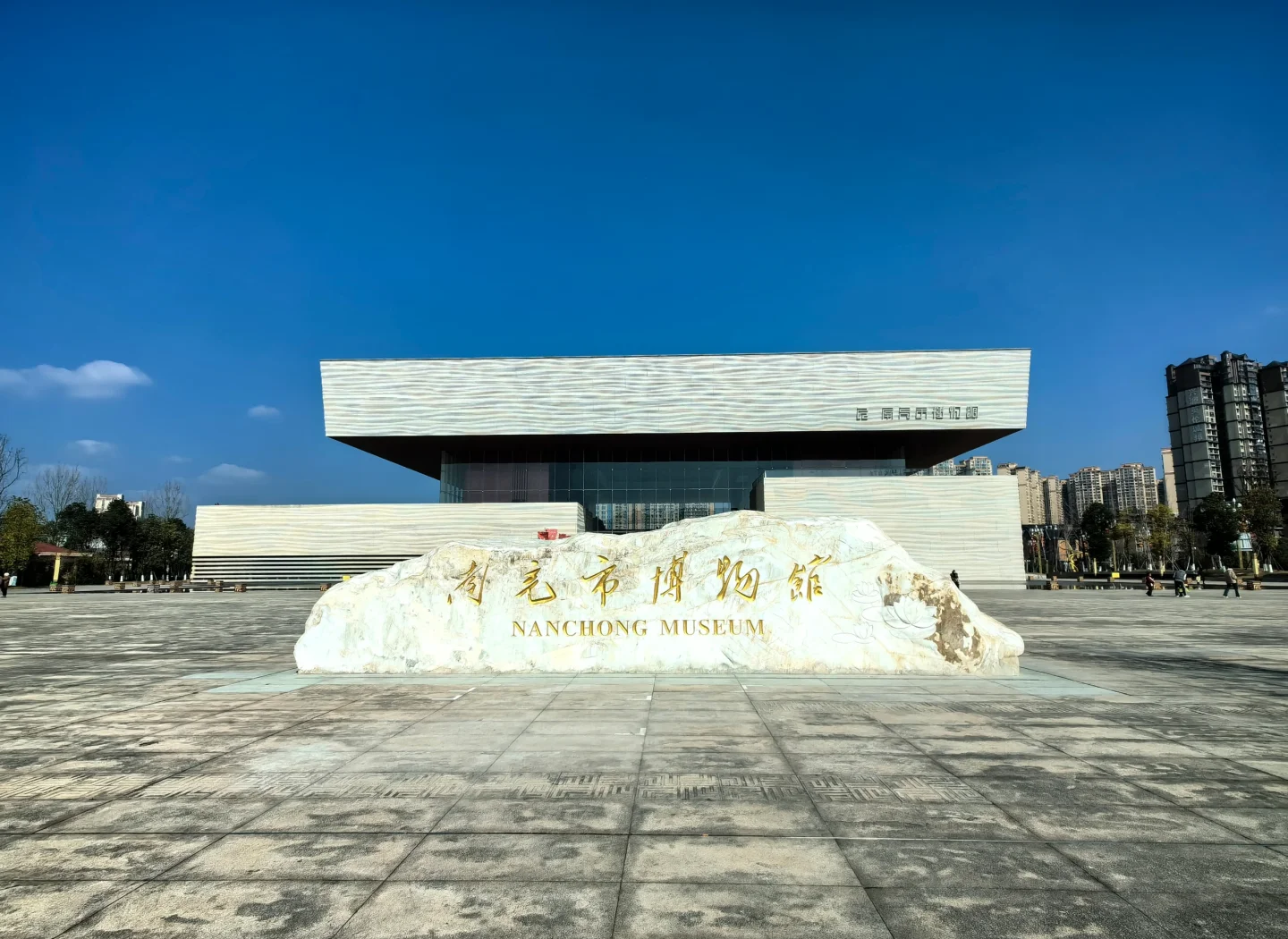
Spanning nearly 50,000 square meters across four above-ground floors and one basement level, the museum's bold exterior draws on the traditional Chinese motif of a dragon seal—a symbol of authority and good fortune. The architects have blended this auspicious imagery with contemporary glass-and-steel design language, creating a structure that recalls the geometric drama of London's Tate Modern while honoring distinctly Chinese symbolism. Inside, soaring atriums and ample natural light create an airy, contemplative atmosphere, while holographic display cases and immersive multimedia bring the artifacts vividly to life.
**Treasures of the Collection**
Among the museum's 3,400-plus artifacts, sixteen are designated Grade One national treasures. Highlights include a Western Zhou dynasty bronze yue-axe inlaid with tiger motifs—roughly contemporary with the early Etruscans of Italy—a gilded Han dynasty bronze bird carrying a wine vessel, and a Southern Song gilded silver platter featuring floral designs. These pieces offer Western visitors rare insights into the artistic sophistication of the upper Yangtze basin, often overshadowed in conventional guides by the more frequently visited museums of Beijing and Shanghai.
**Planning Your Visit**
The museum is located at 189 Yudai North Road, Baituba Road, in Shunqing District, and is open Tuesday through Sunday from 9:00 AM to 5:00 PM (last entry at 4:30 PM), closed on Mondays. Admission is free, but visitors must reserve in advance via the museum's WeChat public account—a small wrinkle that a hotel concierge can easily help navigate. Free guided tours are available, and the on-site museum shop and café make for a comfortable visit. Reach the museum by bus to the "Cultural Center" stop or by taxi.
**Why Nanchong Museum Is Worth the Detour**
Allow two and a half to three hours to take in the galleries at a comfortable pace, beginning with the comprehensive "Jialing Song" survey before moving to the themed halls on the Three Kingdoms, silk production, folk customs, and revolutionary history. Families will appreciate the XR metaverse immersion experiences and children's educational programs, while history enthusiasts should linger in the Three Kingdoms and silk halls. For a fuller exploration of the region, combine your visit with the nearby Wanjuan Tower on Xishan Hill and the beautifully preserved ancient town of Langzhong—a Ming and Qing-era walled city often compared to a smaller, lesser-known Lijiang.
**A Gateway to the Jialing River Valley**
Nanchong, anciently called "Guozhou," sits astride the middle Jialing River—a tributary of the Yangtze that has carried goods, armies, and ideas for over two millennia. The Jialing served as a vital artery of the ancient Shu kingdom, comparable to how the Danube shaped the Austro-Hungarian Empire or the Loire defined French royal culture. The museum's flagship "Jialing Song" chronological exhibition traces this rich tapestry, weaving together prehistoric fishing communities, Bronze Age agriculture, the legendary silk trade that made Nanchong a renowned "Silk Capital," and pivotal chapters of the Three Kingdoms era (220–280 AD), when the region figured prominently in the contests of Liu Bei and Zhuge Liang.
**Architecture: A Modern Dragon Seal**
Spanning nearly 50,000 square meters across four above-ground floors and one basement level, the museum's bold exterior draws on the traditional Chinese motif of a dragon seal—a symbol of authority and good fortune. The architects have blended this auspicious imagery with contemporary glass-and-steel design language, creating a structure that recalls the geometric drama of London's Tate Modern while honoring distinctly Chinese symbolism. Inside, soaring atriums and ample natural light create an airy, contemplative atmosphere, while holographic display cases and immersive multimedia bring the artifacts vividly to life.
**Treasures of the Collection**
Among the museum's 3,400-plus artifacts, sixteen are designated Grade One national treasures. Highlights include a Western Zhou dynasty bronze yue-axe inlaid with tiger motifs—roughly contemporary with the early Etruscans of Italy—a gilded Han dynasty bronze bird carrying a wine vessel, and a Southern Song gilded silver platter featuring floral designs. These pieces offer Western visitors rare insights into the artistic sophistication of the upper Yangtze basin, often overshadowed in conventional guides by the more frequently visited museums of Beijing and Shanghai.
**Planning Your Visit**
The museum is located at 189 Yudai North Road, Baituba Road, in Shunqing District, and is open Tuesday through Sunday from 9:00 AM to 5:00 PM (last entry at 4:30 PM), closed on Mondays. Admission is free, but visitors must reserve in advance via the museum's WeChat public account—a small wrinkle that a hotel concierge can easily help navigate. Free guided tours are available, and the on-site museum shop and café make for a comfortable visit. Reach the museum by bus to the "Cultural Center" stop or by taxi.
**Why Nanchong Museum Is Worth the Detour**
Allow two and a half to three hours to take in the galleries at a comfortable pace, beginning with the comprehensive "Jialing Song" survey before moving to the themed halls on the Three Kingdoms, silk production, folk customs, and revolutionary history. Families will appreciate the XR metaverse immersion experiences and children's educational programs, while history enthusiasts should linger in the Three Kingdoms and silk halls. For a fuller exploration of the region, combine your visit with the nearby Wanjuan Tower on Xishan Hill and the beautifully preserved ancient town of Langzhong—a Ming and Qing-era walled city often compared to a smaller, lesser-known Lijiang.