Pu'er Ethnic Cultural Park
⭐ 3.80
Simao District, Pu'er City, Yunnan Province, China
 The park serves as the central preservation site for "Mupa Mipa," a Lahu creation epic inscribed on China's national intangible cultural heritage list. Comparable in scope to Finland's Kalevala or the works of Hesiod, it recounts how the first humans emerged from a gourd, a myth that cements the gourd as the tribe's most sacred symbol. Through museum exhibits, visitors trace the Lahu migration southward from the Tibetan Plateau, a journey that parallels great highland-to-lowland movements such as the ancient Indo-European expansions. It offers a rare chance to encounter the living memory of a people often overlooked in mainstream histories.
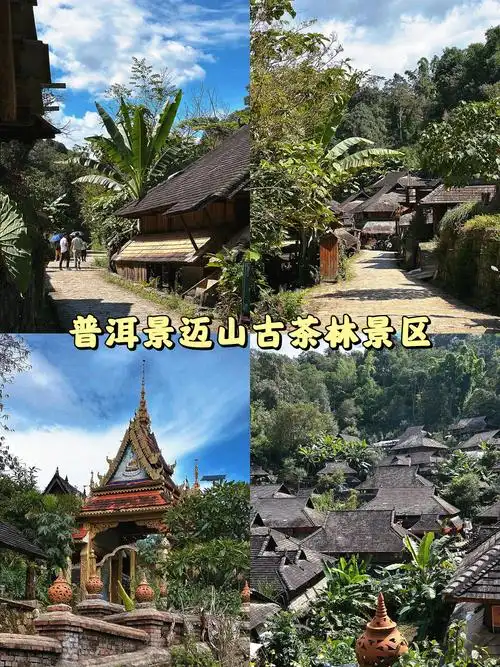
The park's 300-acre grounds center on a tranquil 100-acre lake, ringed by traditional Lahu stilted bamboo houses that resemble elevated versions of Alpine chalets or the pile dwellings once common across pre-industrial Southeast Asia. A soaring gourd pagoda and totem sculptures rise above the foliage, while three footbridges—a modest "Well-Off Bridge," paired double-arched stone spans, and a swinging cable suspension bridge—link the shorelines. The architectural vocabulary echoes vernacular traditions found today in Laos and northern Thailand, where related ethnic groups still build in bamboo and thatch.
Beyond its museum, the park functions as an informal living village where visitors can try bamboo weaving and brocade work, crafts shared with highland communities from Myanmar to Vietnam. Each April, the Gourd Festival transforms the grounds into a market and dance arena, with reed-pipe Lusheng performances and communal circle dances that invite outsider participation. On quieter days the atmosphere is contemplative, closer in spirit to a folkloric open-air museum than a staged theme park.
The park sits roughly one kilometer north of Lancang's county seat along West Reservoir Road in Menglang Town, easily reached by taxi or rented car. Entry is free and no reservation is required, though museum and exhibition halls typically open 8:30 a.m. to 5:30 p.m., while the illuminated lake area stays open until about 10 p.m. Plan for two to three hours; early morning and late afternoon offer the softest light. On-site dining is minimal, so bring water and snacks.
A recommended route runs from the entrance square past the gourd pagoda and totem sculptures, into the ethnic museum, then through the folk-village zone to the bridges and lakeside promenade, finishing at the tea exhibition center. During the May–October rainy season, paths grow slippery, so sturdy shoes are essential. Photographers should always ask permission before snapping portraits of elders or children. The park is also an ideal first stop before exploring nearby Jingmai Mountain's ancient tea forests or the famed Laodabao song village.
The park serves as the central preservation site for "Mupa Mipa," a Lahu creation epic inscribed on China's national intangible cultural heritage list. Comparable in scope to Finland's Kalevala or the works of Hesiod, it recounts how the first humans emerged from a gourd, a myth that cements the gourd as the tribe's most sacred symbol. Through museum exhibits, visitors trace the Lahu migration southward from the Tibetan Plateau, a journey that parallels great highland-to-lowland movements such as the ancient Indo-European expansions. It offers a rare chance to encounter the living memory of a people often overlooked in mainstream histories.
The park's 300-acre grounds center on a tranquil 100-acre lake, ringed by traditional Lahu stilted bamboo houses that resemble elevated versions of Alpine chalets or the pile dwellings once common across pre-industrial Southeast Asia. A soaring gourd pagoda and totem sculptures rise above the foliage, while three footbridges—a modest "Well-Off Bridge," paired double-arched stone spans, and a swinging cable suspension bridge—link the shorelines. The architectural vocabulary echoes vernacular traditions found today in Laos and northern Thailand, where related ethnic groups still build in bamboo and thatch.
Beyond its museum, the park functions as an informal living village where visitors can try bamboo weaving and brocade work, crafts shared with highland communities from Myanmar to Vietnam. Each April, the Gourd Festival transforms the grounds into a market and dance arena, with reed-pipe Lusheng performances and communal circle dances that invite outsider participation. On quieter days the atmosphere is contemplative, closer in spirit to a folkloric open-air museum than a staged theme park.
The park sits roughly one kilometer north of Lancang's county seat along West Reservoir Road in Menglang Town, easily reached by taxi or rented car. Entry is free and no reservation is required, though museum and exhibition halls typically open 8:30 a.m. to 5:30 p.m., while the illuminated lake area stays open until about 10 p.m. Plan for two to three hours; early morning and late afternoon offer the softest light. On-site dining is minimal, so bring water and snacks.
A recommended route runs from the entrance square past the gourd pagoda and totem sculptures, into the ethnic museum, then through the folk-village zone to the bridges and lakeside promenade, finishing at the tea exhibition center. During the May–October rainy season, paths grow slippery, so sturdy shoes are essential. Photographers should always ask permission before snapping portraits of elders or children. The park is also an ideal first stop before exploring nearby Jingmai Mountain's ancient tea forests or the famed Laodabao song village.