Ancient Tea Horse Road Ruins
⭐ 4.60
Simao District, Pu'er City, Yunnan Province, China
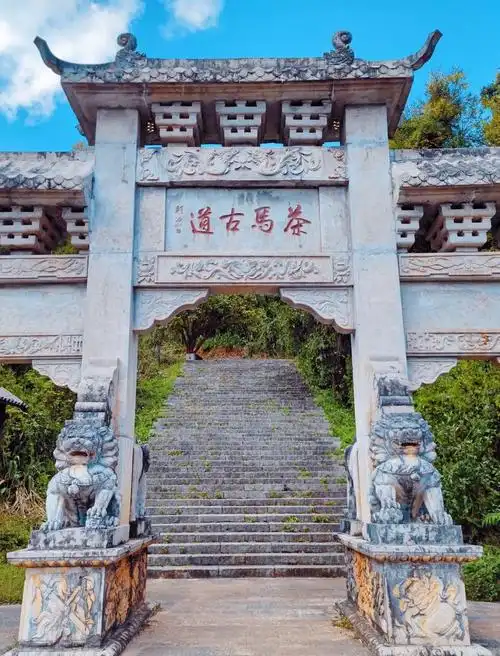 The Tea Horse Road rose to prominence during the Tang and Song dynasties, flourishing through the Ming and Qing, much as the medieval salt and spice routes knit together the cities of the Hanseatic League. From Pu'er—a name now synonymous worldwide with fermented tea—mule caravans hauled compressed tea cakes northward to imperial Beijing and westward across the Himalayas into Tibet, where the brew was prized for its life-sustaining qualities. This corridor functioned as a southern extension of the Silk Road, linking the Han, Yi, and Hani communities of Yunnan with the imperial heartland. Often called "China's living transport history book," it remains a tangible thread between the old kingdom of Dali, the Tibetan plateau, and the Chinese throne.
Walking the original flagstone path feels akin to striding the Appian Way outside Rome—ancient stone underfoot, grooves deepened by centuries of use. Here, however, the ruts are shaped by iron horseshoes rather than cart wheels, and the soft grey paving is offset by the warm wood of nearby pavilions. Weather-and-rain bridges, with their timbered roofs and stone piers, recall the covered bridges of Lucerne or the half-timbered guildhalls of old Bavaria. At the summit, a reconstructed Song-and-Ming quarter rises with upswept eaves and lacquered shopfronts, offering a layered glimpse of how traders once bargained, rested, and refilled their saddlebags.
More than a trade artery, the road is a meeting place of peoples. Han, Yi, Hani, and Tibetan merchants swapped not only tea but also languages, recipes, and folk songs—a cultural exchange as rich as that along the medieval pilgrimage Camino de Santiago. The on-site Caravan Museum gathers saddles, copper bells, and yellowed ledgers alongside grainy photographs, while the nightly Caravan Love Song water-and-light show and the dramatic non-heritage iron-flower forging performance capture both the romance and the grit of the mule drivers' lives. Visitors can even press their own commemorative tea cake, leaving with a tangible souvenir of a 1,300-year-old tradition.
The park sits about 5 km east of central Simao District on Pu'er Avenue, beside the Tea Horse Ancient Town resort. Gates open from 08:30 to 17:00, with last entry at closing. Entry to the grounds is free, but core experiences require a ticket: a basic package runs roughly 118 RMB per person, while the in-depth trekking pass costs about 198 RMB. Book ahead through official channels; Alipay and foreign-card scans are accepted at main counters, though small vendors prefer cash. A morning start lets you walk the cool flagstones before the heat, with lunch in the caravan market area followed by the Rainbow Cable Car and museum.
This is the literal point of departure for the tea that later reached Russia, France, and beyond—where the very word "Pu'er" first stepped onto the world stage. Sturdy non-slip hiking shoes are essential, as the polished stones turn treacherous after frequent afternoon showers; pack a light rain jacket and insect repellent, and avoid venturing into forested slopes during electrical storms. Respect local customs by asking before photographing villagers or religious shrines. Few places let you walk a working monument and ride a cable car over tea fields in the same afternoon—Pu'er delivers both with a sincerity that feels refreshingly off the mainstream tourist trail.
The Tea Horse Road rose to prominence during the Tang and Song dynasties, flourishing through the Ming and Qing, much as the medieval salt and spice routes knit together the cities of the Hanseatic League. From Pu'er—a name now synonymous worldwide with fermented tea—mule caravans hauled compressed tea cakes northward to imperial Beijing and westward across the Himalayas into Tibet, where the brew was prized for its life-sustaining qualities. This corridor functioned as a southern extension of the Silk Road, linking the Han, Yi, and Hani communities of Yunnan with the imperial heartland. Often called "China's living transport history book," it remains a tangible thread between the old kingdom of Dali, the Tibetan plateau, and the Chinese throne.
Walking the original flagstone path feels akin to striding the Appian Way outside Rome—ancient stone underfoot, grooves deepened by centuries of use. Here, however, the ruts are shaped by iron horseshoes rather than cart wheels, and the soft grey paving is offset by the warm wood of nearby pavilions. Weather-and-rain bridges, with their timbered roofs and stone piers, recall the covered bridges of Lucerne or the half-timbered guildhalls of old Bavaria. At the summit, a reconstructed Song-and-Ming quarter rises with upswept eaves and lacquered shopfronts, offering a layered glimpse of how traders once bargained, rested, and refilled their saddlebags.
More than a trade artery, the road is a meeting place of peoples. Han, Yi, Hani, and Tibetan merchants swapped not only tea but also languages, recipes, and folk songs—a cultural exchange as rich as that along the medieval pilgrimage Camino de Santiago. The on-site Caravan Museum gathers saddles, copper bells, and yellowed ledgers alongside grainy photographs, while the nightly Caravan Love Song water-and-light show and the dramatic non-heritage iron-flower forging performance capture both the romance and the grit of the mule drivers' lives. Visitors can even press their own commemorative tea cake, leaving with a tangible souvenir of a 1,300-year-old tradition.
The park sits about 5 km east of central Simao District on Pu'er Avenue, beside the Tea Horse Ancient Town resort. Gates open from 08:30 to 17:00, with last entry at closing. Entry to the grounds is free, but core experiences require a ticket: a basic package runs roughly 118 RMB per person, while the in-depth trekking pass costs about 198 RMB. Book ahead through official channels; Alipay and foreign-card scans are accepted at main counters, though small vendors prefer cash. A morning start lets you walk the cool flagstones before the heat, with lunch in the caravan market area followed by the Rainbow Cable Car and museum.
This is the literal point of departure for the tea that later reached Russia, France, and beyond—where the very word "Pu'er" first stepped onto the world stage. Sturdy non-slip hiking shoes are essential, as the polished stones turn treacherous after frequent afternoon showers; pack a light rain jacket and insect repellent, and avoid venturing into forested slopes during electrical storms. Respect local customs by asking before photographing villagers or religious shrines. Few places let you walk a working monument and ride a cable car over tea fields in the same afternoon—Pu'er delivers both with a sincerity that feels refreshingly off the mainstream tourist trail.