Pu'er National Park
⭐ 4.30
Simao District, Pu'er City, Yunnan Province, China
 **A Continental-Scale Rainforest Sanctuary**
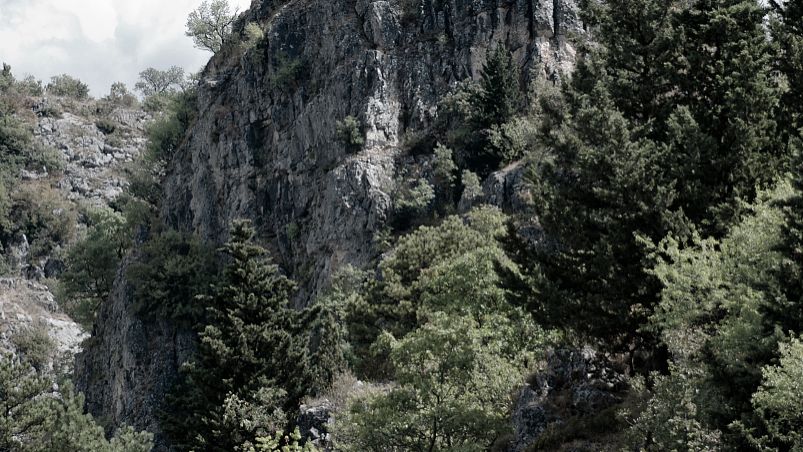
Pu'er Sunhe Forest Park protects what scientists consider the finest surviving example of southern subtropical monsoon evergreen broadleaf forest along the entire Tropic of Cancer. Comparable in biological importance to Borneo's Danum Valley or Madagascar's eastern rainforests, this 216-square-kilometer reserve stands where the sun sits directly overhead at the summer solstice yet harbors a climate cool enough for ancient cloud forest species. With forest canopy covering more than 97% of its terrain, it functions as a living laboratory for understanding how life thrives in the narrow thermal band that girdles the globe.
**Wildlife of Exceptional Rarity**
The park documents over 600 vertebrate species, including 17 classified as China's nationally protected first-tier animals. Among its star residents are western black-crested gibbons, whose haunting calls echo through the canopy much like the indri of Madagascar; Asiatic black bears; and a breeding population of southern white rhinoceros—one of the few such herds outside Africa. Red pandas clamber through the bamboo, macaques chatter in family troops, and the rivers teem with native carp. For Western visitors accustomed to zoo enclosures, seeing these animals move freely across connected habitats offers a profoundly different perspective on Asian megafauna.
**Ethical Close-Range Encounters**
What distinguishes Pu'er from conventional reserves is its carefully regulated, ranger-supervised interaction program. Trained guides lead small groups in activities such as shoulder-perching with red pandas (a behavior conditioned through positive reinforcement, not restraint), gentle feeding sessions with the resident white rhinos, and acoustic listening exercises to locate gibbon troops. Programs strictly follow conservation protocols, making the park one of the few places in mainland Asia where visitors can engage directly with endangered primates and megafauna under professional supervision.
**Nature Education and Citizen Science**
The park operates a mature eco-education curriculum tailored for school groups, families, and citizen scientists. Offerings include guided "ecological crash" observation sessions where naturalists decode predator-prey dynamics, nocturnal insect safaris, and plant-based foraging workshops. Interpretive trails use numbered stations similar to those in Costa Rica's Monteverde or Tanzania's Ngorongoro, allowing self-guided learning. For Western travelers interested in conservation biology, the park's research station welcomes informal discussions with staff about ongoing primate and pollinator studies.
**Practical Visitor Information**
Entry tickets begin at around 100 RMB, with electric shuttle passes mandatory for navigating the 8-kilometer boardwalk circuit. Allow a full 4 to 6 hours, ideally arriving at opening time to catch the morning interaction sessions before animals retreat into dense cover. The on-site wetland restaurant, wellness center, and the charming Red Panda Manor Hotel enable a seamless overnight stay for those wishing to extend their immersion. Arrive prepared: the terrain is humid and hilly, insect repellent is essential, and bringing water and light snacks is wise, as on-site dining prices run noticeably higher than in nearby Pu'er city.
**Why Pu'er Belongs on Your Itinerary**
For travelers tracing the ancient Tea Horse Road through Yunnan or seeking an alternative to the crowded panda bases of Sichuan, Pu'er Sunhe offers a quieter, broader, and arguably richer biodiversity experience. It is the only place on Earth where you can watch a white rhino graze beneath ancient fig trees, hear a gibbon's dawn chorus in a monsoon forest, and hold a red panda—all within a single afternoon. Few destinations combine such ecological depth, family-friendly programming, and accessibility from Kunming's international hub.
**A Continental-Scale Rainforest Sanctuary**
Pu'er Sunhe Forest Park protects what scientists consider the finest surviving example of southern subtropical monsoon evergreen broadleaf forest along the entire Tropic of Cancer. Comparable in biological importance to Borneo's Danum Valley or Madagascar's eastern rainforests, this 216-square-kilometer reserve stands where the sun sits directly overhead at the summer solstice yet harbors a climate cool enough for ancient cloud forest species. With forest canopy covering more than 97% of its terrain, it functions as a living laboratory for understanding how life thrives in the narrow thermal band that girdles the globe.
**Wildlife of Exceptional Rarity**
The park documents over 600 vertebrate species, including 17 classified as China's nationally protected first-tier animals. Among its star residents are western black-crested gibbons, whose haunting calls echo through the canopy much like the indri of Madagascar; Asiatic black bears; and a breeding population of southern white rhinoceros—one of the few such herds outside Africa. Red pandas clamber through the bamboo, macaques chatter in family troops, and the rivers teem with native carp. For Western visitors accustomed to zoo enclosures, seeing these animals move freely across connected habitats offers a profoundly different perspective on Asian megafauna.
**Ethical Close-Range Encounters**
What distinguishes Pu'er from conventional reserves is its carefully regulated, ranger-supervised interaction program. Trained guides lead small groups in activities such as shoulder-perching with red pandas (a behavior conditioned through positive reinforcement, not restraint), gentle feeding sessions with the resident white rhinos, and acoustic listening exercises to locate gibbon troops. Programs strictly follow conservation protocols, making the park one of the few places in mainland Asia where visitors can engage directly with endangered primates and megafauna under professional supervision.
**Nature Education and Citizen Science**
The park operates a mature eco-education curriculum tailored for school groups, families, and citizen scientists. Offerings include guided "ecological crash" observation sessions where naturalists decode predator-prey dynamics, nocturnal insect safaris, and plant-based foraging workshops. Interpretive trails use numbered stations similar to those in Costa Rica's Monteverde or Tanzania's Ngorongoro, allowing self-guided learning. For Western travelers interested in conservation biology, the park's research station welcomes informal discussions with staff about ongoing primate and pollinator studies.
**Practical Visitor Information**
Entry tickets begin at around 100 RMB, with electric shuttle passes mandatory for navigating the 8-kilometer boardwalk circuit. Allow a full 4 to 6 hours, ideally arriving at opening time to catch the morning interaction sessions before animals retreat into dense cover. The on-site wetland restaurant, wellness center, and the charming Red Panda Manor Hotel enable a seamless overnight stay for those wishing to extend their immersion. Arrive prepared: the terrain is humid and hilly, insect repellent is essential, and bringing water and light snacks is wise, as on-site dining prices run noticeably higher than in nearby Pu'er city.
**Why Pu'er Belongs on Your Itinerary**
For travelers tracing the ancient Tea Horse Road through Yunnan or seeking an alternative to the crowded panda bases of Sichuan, Pu'er Sunhe offers a quieter, broader, and arguably richer biodiversity experience. It is the only place on Earth where you can watch a white rhino graze beneath ancient fig trees, hear a gibbon's dawn chorus in a monsoon forest, and hold a red panda—all within a single afternoon. Few destinations combine such ecological depth, family-friendly programming, and accessibility from Kunming's international hub.