Rizhao Museum
⭐ 3.80
No. 19, Shandong Road, Donggang District, Rizhao City, Shandong Province, China
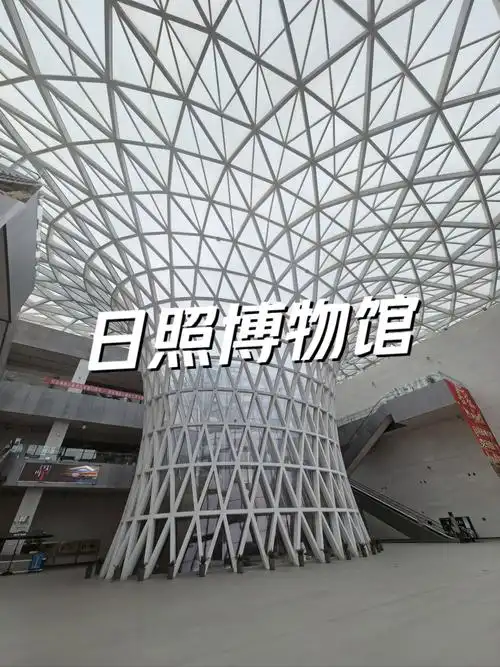 Rizhao's new museum, opened on Beijing Road in 2021, fills a long-standing gap in the cultural map of coastal Shandong. Where most Chinese provincial museums emphasize Confucian or imperial narratives, Rizhao foregrounds the Dongyi peoples and the "sun culture" that gives the city its very name (Rizhao literally means "sunshine"). Its galleries trace a continuous arc from the Dawenkou and Longshan Neolithic cultures through the Han dynasty, presenting the eastern seaboard's salt-making, fishing, and ritual traditions that flourished in parallel with the Bronze Age civilizations of the central plains and contemporary Mycenaean Greece.
Architecture itself becomes a teaching tool. The central atrium's sculpted cup is a direct enlargement of the museum's signature treasure—the Longshan "eggshell black pottery high-stem cup"—translating an artifact roughly 4,000 years old into a soaring modern space. Inside, five permanent halls cover prehistory, Xia–Shang–Zhou, the Han era, Rizhao's local memory, and notable historical figures, with bilingual labeling throughout. The 39-mu site and nearly 7,000 sq m of gallery space put it on a scale comparable to a mid-sized European regional museum.
The collection is the real draw. More than 200 pieces rank as nationally protected relics, but none rival the Longshan eggshell ware, famed for walls as thin as paper, a bell-like ring when tapped, and a lacquer-like luster achieved through precise kiln reduction. From the Haiqu Han tombs come bronze vessels and earthenware that vividly reconstruct daily life and burial customs in a coastal settlement two millennia ago—evidence that resembles, in its archaeological richness, finds at Pompeii or Vindolanda.
Visits require real-name booking via the WeChat account "Rizhao City Museum." Opening hours are Tuesday to Sunday, 9:00–17:00 (last entry 16:30); the museum is closed Mondays. Free audio guides and scheduled docent tours are offered in Mandarin, with English materials available on request. Interactive zones include VR/AR stations, simulated archaeology digs, and black-pottery wheel-throwing sessions that work well for older children and adults alike.
Allow 1.5 to 2 hours and follow the suggested route—prehistory → Xia-Shang-Zhou → local memory → interactive wing—to keep the chronology clear. Weekends and Chinese holidays bring school groups; arrive at opening for a quieter experience. The adjacent Yinhe Park invites a post-visit stroll, parking is free on-site, and the museum sits within easy reach of Rizhao's beaches and the high-speed rail station.
What sets this museum apart from better-known stops like the Shandong Provincial Museum in Jinan or the National Museum in Beijing is its tightly curated, single-minded narrative. Rather than attempting a sweeping survey of Chinese civilization, it zooms in on one coastal corner and one enduring idea—the sun—and lets the artifacts speak. For travelers seeking an unhurried, illuminating counterpoint to China's great imperial sites, Rizhao City Museum is an unusually rewarding detour.
Rizhao's new museum, opened on Beijing Road in 2021, fills a long-standing gap in the cultural map of coastal Shandong. Where most Chinese provincial museums emphasize Confucian or imperial narratives, Rizhao foregrounds the Dongyi peoples and the "sun culture" that gives the city its very name (Rizhao literally means "sunshine"). Its galleries trace a continuous arc from the Dawenkou and Longshan Neolithic cultures through the Han dynasty, presenting the eastern seaboard's salt-making, fishing, and ritual traditions that flourished in parallel with the Bronze Age civilizations of the central plains and contemporary Mycenaean Greece.
Architecture itself becomes a teaching tool. The central atrium's sculpted cup is a direct enlargement of the museum's signature treasure—the Longshan "eggshell black pottery high-stem cup"—translating an artifact roughly 4,000 years old into a soaring modern space. Inside, five permanent halls cover prehistory, Xia–Shang–Zhou, the Han era, Rizhao's local memory, and notable historical figures, with bilingual labeling throughout. The 39-mu site and nearly 7,000 sq m of gallery space put it on a scale comparable to a mid-sized European regional museum.
The collection is the real draw. More than 200 pieces rank as nationally protected relics, but none rival the Longshan eggshell ware, famed for walls as thin as paper, a bell-like ring when tapped, and a lacquer-like luster achieved through precise kiln reduction. From the Haiqu Han tombs come bronze vessels and earthenware that vividly reconstruct daily life and burial customs in a coastal settlement two millennia ago—evidence that resembles, in its archaeological richness, finds at Pompeii or Vindolanda.
Visits require real-name booking via the WeChat account "Rizhao City Museum." Opening hours are Tuesday to Sunday, 9:00–17:00 (last entry 16:30); the museum is closed Mondays. Free audio guides and scheduled docent tours are offered in Mandarin, with English materials available on request. Interactive zones include VR/AR stations, simulated archaeology digs, and black-pottery wheel-throwing sessions that work well for older children and adults alike.
Allow 1.5 to 2 hours and follow the suggested route—prehistory → Xia-Shang-Zhou → local memory → interactive wing—to keep the chronology clear. Weekends and Chinese holidays bring school groups; arrive at opening for a quieter experience. The adjacent Yinhe Park invites a post-visit stroll, parking is free on-site, and the museum sits within easy reach of Rizhao's beaches and the high-speed rail station.
What sets this museum apart from better-known stops like the Shandong Provincial Museum in Jinan or the National Museum in Beijing is its tightly curated, single-minded narrative. Rather than attempting a sweeping survey of Chinese civilization, it zooms in on one coastal corner and one enduring idea—the sun—and lets the artifacts speak. For travelers seeking an unhurried, illuminating counterpoint to China's great imperial sites, Rizhao City Museum is an unusually rewarding detour.