Nanchong Science and Technology Museum
⭐ 4.50
No. 188, South Section, Fazhan Avenue, Jiangdong New District, Gaoping District, Nanchong City, Sichuan Province, China
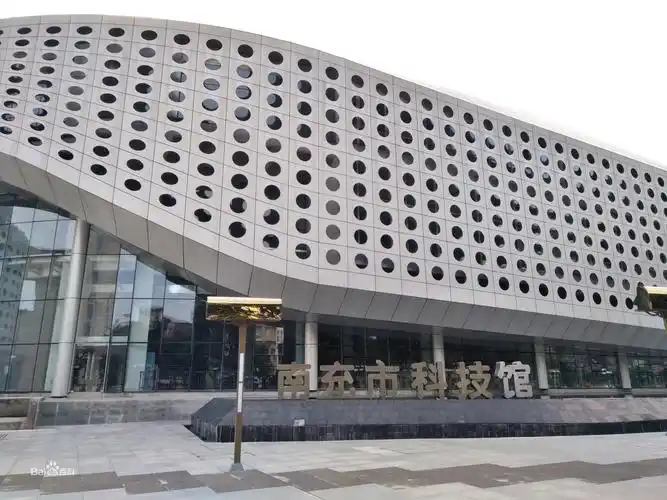 Nanchong sits along the Jialing River, a tributary system that has carried goods, armies, and ideas through Sichuan since the days of the ancient Ba and Shu kingdoms more than two millennia ago. The Science and Technology Museum reflects this region's enduring role as a bridge between tradition and modernity, weaving local cultural references—including engineering lessons drawn from the area's bridges—into a framework familiar to anyone who has visited institutions like London's Science Museum or Munich's Deutsches Museum. Like those European counterparts, it positions itself as a public laboratory where curiosity, rather than passive viewing, drives the experience.
The building itself is a study in contemporary Chinese civic architecture: bright, spacious, and climate-controlled, with 7,600 square meters of exhibition space distributed over three floors. The ground level opens with a grand atrium and foundational science exhibits, while the second floor houses a Children's Science Park designed for ages 3 to 12, comparable in spirit to the children's galleries at San Francisco's Exploratorium. The third floor, "Smart Imagination," turns attention to frontier technology and spaceflight simulation, situating visitors within China's broader push toward aerospace and high-speed rail innovation.
What distinguishes the museum is its unusually high proportion of hands-on installations. An optical maze challenges perception, sound-wave resonance exhibits let visitors "see" vibrations, and stationary bicycles generate electricity in real time—demonstrations that translate abstract physics into tangible experience. The Fuxing high-speed train cab simulator is particularly meaningful for international visitors, offering a glimpse of the rolling stock that has reshaped Chinese mobility since 2017 and now connects cities across Eurasia in journeys reminiscent of the historic Silk Road routes.
Beyond permanent exhibits, the museum embraces a "learn-through-play" philosophy through dynamic seasonal programming. Each summer, the "Science Cool Play Island" transforms the halls into an immersive adventure, with passport-style stamp cards guiding visitors through tabletop-game competitions, hands-on experiments, and expert talks. This approach echoes the gamified education trend seen at institutions like the Copernicus Science Centre in Warsaw, blending entertainment with rigorous STEM content in ways that engage both children and adults.
Practical planning is straightforward but worth noting. Admission is free, though advance online reservation through the official WeChat account is mandatory, with a daily cap of 2,000 visitors. The museum operates Wednesday through Sunday from 9:00 to 17:00, with last entry at 16:00, and is closed Mondays and Tuesdays except during national holidays. Visitors should bring identification—foreign guests should carry their original passport and request access through the dedicated international channel, ideally with a translation app in hand, as most signage is in Chinese. Arriving before 10:00 on a weekday morning offers the most comfortable experience; the air conditioning runs cool, so a light jacket and comfortable shoes are recommended. The museum also pairs naturally with neighboring cultural venues such as the Nanchong Local Chronicles Museum, allowing travelers to extend their exploration of the city's heritage.
Nanchong sits along the Jialing River, a tributary system that has carried goods, armies, and ideas through Sichuan since the days of the ancient Ba and Shu kingdoms more than two millennia ago. The Science and Technology Museum reflects this region's enduring role as a bridge between tradition and modernity, weaving local cultural references—including engineering lessons drawn from the area's bridges—into a framework familiar to anyone who has visited institutions like London's Science Museum or Munich's Deutsches Museum. Like those European counterparts, it positions itself as a public laboratory where curiosity, rather than passive viewing, drives the experience.
The building itself is a study in contemporary Chinese civic architecture: bright, spacious, and climate-controlled, with 7,600 square meters of exhibition space distributed over three floors. The ground level opens with a grand atrium and foundational science exhibits, while the second floor houses a Children's Science Park designed for ages 3 to 12, comparable in spirit to the children's galleries at San Francisco's Exploratorium. The third floor, "Smart Imagination," turns attention to frontier technology and spaceflight simulation, situating visitors within China's broader push toward aerospace and high-speed rail innovation.
What distinguishes the museum is its unusually high proportion of hands-on installations. An optical maze challenges perception, sound-wave resonance exhibits let visitors "see" vibrations, and stationary bicycles generate electricity in real time—demonstrations that translate abstract physics into tangible experience. The Fuxing high-speed train cab simulator is particularly meaningful for international visitors, offering a glimpse of the rolling stock that has reshaped Chinese mobility since 2017 and now connects cities across Eurasia in journeys reminiscent of the historic Silk Road routes.
Beyond permanent exhibits, the museum embraces a "learn-through-play" philosophy through dynamic seasonal programming. Each summer, the "Science Cool Play Island" transforms the halls into an immersive adventure, with passport-style stamp cards guiding visitors through tabletop-game competitions, hands-on experiments, and expert talks. This approach echoes the gamified education trend seen at institutions like the Copernicus Science Centre in Warsaw, blending entertainment with rigorous STEM content in ways that engage both children and adults.
Practical planning is straightforward but worth noting. Admission is free, though advance online reservation through the official WeChat account is mandatory, with a daily cap of 2,000 visitors. The museum operates Wednesday through Sunday from 9:00 to 17:00, with last entry at 16:00, and is closed Mondays and Tuesdays except during national holidays. Visitors should bring identification—foreign guests should carry their original passport and request access through the dedicated international channel, ideally with a translation app in hand, as most signage is in Chinese. Arriving before 10:00 on a weekday morning offers the most comfortable experience; the air conditioning runs cool, so a light jacket and comfortable shoes are recommended. The museum also pairs naturally with neighboring cultural venues such as the Nanchong Local Chronicles Museum, allowing travelers to extend their exploration of the city's heritage.