Zongjiao Lukang Park
⭐ 4.20
Zongjiao Lukang Park, Chengguan District, Shigatse, Tibet Autonomous Region, China
 **Historical Context**
The park's origins trace to the seventeenth century, when the 5th Dalai Lama—the same sovereign who transformed the Potala Palace into Tibet's supreme political and religious seat—commissioned the Dragon King Temple on the lake's central island. Think of it as the Petit Trianon of Lhasa: a secluded royal pleasure garden tucked behind a grander royal residence. For generations, Dalai Lamas retreated here for summer *linka*, outdoor garden banquets that recall the courtly leisure of Versailles or Sanssouci. Springs flowing from the hills behind the Potala continue to feed the pool, sustaining the site through centuries of dynastic change.
**Architecture**
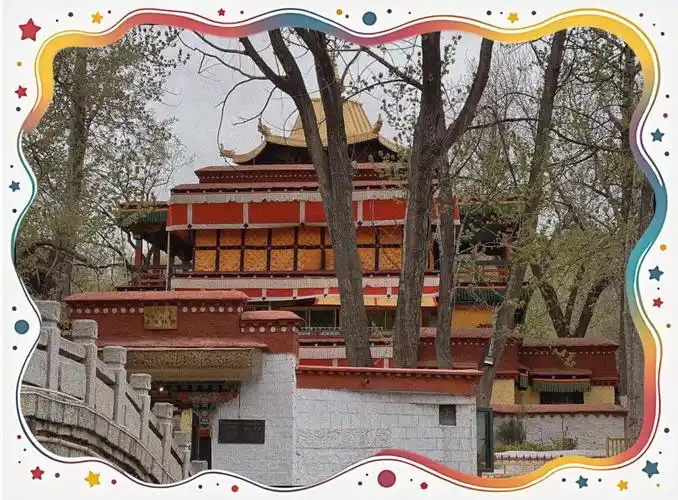
The focal point is the compact Dragon King Temple, whose vermilion walls and gilded roof deliberately echo the Potala's white-and-red palace rising above. A sinuous stone bridge with low arches links the lakeshore to the island shrine, much as eighteenth-century follies dot the ornamental lakes of Stowe or Villa d'Este. Around the pool runs a devotional walking path, the *kora*, where pilgrims circle clockwise reciting mantras—an active sanctuary that blends landscape design with living faith.
**Natural Scenery**
The defining feature is water. On still mornings, the Potala Palace mirrors itself so perfectly in the pond that stone and reflection blur together—an effect rivaling the painterly compositions of Monet's Giverny. Centuries-old willows with gnarled trunks lean over the banks, their trailing branches softening the architectural severity above. Spring brings blossoming peaches, summer delivers dense green shade, while autumn and winter introduce migratory ruddy shelducks and bar-headed geese, transforming the urban lake into an unexpected high-altitude bird sanctuary.
**Cultural Experience**
This is the most authentic window onto everyday Lhasa. Before dawn, elderly Tibetan women shuffle clockwise around the water, prayer beads clicking, while juniper smoke curls from offering vessels at the shrine. By evening the mood shifts: residents gather for communal *guozhuang* circle dances, hands linked, the air filling with folk songs and laughter. Whether you chase culture or photography, watching ordinary Tibetan life unfold against one of Asia's most iconic backdrops creates memories no museum can replicate.
**Practical Information**
The park sits just west of Beijing Middle Road, an easy walk from the Potala Palace and well-served by city buses. Admission is completely free, and gates stay open all day, though atmospheric mist features operate only at set times. Plan to arrive before sunrise for the famous reflected Potala, or return at dusk when the palace glows under golden floodlights. Budget one to two hours, ideally on the same day as your Potala Palace visit, since the entrance lies only a few hundred meters away. Bring comfortable walking shoes and a warm layer—Lhasa's altitude and evening chill catch many travelers unprepared.
**Historical Context**
The park's origins trace to the seventeenth century, when the 5th Dalai Lama—the same sovereign who transformed the Potala Palace into Tibet's supreme political and religious seat—commissioned the Dragon King Temple on the lake's central island. Think of it as the Petit Trianon of Lhasa: a secluded royal pleasure garden tucked behind a grander royal residence. For generations, Dalai Lamas retreated here for summer *linka*, outdoor garden banquets that recall the courtly leisure of Versailles or Sanssouci. Springs flowing from the hills behind the Potala continue to feed the pool, sustaining the site through centuries of dynastic change.
**Architecture**
The focal point is the compact Dragon King Temple, whose vermilion walls and gilded roof deliberately echo the Potala's white-and-red palace rising above. A sinuous stone bridge with low arches links the lakeshore to the island shrine, much as eighteenth-century follies dot the ornamental lakes of Stowe or Villa d'Este. Around the pool runs a devotional walking path, the *kora*, where pilgrims circle clockwise reciting mantras—an active sanctuary that blends landscape design with living faith.
**Natural Scenery**
The defining feature is water. On still mornings, the Potala Palace mirrors itself so perfectly in the pond that stone and reflection blur together—an effect rivaling the painterly compositions of Monet's Giverny. Centuries-old willows with gnarled trunks lean over the banks, their trailing branches softening the architectural severity above. Spring brings blossoming peaches, summer delivers dense green shade, while autumn and winter introduce migratory ruddy shelducks and bar-headed geese, transforming the urban lake into an unexpected high-altitude bird sanctuary.
**Cultural Experience**
This is the most authentic window onto everyday Lhasa. Before dawn, elderly Tibetan women shuffle clockwise around the water, prayer beads clicking, while juniper smoke curls from offering vessels at the shrine. By evening the mood shifts: residents gather for communal *guozhuang* circle dances, hands linked, the air filling with folk songs and laughter. Whether you chase culture or photography, watching ordinary Tibetan life unfold against one of Asia's most iconic backdrops creates memories no museum can replicate.
**Practical Information**
The park sits just west of Beijing Middle Road, an easy walk from the Potala Palace and well-served by city buses. Admission is completely free, and gates stay open all day, though atmospheric mist features operate only at set times. Plan to arrive before sunrise for the famous reflected Potala, or return at dusk when the palace glows under golden floodlights. Budget one to two hours, ideally on the same day as your Potala Palace visit, since the entrance lies only a few hundred meters away. Bring comfortable walking shoes and a warm layer—Lhasa's altitude and evening chill catch many travelers unprepared.