Zhayeba Temple
⭐ 4.50
Zhayeba Temple, Namling County, Shigatse City, Tibet Autonomous Region, China
 Drakar Taso dates to the 7th century, an era when Tibet's first emperor Songtsen Gampo unified the Tibetan plateau in the same generation that Islam was born in Arabia and Constantinople still served as the Eastern Roman capital. Founded more than a century before Charlemagne was crowned Holy Roman Emperor and predating Europe's great medieval cathedrals by some 500 years, the monastery stands among the oldest continuously active religious sites in the Himalayas. Songtsen Gampo himself reportedly meditated in one of its cliff caves. Later masters, including the legendary Indian sage Padmasambhava (Guru Rinpoche) and the Bengali scholar Atisha—both pivotal figures in shaping Tibetan Buddhism in the 8th and 11th centuries—also retreated here for solitary contemplation, leaving behind a spiritual lineage that endures to this day.
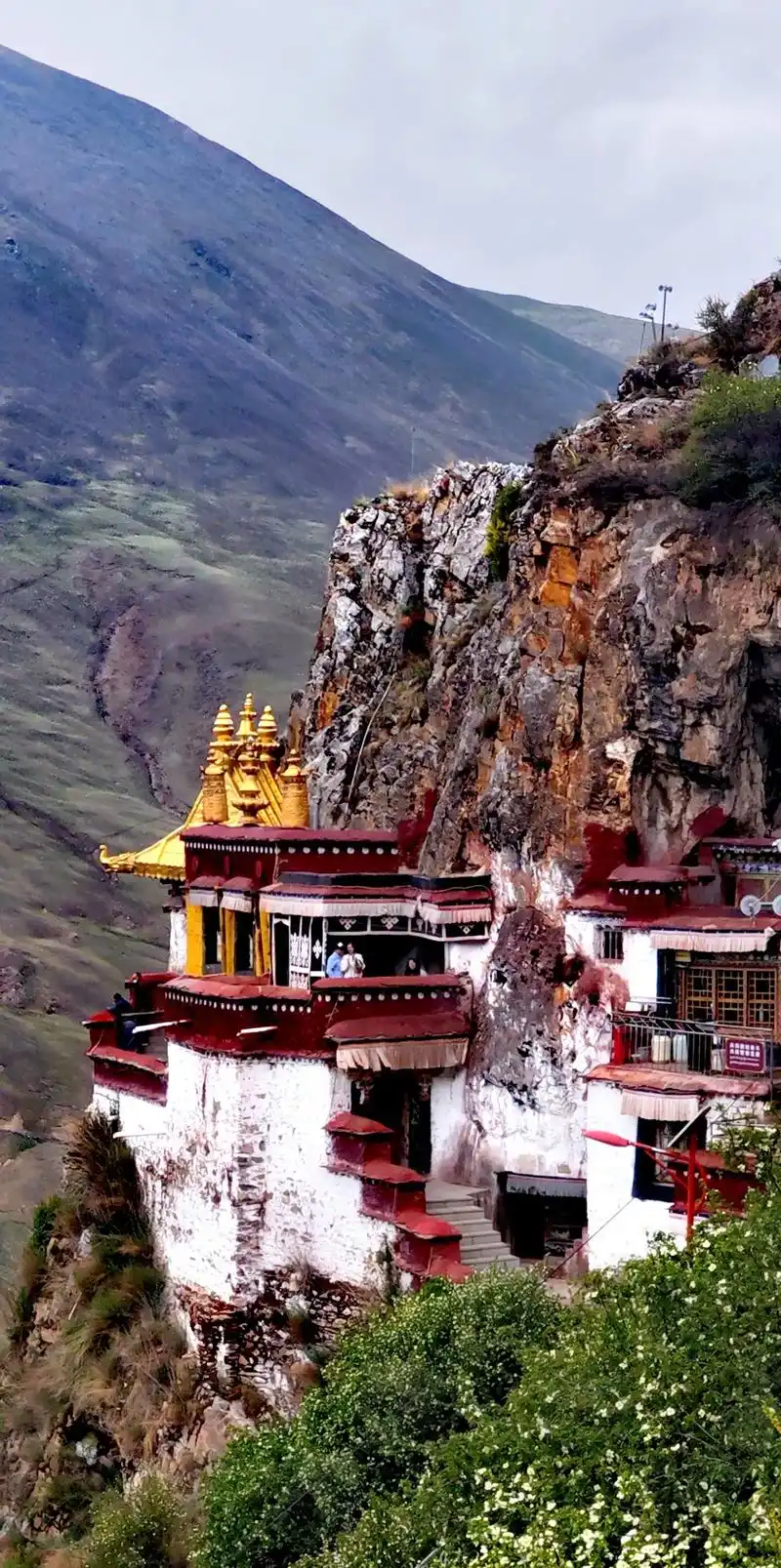
The monastery's defining feature is its seamless integration with the towering cliffs of Mount Lhari Nyingpo. Unlike the sprawling flat-ground complexes of Lhasa's great monasteries, Drakar Taso's chapels and hermit cells are embedded directly into the rock, reminiscent of Greece's cliff-bound Meteora monasteries or Spain's mountaintop Montserrat. Shrines tier upward in cascading levels, with wood-painted facades perched improbably against vertical stone. Dozens of ancient meditation caves honeycomb the cliff face, including Songtsen Gampo's practice grotto and the famed "Moon Cave" of Padmasambhava, creating an otherworldly skyline often likened to a "hanging palace" suspended in the mountains.
As a principal seat of the Nyingma—the oldest of Tibet's four major Buddhist schools and the tradition most closely tied to the earliest Indian tantric transmissions—Drakar Taso embodies the hermitic, contemplative heart of Tibetan spirituality. A beloved Tibetan proverb declares "Lhasa's spiritual heart is at Drak Yerpa," underscoring its status as the supreme meditation sanctuary. Pilgrims still walk the kora clockwise around the cliff, burn juniper in traditional sang offerings, and absorb the profound silence that has drawn contemplatives for thirteen centuries.
The monastery lies roughly an hour's drive from central Lhasa via private car or chartered minivan, making it ideal for a half-day excursion. However, at 4,360 meters above sea level, altitude sickness poses a real risk—visitors should acclimatize in Lhasa for two to three days beforehand, carry portable oxygen canisters, and wear sturdy non-slip footwear. Spring through autumn offers the most comfortable conditions and reliable access, while winter brings treacherous icy paths and heavy snow. Remember to dress modestly (shoulders and knees covered), remove shoes before entering chapels, walk only clockwise around sacred features, and refrain from photographing inside certain cave interiors.
For travelers seeking more than postcard scenery, Drakar Taso offers something increasingly rare: an authentic encounter with living Tibetan hermit culture set against a backdrop of breathtaking natural drama. Where most famous monasteries showcase gilded assembly halls and colorful festival crowds, Drakar Taso whispers of solitude, asceticism, and direct communion with the mountain itself—a spiritual atmosphere as vivid today as it was when Songtsen Gampo first sought enlightenment in these cliffs. Few experiences in Tibet feel so close to the mystical origins of Himalayan Buddhism.
Drakar Taso dates to the 7th century, an era when Tibet's first emperor Songtsen Gampo unified the Tibetan plateau in the same generation that Islam was born in Arabia and Constantinople still served as the Eastern Roman capital. Founded more than a century before Charlemagne was crowned Holy Roman Emperor and predating Europe's great medieval cathedrals by some 500 years, the monastery stands among the oldest continuously active religious sites in the Himalayas. Songtsen Gampo himself reportedly meditated in one of its cliff caves. Later masters, including the legendary Indian sage Padmasambhava (Guru Rinpoche) and the Bengali scholar Atisha—both pivotal figures in shaping Tibetan Buddhism in the 8th and 11th centuries—also retreated here for solitary contemplation, leaving behind a spiritual lineage that endures to this day.
The monastery's defining feature is its seamless integration with the towering cliffs of Mount Lhari Nyingpo. Unlike the sprawling flat-ground complexes of Lhasa's great monasteries, Drakar Taso's chapels and hermit cells are embedded directly into the rock, reminiscent of Greece's cliff-bound Meteora monasteries or Spain's mountaintop Montserrat. Shrines tier upward in cascading levels, with wood-painted facades perched improbably against vertical stone. Dozens of ancient meditation caves honeycomb the cliff face, including Songtsen Gampo's practice grotto and the famed "Moon Cave" of Padmasambhava, creating an otherworldly skyline often likened to a "hanging palace" suspended in the mountains.
As a principal seat of the Nyingma—the oldest of Tibet's four major Buddhist schools and the tradition most closely tied to the earliest Indian tantric transmissions—Drakar Taso embodies the hermitic, contemplative heart of Tibetan spirituality. A beloved Tibetan proverb declares "Lhasa's spiritual heart is at Drak Yerpa," underscoring its status as the supreme meditation sanctuary. Pilgrims still walk the kora clockwise around the cliff, burn juniper in traditional sang offerings, and absorb the profound silence that has drawn contemplatives for thirteen centuries.
The monastery lies roughly an hour's drive from central Lhasa via private car or chartered minivan, making it ideal for a half-day excursion. However, at 4,360 meters above sea level, altitude sickness poses a real risk—visitors should acclimatize in Lhasa for two to three days beforehand, carry portable oxygen canisters, and wear sturdy non-slip footwear. Spring through autumn offers the most comfortable conditions and reliable access, while winter brings treacherous icy paths and heavy snow. Remember to dress modestly (shoulders and knees covered), remove shoes before entering chapels, walk only clockwise around sacred features, and refrain from photographing inside certain cave interiors.
For travelers seeking more than postcard scenery, Drakar Taso offers something increasingly rare: an authentic encounter with living Tibetan hermit culture set against a backdrop of breathtaking natural drama. Where most famous monasteries showcase gilded assembly halls and colorful festival crowds, Drakar Taso whispers of solitude, asceticism, and direct communion with the mountain itself—a spiritual atmosphere as vivid today as it was when Songtsen Gampo first sought enlightenment in these cliffs. Few experiences in Tibet feel so close to the mystical origins of Himalayan Buddhism.