Shigatse Old Town
⭐ 4.20
Sangzhuzi District, Shigatse City, Tibet Autonomous Region, China
 Shigatse—literally "the manor of the best soil" in Tibetan—rose to prominence in the mid-14th century, when warlord Jangchub Gyaltsen founded Sangzhubse Dzong in 1363, the same year Edward III renewed the Hundred Years' War and Petrarch was reviving classical learning in Italy. For centuries, the city served as capital of the Tsang region, rivaling Lhasa in political weight. After the consolidation of Gelugpa power in the 17th century, the Fifth Dalai Lama granted governance of Back Tibet to the First Panchen Lama, making Shigatse the permanent seat of Tibetan Buddhism's second-highest spiritual authority—much like Canterbury or Santiago de Compostela in the Christian world.
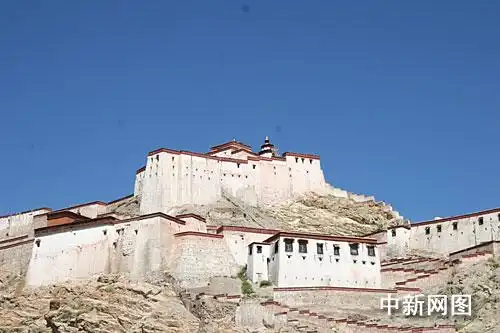
Sangzhubse Dzong, dubbed the "Little Potala," climbs the western hill like a massive white-and-red citadel, reminiscent of the papal fortresses of medieval Europe. Now functioning as a museum, its summit commands sweeping views over the Nyang Chu River valley and the labyrinth of single-story Tibetan townhouses below. A short walk eastward leads to Tashilhunpo, founded in 1447 by the First Dalai Lama himself: a sprawling whitewashed complex of chapels and cloisters, crowned by a 26-meter Maitreya statue, one of the largest bronze figures on earth. Together, they form a spiritual axis comparable to the Vatican and Castel Sant'Angelo overlooking Rome.
Beyond its monuments, Shigatse Old Town is prized for its unfiltered daily rhythm. In the recently renovated Baijikong district and along the Xigizi pedestrian street, lanes wind past working families, small workshops, and century-old sweet tea houses where patrons sip butter tea and toss dice in traditional games, with no entrance fees or staged performances. Pilgrims prostrate at stone shrines while crimson-robed monks shuffle between prayer halls, and the air hums with murmured mantras. It is a community, not a museum, offering visitors the rare chance to encounter Tibetan Buddhist devotion as a living continuum rather than a curated exhibit.
Plan carefully for altitude: at 3,800 meters, even a brisk walk can leave you breathless. Acclimatize in Lhasa for two to three days first, hydrate aggressively, and pace yourself. Sangzhubse Dzong is free and open Wednesday through Sunday until 17:00, but the climb involves many steep steps, so go slowly to avoid altitude sickness. Tashilhunpo typically closes to new visitors around 18:30, and within its precincts you must walk clockwise around shrines, remove hats, and refrain from photographing monks or sacred images without permission. August offers the mildest weather, yet fierce plateau sun demands high-SPF sunscreen, sunglasses, and windproof layers even in summer.
For travelers seeking to understand Tibet beyond postcard clichés, Shigatse delivers an intimacy unavailable in Lhasa. Sample back-Tibetan specialties: pangbi (chilled pea-flour noodles with fiery chili paste), hand-pulled Tibetan noodles, butter tea, and Gangba lamb, perhaps China's finest mutton, raised on high-altitude pastures. A rewarding day begins with breakfast on Xigizi Street, drifts into the spinning prayer wheels of Tashilhunpo, pauses at the Buddha-display platform for valley views, climbs the dzong at golden hour, and unwinds by the riverside. Allow four to five hours, and budget extra time simply to sit, sip tea, and absorb six centuries of devotion.
Shigatse—literally "the manor of the best soil" in Tibetan—rose to prominence in the mid-14th century, when warlord Jangchub Gyaltsen founded Sangzhubse Dzong in 1363, the same year Edward III renewed the Hundred Years' War and Petrarch was reviving classical learning in Italy. For centuries, the city served as capital of the Tsang region, rivaling Lhasa in political weight. After the consolidation of Gelugpa power in the 17th century, the Fifth Dalai Lama granted governance of Back Tibet to the First Panchen Lama, making Shigatse the permanent seat of Tibetan Buddhism's second-highest spiritual authority—much like Canterbury or Santiago de Compostela in the Christian world.
Sangzhubse Dzong, dubbed the "Little Potala," climbs the western hill like a massive white-and-red citadel, reminiscent of the papal fortresses of medieval Europe. Now functioning as a museum, its summit commands sweeping views over the Nyang Chu River valley and the labyrinth of single-story Tibetan townhouses below. A short walk eastward leads to Tashilhunpo, founded in 1447 by the First Dalai Lama himself: a sprawling whitewashed complex of chapels and cloisters, crowned by a 26-meter Maitreya statue, one of the largest bronze figures on earth. Together, they form a spiritual axis comparable to the Vatican and Castel Sant'Angelo overlooking Rome.
Beyond its monuments, Shigatse Old Town is prized for its unfiltered daily rhythm. In the recently renovated Baijikong district and along the Xigizi pedestrian street, lanes wind past working families, small workshops, and century-old sweet tea houses where patrons sip butter tea and toss dice in traditional games, with no entrance fees or staged performances. Pilgrims prostrate at stone shrines while crimson-robed monks shuffle between prayer halls, and the air hums with murmured mantras. It is a community, not a museum, offering visitors the rare chance to encounter Tibetan Buddhist devotion as a living continuum rather than a curated exhibit.
Plan carefully for altitude: at 3,800 meters, even a brisk walk can leave you breathless. Acclimatize in Lhasa for two to three days first, hydrate aggressively, and pace yourself. Sangzhubse Dzong is free and open Wednesday through Sunday until 17:00, but the climb involves many steep steps, so go slowly to avoid altitude sickness. Tashilhunpo typically closes to new visitors around 18:30, and within its precincts you must walk clockwise around shrines, remove hats, and refrain from photographing monks or sacred images without permission. August offers the mildest weather, yet fierce plateau sun demands high-SPF sunscreen, sunglasses, and windproof layers even in summer.
For travelers seeking to understand Tibet beyond postcard clichés, Shigatse delivers an intimacy unavailable in Lhasa. Sample back-Tibetan specialties: pangbi (chilled pea-flour noodles with fiery chili paste), hand-pulled Tibetan noodles, butter tea, and Gangba lamb, perhaps China's finest mutton, raised on high-altitude pastures. A rewarding day begins with breakfast on Xigizi Street, drifts into the spinning prayer wheels of Tashilhunpo, pauses at the Buddha-display platform for valley views, climbs the dzong at golden hour, and unwinds by the riverside. Allow four to five hours, and budget extra time simply to sit, sip tea, and absorb six centuries of devotion.