Tashilhunpo Monastery
⭐ 4.80
Sangzhuzi District, Shigatse City, Tibet Autonomous Region, China
 Tashilhunpo was born in the mid-15th century, when the Ming emperor was consolidating his rule, the Italian Renaissance was reshaping Florence, and Constantinople was about to fall to the Ottomans (1453). Founded in 1447 by Gedun Drup—a disciple of the reformer Tsongkhapa later recognized as the First Dalai Lama—the monastery was dramatically expanded a century and a half later by the Fourth Panchen Lama, Lozan Choki Gyaltsen. Much as Canterbury Cathedral anchors Anglicanism or Mont-Saint-Michel embodies medieval French monasticism, Tashilhunpo remains the spiritual stronghold of the Tsang region and the second holiest site in Tibetan Gelug Buddhism after the Potala Palace.
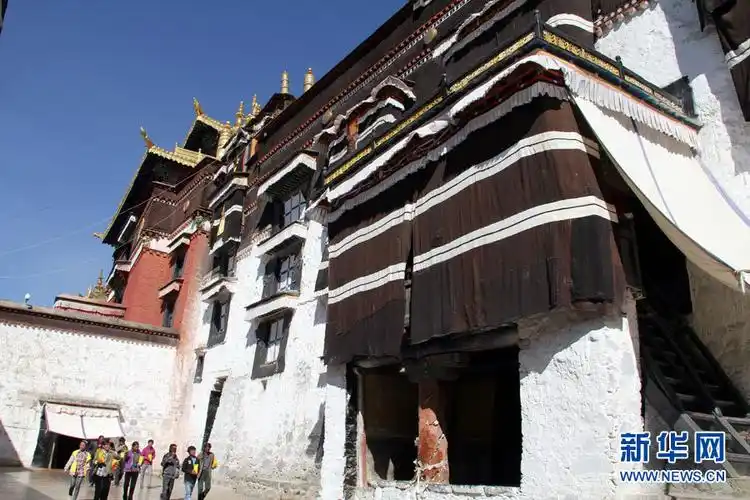
The monastery cascades down the hillside in a striking fusion of styles: whitewashed Tibetan fortress walls enclose courtyards reminiscent of Chinese imperial compounds, while gleaming gilded roofs catch the high-altitude sun. Walkways and staircases link dozens of halls and chapels where centuries-old murals frame butter-lamp-lit shrines. The golden rooflines have drawn comparisons to the onion domes of St. Basil's Cathedral in Moscow, though they reflect a distinctively Himalayan aesthetic. Built largely without nails, the complex has survived earthquakes and political upheaval; it was extensively restored in the 1980s, a renovation supported in part by Tibetan Buddhist communities abroad.
The undisputed showpiece is the Maitreya Hall, completed in 1914, which houses a 26.2-meter (86-foot) seated Maitreya—the largest gilded bronze statue of its kind anywhere on earth. To put that scale in perspective, it exceeds the height of a nine-story building and rivals the Statue of Liberty from toe to crown. The statue contains hundreds of kilograms of gold, thousands of precious stones, and ancient relics sealed within. Visitors who ascend to the upper platforms can look the Buddha in the eye—an encounter travelers describe as one of the great spiritual sights of Asia, rivaling the colossal Buddhas of Nara or the vanished giants of Bamiyan.
Across the complex, a series of richly ornamented funerary stupas preserve the remains of successive Panchen Lamas, supreme spiritual leaders second in authority only to the Dalai Lamas. The tallest—containing the tomb of the Ninth Panchen Lama—rises eleven meters in gilded copper and silver encrusted with pearls and turquoise, matching the splendor of royal tombs in Westminster Abbey or the Bourbon Chapel at Versailles. These shrines are decorated with carved stone reliefs, painted silk, and pilgrim offerings accumulated over generations, turning Tashilhunpo into both mausoleum and treasury.
Unlike a museum, Tashilhunpo remains a fully functioning monastery, home to roughly five hundred monks who chant at dawn, debate Buddhist philosophy in the afternoons, and keep the butter lamps that have flickered here for nearly six hundred years. Pilgrims from across Tibet and the Himalayas arrive daily to prostrate themselves on worn flagstones, while schoolchildren receive religious instruction in halls where scholars have argued the metaphysics of emptiness for half a millennium. The monastery also historically hosted the enthronement of the 17th Karmapa, underscoring its pan-Himalayan reach into Bhutan, Nepal, and Sikkim.
Visitors should note that Tashilhunpo sits at about 3,900 meters above sea level in Shigatse, roughly 350 kilometers west of Lhasa and easily reached by the Qinghai–Tibet railway to Shigatse station, followed by a short taxi ride. Two days of acclimatization in Lhasa is strongly recommended. The site opens daily from roughly 9:00 a.m. to 5:00 p.m., with admission around 80 RMB and extra fees for the Maitreya Hall. April through June and September through October offer the clearest skies and mildest weather; monsoon rains make July and August slippery. Modest dress is required, photography is restricted inside most halls, and visitors should always walk clockwise around shrines.
Tashilhunpo was born in the mid-15th century, when the Ming emperor was consolidating his rule, the Italian Renaissance was reshaping Florence, and Constantinople was about to fall to the Ottomans (1453). Founded in 1447 by Gedun Drup—a disciple of the reformer Tsongkhapa later recognized as the First Dalai Lama—the monastery was dramatically expanded a century and a half later by the Fourth Panchen Lama, Lozan Choki Gyaltsen. Much as Canterbury Cathedral anchors Anglicanism or Mont-Saint-Michel embodies medieval French monasticism, Tashilhunpo remains the spiritual stronghold of the Tsang region and the second holiest site in Tibetan Gelug Buddhism after the Potala Palace.
The monastery cascades down the hillside in a striking fusion of styles: whitewashed Tibetan fortress walls enclose courtyards reminiscent of Chinese imperial compounds, while gleaming gilded roofs catch the high-altitude sun. Walkways and staircases link dozens of halls and chapels where centuries-old murals frame butter-lamp-lit shrines. The golden rooflines have drawn comparisons to the onion domes of St. Basil's Cathedral in Moscow, though they reflect a distinctively Himalayan aesthetic. Built largely without nails, the complex has survived earthquakes and political upheaval; it was extensively restored in the 1980s, a renovation supported in part by Tibetan Buddhist communities abroad.
The undisputed showpiece is the Maitreya Hall, completed in 1914, which houses a 26.2-meter (86-foot) seated Maitreya—the largest gilded bronze statue of its kind anywhere on earth. To put that scale in perspective, it exceeds the height of a nine-story building and rivals the Statue of Liberty from toe to crown. The statue contains hundreds of kilograms of gold, thousands of precious stones, and ancient relics sealed within. Visitors who ascend to the upper platforms can look the Buddha in the eye—an encounter travelers describe as one of the great spiritual sights of Asia, rivaling the colossal Buddhas of Nara or the vanished giants of Bamiyan.
Across the complex, a series of richly ornamented funerary stupas preserve the remains of successive Panchen Lamas, supreme spiritual leaders second in authority only to the Dalai Lamas. The tallest—containing the tomb of the Ninth Panchen Lama—rises eleven meters in gilded copper and silver encrusted with pearls and turquoise, matching the splendor of royal tombs in Westminster Abbey or the Bourbon Chapel at Versailles. These shrines are decorated with carved stone reliefs, painted silk, and pilgrim offerings accumulated over generations, turning Tashilhunpo into both mausoleum and treasury.
Unlike a museum, Tashilhunpo remains a fully functioning monastery, home to roughly five hundred monks who chant at dawn, debate Buddhist philosophy in the afternoons, and keep the butter lamps that have flickered here for nearly six hundred years. Pilgrims from across Tibet and the Himalayas arrive daily to prostrate themselves on worn flagstones, while schoolchildren receive religious instruction in halls where scholars have argued the metaphysics of emptiness for half a millennium. The monastery also historically hosted the enthronement of the 17th Karmapa, underscoring its pan-Himalayan reach into Bhutan, Nepal, and Sikkim.
Visitors should note that Tashilhunpo sits at about 3,900 meters above sea level in Shigatse, roughly 350 kilometers west of Lhasa and easily reached by the Qinghai–Tibet railway to Shigatse station, followed by a short taxi ride. Two days of acclimatization in Lhasa is strongly recommended. The site opens daily from roughly 9:00 a.m. to 5:00 p.m., with admission around 80 RMB and extra fees for the Maitreya Hall. April through June and September through October offer the clearest skies and mildest weather; monsoon rains make July and August slippery. Modest dress is required, photography is restricted inside most halls, and visitors should always walk clockwise around shrines.