Nianhua Bay Zen Town
⭐ 4.60
Nianhua Bay Zen Town, Binhu District, Wuxi, Jiangsu, China
 Opened in 2015 on the Masan Peninsula along Lake Taihu, Nianhua Wan covers roughly 107 hectares adjacent to the famous Lingshan Grand Buddha. While the town itself is contemporary, its aesthetic draws deeply from China's Tang (618–907) and Song (960–1279) dynasties—the same golden age that produced Dunhuang's Buddhist cave art and profoundly influenced Japan's Heian court. The Zen (Chan) philosophy woven throughout originated here before spreading to Kyoto and later shaping Western perceptions of Eastern spirituality through figures like D.T. Suzuki and the Beat Generation.
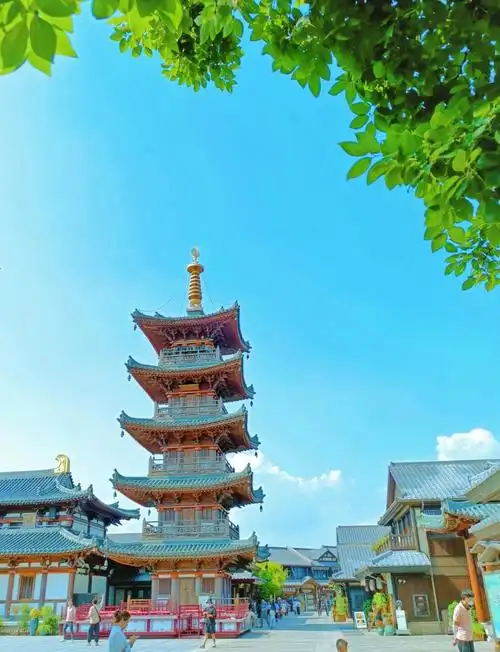
The town's timber-framed buildings feature grey-tiled roofs, whitewashed walls, and upturned eaves reminiscent of classical Chinese scroll paintings. This style parallels medieval European half-timbered towns like Rothenburg ob der Tauber, yet with distinctly East Asian proportions. The five-story Nianhua Pagoda serves as the visual anchor, echoing ancient wooden towers that once dotted the Yangtze region. Waterways wind between structures in the manner of Jiangnan canal towns such as Zhouzhuang, creating a layered landscape where bridges, reflection pools, and seasonal flower fields invite unhurried exploration.
At its heart, Nianhua Wan functions as a contemporary Zen retreat—akin to a Carthusian monastery or a mindfulness retreat in Tuscany, but framed by Chinese aesthetics. Daily activities include sutra copying, flower arrangement, tea ceremonies, and seated meditation. These pursuits trace back to the Chan schools of the Tang era, when wandering monks like Huineng formalized meditation as a path to sudden enlightenment. For visitors, even a brief participation offers respite from modern stress and a window into one of Asia's most influential philosophical traditions.
The real magic emerges after sunset. The "Zen Walk" performance series includes the pagoda illumination ceremony, a water-screen dance on Wudeng Lake titled "Five Petals Bloom," and the climactic "Picking Flower Smile" show featuring synchronized drones, kinetic sculptures, and fireworks. This immersive spectacle rivals Europe's celebrated light festivals in Lyon, Berlin, or Ghent, yet feels distinctly Chinese in its references to Buddhist parables and Tang poetry. Allow at least three to four hours to experience the full program.
Adult tickets range from 94–150 RMB, with evening passes offering the best value for night-focused visitors. Arrive by late afternoon via the South Gate to explore in daylight, then settle in for the evening shows. Opening hours typically run 09:00–21:00, though extended during summer and holidays. Check the official mini-program for real-time schedules, as drone and fireworks performances are weather-dependent. Comfortable flat shoes are essential—the cobblestone streets punish high heels. Hanfu or light linen outfits photograph beautifully against the muted architecture.
Foreign travelers can pay with Visa, Mastercard, or Alipay's international version; most signage includes English, though some interpretive content remains Chinese-only—translation apps are helpful. On-site dining prices run high, so bring water and consider a light meal beforehand. For a fuller experience, combine with a visit to neighboring Lingshan Grand Buddha, or stay overnight at one of the town's boutique inns to absorb the rhythm of "morning bells, evening drums." Whether you're a spiritual seeker, a photographer, or simply a curious traveler, Nianhua Wan offers a rare contemporary interpretation of China's most enduring contemplative traditions.
Opened in 2015 on the Masan Peninsula along Lake Taihu, Nianhua Wan covers roughly 107 hectares adjacent to the famous Lingshan Grand Buddha. While the town itself is contemporary, its aesthetic draws deeply from China's Tang (618–907) and Song (960–1279) dynasties—the same golden age that produced Dunhuang's Buddhist cave art and profoundly influenced Japan's Heian court. The Zen (Chan) philosophy woven throughout originated here before spreading to Kyoto and later shaping Western perceptions of Eastern spirituality through figures like D.T. Suzuki and the Beat Generation.
The town's timber-framed buildings feature grey-tiled roofs, whitewashed walls, and upturned eaves reminiscent of classical Chinese scroll paintings. This style parallels medieval European half-timbered towns like Rothenburg ob der Tauber, yet with distinctly East Asian proportions. The five-story Nianhua Pagoda serves as the visual anchor, echoing ancient wooden towers that once dotted the Yangtze region. Waterways wind between structures in the manner of Jiangnan canal towns such as Zhouzhuang, creating a layered landscape where bridges, reflection pools, and seasonal flower fields invite unhurried exploration.
At its heart, Nianhua Wan functions as a contemporary Zen retreat—akin to a Carthusian monastery or a mindfulness retreat in Tuscany, but framed by Chinese aesthetics. Daily activities include sutra copying, flower arrangement, tea ceremonies, and seated meditation. These pursuits trace back to the Chan schools of the Tang era, when wandering monks like Huineng formalized meditation as a path to sudden enlightenment. For visitors, even a brief participation offers respite from modern stress and a window into one of Asia's most influential philosophical traditions.
The real magic emerges after sunset. The "Zen Walk" performance series includes the pagoda illumination ceremony, a water-screen dance on Wudeng Lake titled "Five Petals Bloom," and the climactic "Picking Flower Smile" show featuring synchronized drones, kinetic sculptures, and fireworks. This immersive spectacle rivals Europe's celebrated light festivals in Lyon, Berlin, or Ghent, yet feels distinctly Chinese in its references to Buddhist parables and Tang poetry. Allow at least three to four hours to experience the full program.
Adult tickets range from 94–150 RMB, with evening passes offering the best value for night-focused visitors. Arrive by late afternoon via the South Gate to explore in daylight, then settle in for the evening shows. Opening hours typically run 09:00–21:00, though extended during summer and holidays. Check the official mini-program for real-time schedules, as drone and fireworks performances are weather-dependent. Comfortable flat shoes are essential—the cobblestone streets punish high heels. Hanfu or light linen outfits photograph beautifully against the muted architecture.
Foreign travelers can pay with Visa, Mastercard, or Alipay's international version; most signage includes English, though some interpretive content remains Chinese-only—translation apps are helpful. On-site dining prices run high, so bring water and consider a light meal beforehand. For a fuller experience, combine with a visit to neighboring Lingshan Grand Buddha, or stay overnight at one of the town's boutique inns to absorb the rhythm of "morning bells, evening drums." Whether you're a spiritual seeker, a photographer, or simply a curious traveler, Nianhua Wan offers a rare contemporary interpretation of China's most enduring contemplative traditions.