Wuxi Museum
⭐ 4.30
Wuxi Museum, Wuxi, Jiangsu Province, China
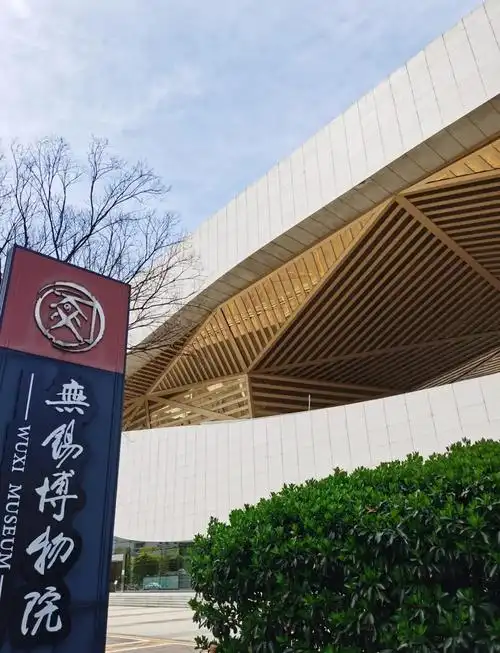 Wuxi Museum opened in 2008 through the merger of three predecessor institutions—a revolutionary memorial, a civic museum, and a science center—creating a flagship cultural venue on par with regional heavyweights such as Nanjing Museum and Suzhou Museum. Its collections trace a continuous civilizational arc from the Liangzhu Neolithic culture (c. 3300–2300 BCE), contemporaneous with Egypt's Old Kingdom and the early Mesopotamian city-states, through the Spring and Autumn Wu kingdom, the Tang and Song literary golden age, and into Wuxi's pivotal role as the cradle of modern Chinese industry and commerce. For Western visitors, the museum offers an exceptionally accessible entry point into the layered heritage of the Yangtze Delta, a region whose cultural output rivals that of northern Italy in density and refinement.
The building itself commands attention. Set on the southern flank of Taihu Square, the museum spans 71,000 square meters—roughly the footprint of London's Tate Modern complex—wrapped in a contemporary glass-and-stone façade that glows after dark and has become a favorite subject for night photography. Inside, the museum is divided into three wings: a West Zone devoted to historical narrative, a Central Zone for blockbuster temporary exhibitions, and an East Zone housing interactive science galleries. Climate control throughout makes it a particularly welcome refuge during the humid Jiangnan summer, when temperatures regularly climb above 35°C.
The West Zone forms the museum's heart. On the lower level, "Wu Charm, Wuxi Rhyme" walks visitors through seven millennia of local history with atmospheric displays of bronze ritual vessels, Song-dynasty porcelain, and Qing-era silk trade documents that illuminate Wuxi's enduring role as a hub of the Grand Canal economy. Upstairs, the "Purple Sand and Gold" gallery gathers masterpieces by celebrated Yixing teapot masters, while "Curious Tombs" presents a breathtaking cache of gold, silver, and jade funerary objects from the 14th-century tomb of Qian Yu—a Yuan-dynasty gentleman whose wealth reflects the cosmopolitan merchant culture of the Mongol era. A dedicated hall of Huishan clay figurines showcases this beloved folk tradition, recognized by UNESCO as intangible cultural heritage, with hands-on demonstration stations ideal for younger visitors.
The Central Zone hosts a rotating program of major traveling exhibitions. The 2026 summer calendar features "Rose Kingdom—Antiquities of Syria," bringing treasures from one of humanity's oldest cradles of civilization into direct dialogue with Jiangsu's own ancient past, alongside "Echoes of Dunhuang," a spectacular Dunhuang-themed show incorporating a 4D cinema experience, and an immersive football culture exhibition tracing the sport's Chinese origins during the Han dynasty. The "Jin Kui Treasures" rotation regularly resurfaces more than a hundred rarely-seen masterpieces from the museum's own reserves, ensuring that even repeat visitors encounter fresh material.
Practical logistics are refreshingly straightforward. The museum sits at 100 Zhongshu Road in the Liangxi District, a ten-minute walk from Qingmingqiao Station on Metro Line 1, with underground parking available and additional spaces in nearby shopping malls. Opening hours run Tuesday through Sunday, 9:00 a.m. to 5:00 p.m., with last admission at 4:00 p.m.; the museum closes on Mondays except during national holidays. Permanent exhibitions are free with a passport or ID card, while special exhibitions typically charge around 30 RMB. Free multilingual audio guides and scheduled docent tours in English (by advance request) greatly enrich the experience.
In a country where major museums can feel overwhelming, Wuxi Museum strikes an ideal balance: substantial enough to anchor an entire day of cultural exploration, yet compact and clearly signposted enough for a satisfying two-hour visit. Few other venues offer such an efficient yet richly textured introduction to Jiangnan civilization, the refinement of its craft traditions, and the broader sweep of Chinese history from Neolithic village to globalized metropolis. For travelers seeking depth without the crowds of Shanghai or Hangzhou, it is an unmissable stop.
Wuxi Museum opened in 2008 through the merger of three predecessor institutions—a revolutionary memorial, a civic museum, and a science center—creating a flagship cultural venue on par with regional heavyweights such as Nanjing Museum and Suzhou Museum. Its collections trace a continuous civilizational arc from the Liangzhu Neolithic culture (c. 3300–2300 BCE), contemporaneous with Egypt's Old Kingdom and the early Mesopotamian city-states, through the Spring and Autumn Wu kingdom, the Tang and Song literary golden age, and into Wuxi's pivotal role as the cradle of modern Chinese industry and commerce. For Western visitors, the museum offers an exceptionally accessible entry point into the layered heritage of the Yangtze Delta, a region whose cultural output rivals that of northern Italy in density and refinement.
The building itself commands attention. Set on the southern flank of Taihu Square, the museum spans 71,000 square meters—roughly the footprint of London's Tate Modern complex—wrapped in a contemporary glass-and-stone façade that glows after dark and has become a favorite subject for night photography. Inside, the museum is divided into three wings: a West Zone devoted to historical narrative, a Central Zone for blockbuster temporary exhibitions, and an East Zone housing interactive science galleries. Climate control throughout makes it a particularly welcome refuge during the humid Jiangnan summer, when temperatures regularly climb above 35°C.
The West Zone forms the museum's heart. On the lower level, "Wu Charm, Wuxi Rhyme" walks visitors through seven millennia of local history with atmospheric displays of bronze ritual vessels, Song-dynasty porcelain, and Qing-era silk trade documents that illuminate Wuxi's enduring role as a hub of the Grand Canal economy. Upstairs, the "Purple Sand and Gold" gallery gathers masterpieces by celebrated Yixing teapot masters, while "Curious Tombs" presents a breathtaking cache of gold, silver, and jade funerary objects from the 14th-century tomb of Qian Yu—a Yuan-dynasty gentleman whose wealth reflects the cosmopolitan merchant culture of the Mongol era. A dedicated hall of Huishan clay figurines showcases this beloved folk tradition, recognized by UNESCO as intangible cultural heritage, with hands-on demonstration stations ideal for younger visitors.
The Central Zone hosts a rotating program of major traveling exhibitions. The 2026 summer calendar features "Rose Kingdom—Antiquities of Syria," bringing treasures from one of humanity's oldest cradles of civilization into direct dialogue with Jiangsu's own ancient past, alongside "Echoes of Dunhuang," a spectacular Dunhuang-themed show incorporating a 4D cinema experience, and an immersive football culture exhibition tracing the sport's Chinese origins during the Han dynasty. The "Jin Kui Treasures" rotation regularly resurfaces more than a hundred rarely-seen masterpieces from the museum's own reserves, ensuring that even repeat visitors encounter fresh material.
Practical logistics are refreshingly straightforward. The museum sits at 100 Zhongshu Road in the Liangxi District, a ten-minute walk from Qingmingqiao Station on Metro Line 1, with underground parking available and additional spaces in nearby shopping malls. Opening hours run Tuesday through Sunday, 9:00 a.m. to 5:00 p.m., with last admission at 4:00 p.m.; the museum closes on Mondays except during national holidays. Permanent exhibitions are free with a passport or ID card, while special exhibitions typically charge around 30 RMB. Free multilingual audio guides and scheduled docent tours in English (by advance request) greatly enrich the experience.
In a country where major museums can feel overwhelming, Wuxi Museum strikes an ideal balance: substantial enough to anchor an entire day of cultural exploration, yet compact and clearly signposted enough for a satisfying two-hour visit. Few other venues offer such an efficient yet richly textured introduction to Jiangnan civilization, the refinement of its craft traditions, and the broader sweep of Chinese history from Neolithic village to globalized metropolis. For travelers seeking depth without the crowds of Shanghai or Hangzhou, it is an unmissable stop.